




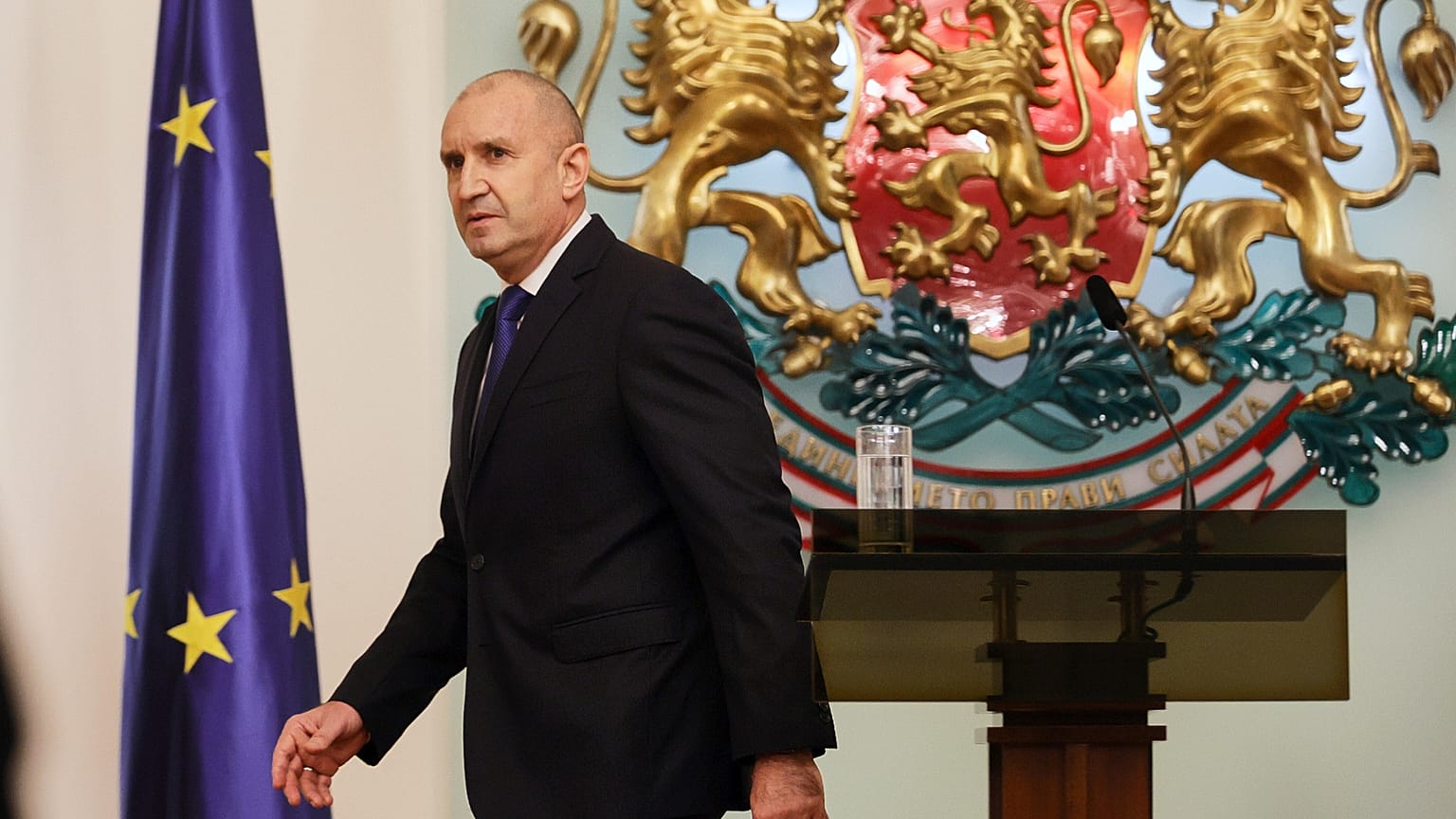














The emergence of a new political party led by now-former President Rumen Radev could significantly reshape not only Bulgaria’s domestic affairs but also its foreign policy.
Bulgarian President Rumen Radev announced that he is resigning as head of state Monday, signalling the launch of a new political project just two months before the next snap parliamentary elections in the country gripped by an ongoing political crisis.
 ADVERTISEMENT
ADVERTISEMENT
ADVERTISEMENT
“Our democracy cannot survive if we leave it in the hands of corrupt figures, deal-makers, and extremists,” the president said, adding that he will formally submit his resignation on Tuesday.
Radev has held the presidency of Bulgaria for nine years. Speculation that he would enter the parliamentary race and seek the post of prime minister has existed for some time and was confirmed today.
Bulgaria is a parliamentary republic, and its governance lies in the hands of the parliament, the council of ministers, and the prime minister.
“We are already members of Schengen and the eurozone," Radev said.
"The questions here are: why did achieving these goals not bring stability and satisfaction; why did Bulgarians stop voting; why do they not rely on the justice system and do not trust the media; why did citizens flood the squares twice; why, in a European Bulgaria, a large percentage of people feel poor, and even more live in insecurity,” he asked.
He blamed the “conveyor-belt” model of governance, “which has the outward features of democracy but functions through the mechanisms of oligarchy.”
During his tenure as president, Radev had to appoint seven caretaker governments due to the years-long political crisis and the inability of parties to form stable majorities.
Just weeks ago, the country was shaken by the largest protests since the 1990s, initially triggered by opposition to the draft budget but later escalating into demands for resignations and more - namely, the withdrawal from politics of key political figures such as former Prime Minister Boyko Borissov and Delyan Peevski, who has been sanctioned under the Magnitsky Act.
The emergence of a new political party led by the former president Rumen Radev could significantly reshape not only Bulgaria’s domestic affairs but also its foreign policy. Radev’s position on the war in Ukraine differs sharply from that of previous governments. For this reason, analysts and opponents have often labelled him “pro-Russian.”
In his speech on Monday, Radev also addressed this issue, stating: “In the name of their political future, some politicians are putting the peaceful lives of Bulgarians at risk amid a dangerous war close to our borders and are even encroaching on civil and ethnic peace, which you and I will preserve despite their provocations.”
Weeks before Bulgaria was set to adopt the euro (on 1 January 2026), Radev called for a referendum on the adoption of the single European currency, but the parliament rejected it.
“The final rift between Bulgarians and the political class came with the National Assembly’s refusal to hold a referendum on the date of introduction of the single European currency. The representatives of the people denied the people their right to choose,” Radev said.
The snap parliamentary elections in Bulgaria will take place in the spring and will be the seventh election since 2021. The role of president will be assumed by Vice President Iliana Yotova.