




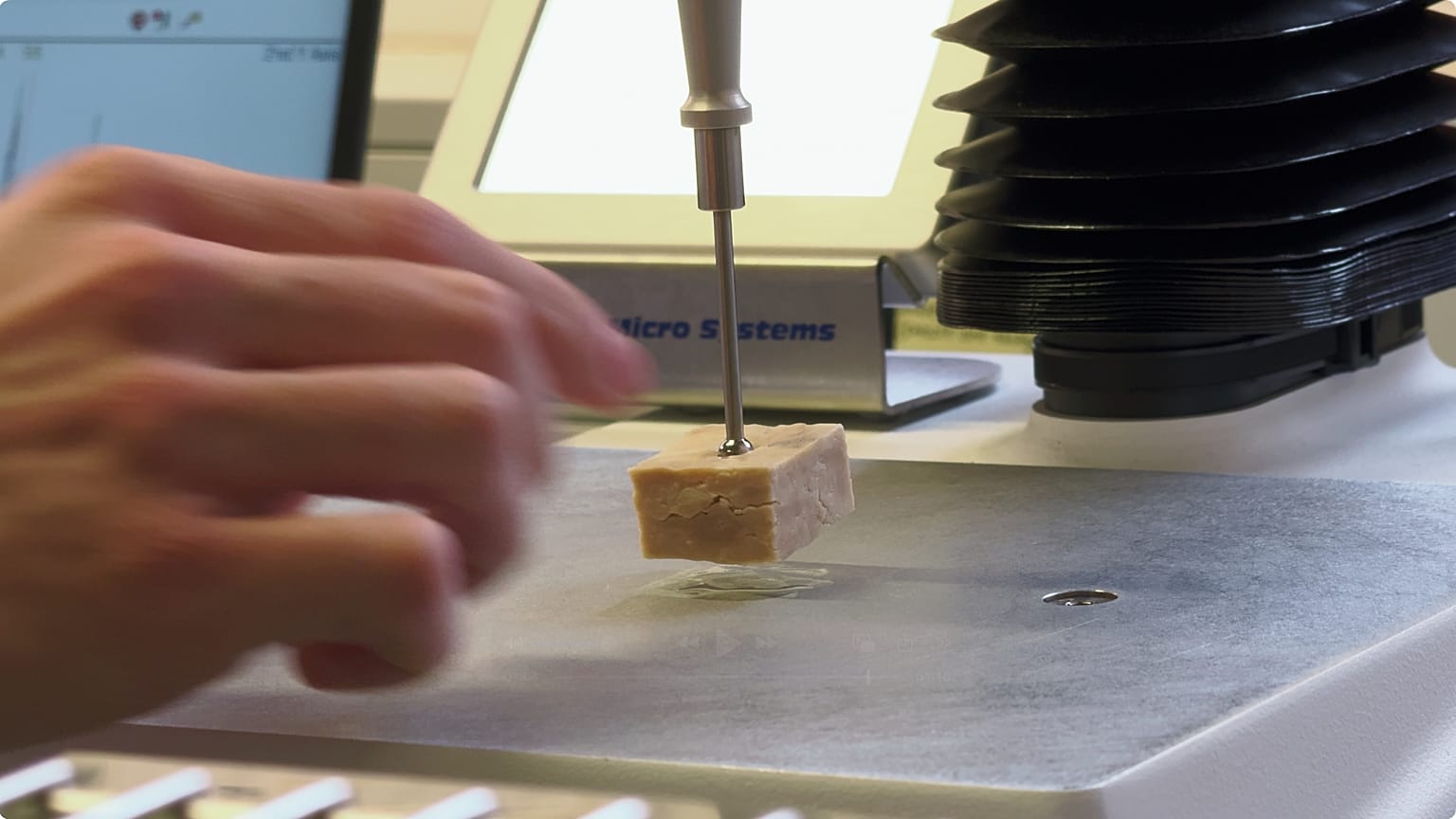














Food technology made in Europe is a global leader. What is the reason behind this success story? Euronews sent its reporter to East Germany to look for answers in Leipzig's "Bio-City".
Zac Austin from Scotland is one of the founders of Pacifico Biolabs. His international team is working towards a world without hunger. Using a new technique to produce meat substitutes from mushroom cultures.
 ADVERTISEMENT
ADVERTISEMENT
ADVERTISEMENT
In Leipzig's Bio-City, regional, national and European funding instruments are interlinked. Hundreds of young companies are laying the foundations here for Europe's market leadership in future technologies.
Austin: "Leipzig is a fantastic location where a large number of start-ups and biotech companies have set up shop." We are not allowed to film everything in the Pacifico laboratory; a lot of the machines and production processes are strictly protected trade secrets - made in Europe.
Co-founder Washington Vintimilla is the biochemical inventor genius of Pacifico: "Together with our food scientists, we achieved the breakthrough of transforming mycelial fibres into (vegan) chicken breast. That was phenomenal. That's when we knew we were on the right track."
The team has discovered a new method of producing vegan steaks and sausages from mushroom proteins. The formula is secret. Vintimilla: "We have to get as close as possible to real meat in terms of texture, that's the key to success."
Food technician Pau Oller Armengol from Spain adds: "With the mycelial fibres, we can produce vegan fish fillet as well as vegan pork medallions, sausage or chicken."
A real chicken needs 60 days to grow up. Pacifico can produce the same amount of protein in just one day. The world's population is growing. Parts of the world are already suffering from hunger. The world's need for protein is growing.
Washington Vintimilla: "The science is clear. If you look at the effects of climate change on the most important crops, we will see a 30 to 40 per cent decline in global crop yields. We will not be able to produce enough food for humanity. We need methods of food production that do not rely on land and produce protein independently of the climate."