




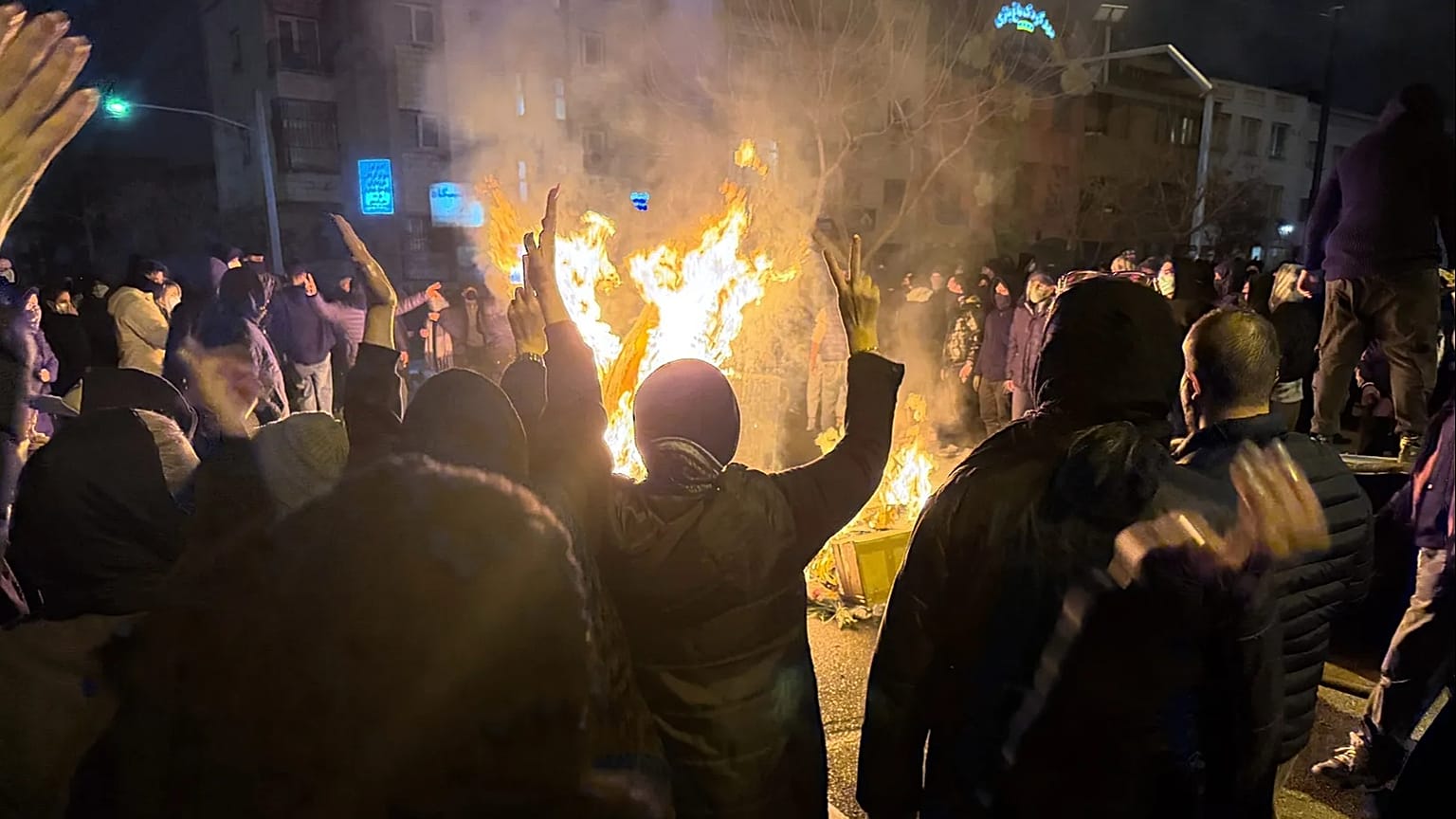














The Treasury announcement comes a day after Trump that he’d been told "on good authority" that plans for executions in Iran have stopped.
The United States imposed sanctions on Iranian security officials and financial networks on Thursday, accusing them of orchestrating a violent crackdown on peaceful protests and laundering billions in oil revenues.
 ADVERTISEMENT
ADVERTISEMENT
ADVERTISEMENT
Treasury Secretary Scott Bessent announced the measures in the wake of the biggest anti-government protests in the history of the Islamic republic, although the demonstrations appear to have diminished over the last few days in the face of repression and an almost week-long internet blackout.
"The United States stands firmly behind the Iranian people in their call for freedom and justice," Bessent said in a statement, adding that the action was taken at President Donald Trump's direction.
Among those sanctioned is Ali Larijani, secretary of Iran's Supreme Council for National Security, whom Washington accused of coordinating the crackdown and calling for force against protesters.
Four regional commanders of Iran's Law Enforcement Forces and Revolutionary Guard were also sanctioned for their roles in the crackdown in Lorestan and Fars provinces.
Security forces in Fars "have killed countless peaceful demonstrators" with hospitals "so inundated with gunshot wound patients that no other types of patients can be admitted," the Treasury said.
The Treasury additionally designated 18 individuals and entities accused of operating "shadow banking" networks that launder proceeds from Iranian oil sales through front companies in the United Arab Emirates, Singapore and the United Kingdom.
These networks funnel billions of dollars annually using cover companies and exchange houses, as Iranian citizens face economic hardship, according to the Treasury.
The sanctions freeze any US assets of those designated and prohibit Americans from doing business with them. Foreign financial institutions risk secondary sanctions for transactions with the designated entities.
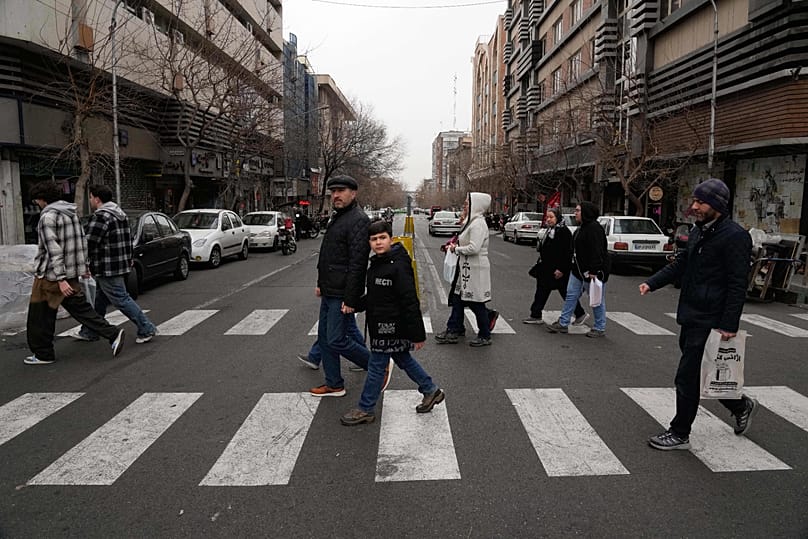
The action builds on the Trump administration's "maximum pressure" campaign against Iran following the US' unilateral withdrawal from the landmark international nuclear deal.
In 2025, the Treasury sanctioned more than 875 persons, vessels and aircraft as part of this effort, it said.
The demonstrations in Iran began on 28 December initially over the collapse of the rial currency, but morphed into wider discontent with the country’s government.
Executions reportedly stopped
The Treasury announcement comes a day after Trump that he’d been told "on good authority" that plans for executions in Iran have stopped, even as Tehran signalled fast trials and executions ahead in its crackdown on protesters.
Trump's claims, which were made with few details, came as he’d told protesting Iranians in recent days that "help is on the way" and that his administration would "act accordingly" to respond to the Iranian government.
But Trump has not offered any details about how the US might respond and it wasn't clear if his comments on Wednesday indicated he would hold off on action.
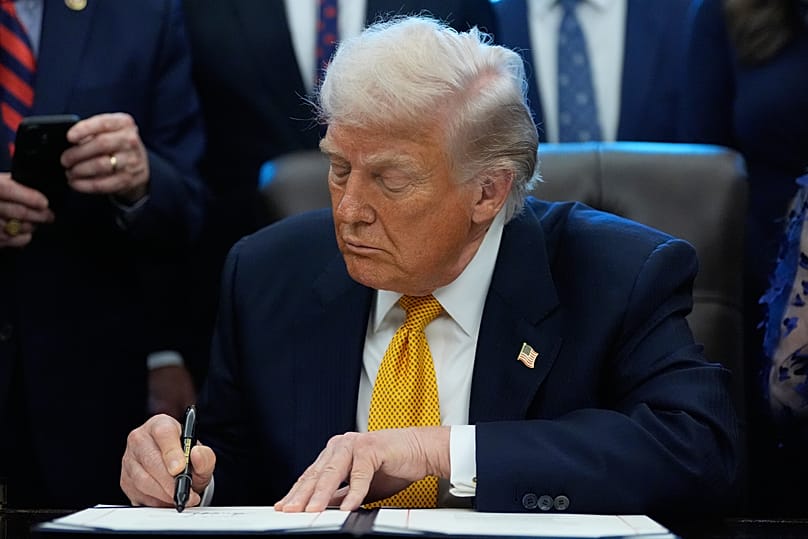
On Wednesday, Gholamhossein Mohseni-Ejei, Iran's judiciary chief, said the government must act quickly to punish more than 18,000 people who have been detained through rapid trials and executions.
The security force crackdown on the demonstrations has killed at least 3,428, the Norway-based Iran Human Rights (IHR) NGO reported.
The death toll exceeds that of any other round of protest or unrest in Iran in decades and recalls the chaos surrounding the country’s 1979 Islamic Revolution.