




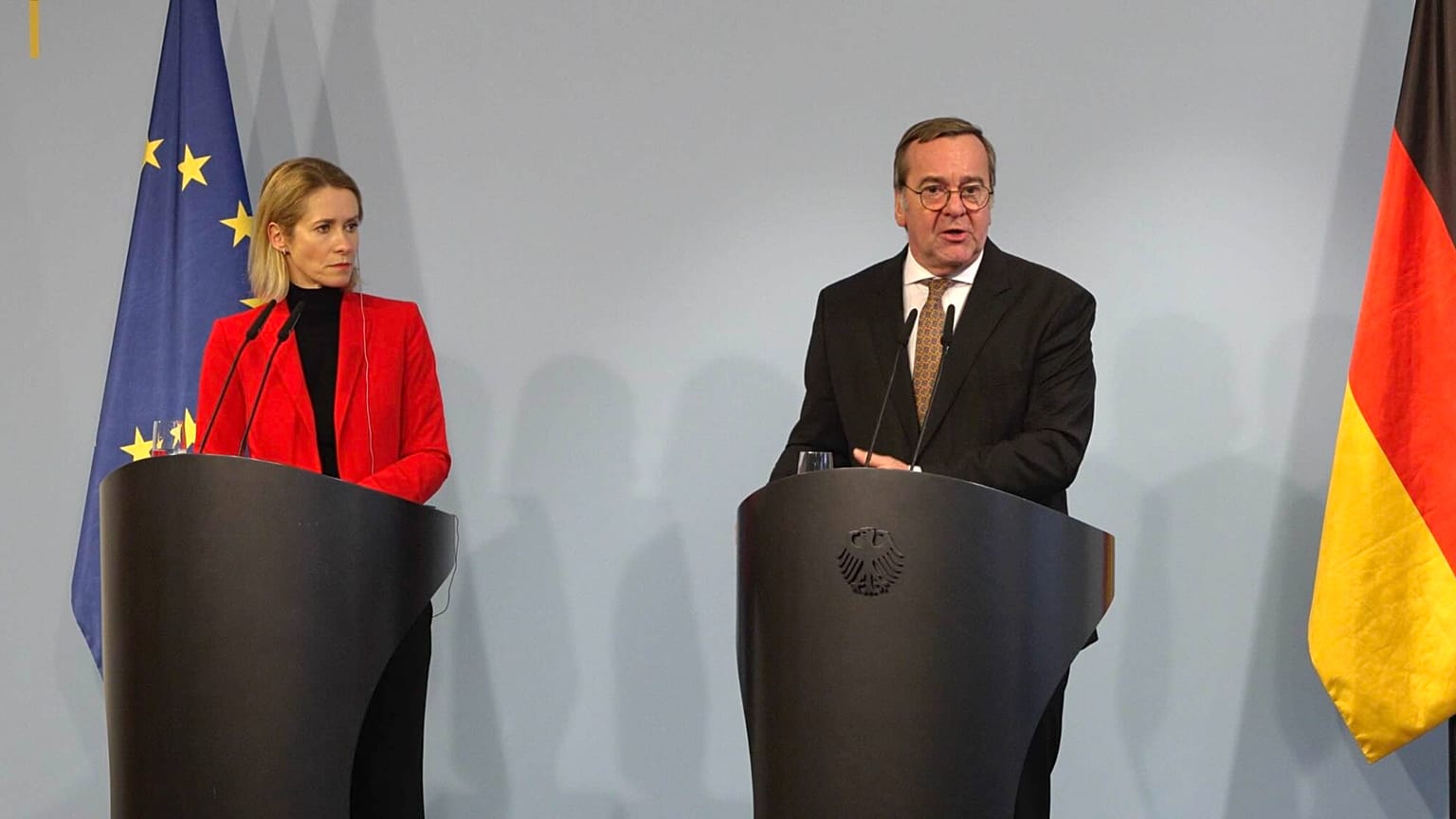














EU foreign policy chief Kaja Kallas held talks in Berlin with German defence minister Boris Pistorius as challenges to the future of European and global security continue to mount.
In her first official visit of the year, EU foreign policy chief Kaja Kallas travelled to Berlin on Tuesday to meet German Defence Minister Boris Pistorius at the German defence ministry.
 ADVERTISEMENT
ADVERTISEMENT
ADVERTISEMENT
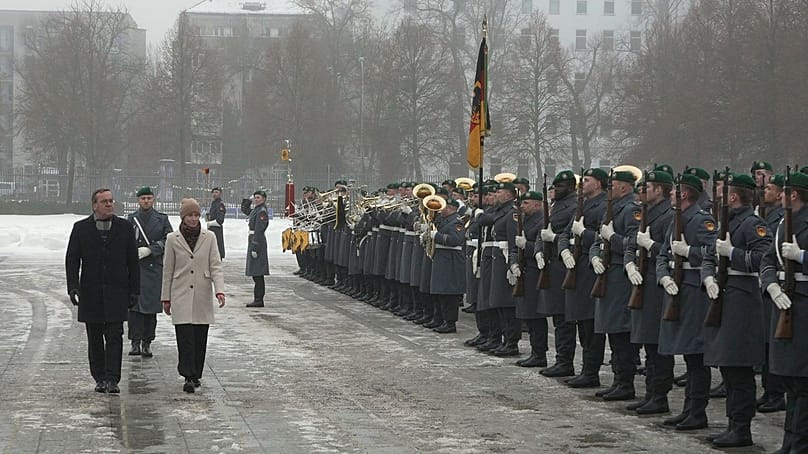
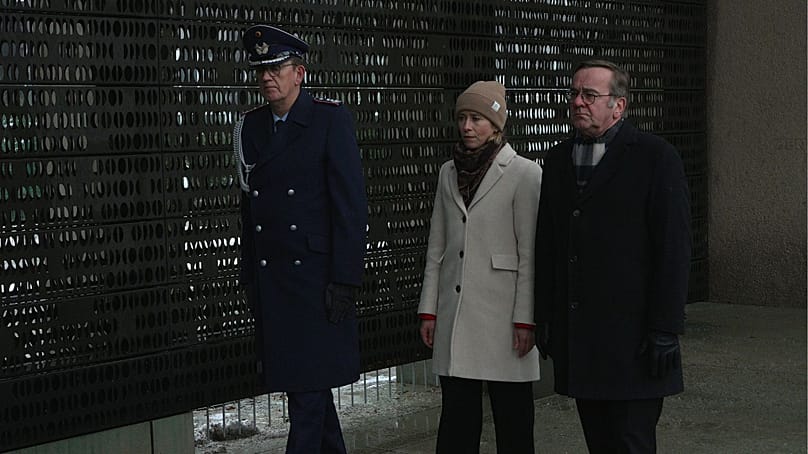
Kallas was welcomed with military honours and a wreath-laying ceremony before she and Pistorius discussed continued financial and military support for Ukraine, security guarantees, and what Pistorius described as "the Arctic question".
The German minister added that efforts to reach a possible ceasefire were ongoing, even though Russian President Vladimir Putin was not involved.
According to Pistorius, Putin has made his position "very clear", including by stating that any Western troops deployed to Ukraine would be treated as "legitimate targets".
'Berlin will not abandon Kyiv'
Pistorius stressed that Germany would continue to support Ukraine and "will not abandon Kyiv", pointing to the €11.5 billion Berlin is providing to Ukraine this year.
According to the Ukraine Support Tracker compiled by the Kiel Institute for the World Economy, Europe has provided more than €130 billion in support to Kyiv since Russia launched its full-scale invasion, up to October 2025.
That figure includes contributions from both EU institutions and individual member states, putting European contributions ahead of those of the United States, which has pledged around €115 billion since February 2022.
Since Chancellor Friedrich Merz took office in May 2025, Germany has stopped publicly detailing its military assistance to Ukraine, citing a policy of strategic ambiguity aimed at preventing Russia from knowing in advance which weapons are being supplied.
The government has nevertheless announced several investments in Ukraine's defence sector in an effort to strengthen the country's arms industry and enable it to produce its own long-range weapons, but details on which companies and weapons systems are involved have not been made public.
To ensure that "every euro delivers maximum impact", Pistorius said closer integration between European and Ukrainian defence industries was essential. Germany, he added, had already gained "positive experience" from this approach and intended to apply those lessons to its own armed forces as well.
The transatlantic question
The EU and its member states have been driven to strengthen their defence capabilities not only by the need to deter a potential Russian attack on NATO territory, but also by growing pressure on the security situation in the Arctic – in particular, the Trump administration's threats to annex Greenland.
As a Danish territory, Greenland falls under NATO's area of responsibility, Pistorius said, stressing that the island "must be protected" and "will be protected" and reaffirming Germany's unwavering commitment to the territorial integrity and sovereignty of the Kingdom of Denmark.
According to a representative Forsa poll commissioned by German magazine Stern, a clear majority of Germans – around 62 per cent – would back military action in an emergency if Denmark were to invoke the alliance’s mutual defence clause. Around a third of those surveyed (32 per cent) oppose such a move, while six per cent expressed no view. Kallas and Pistorius declined to comment on the possible deployment of ground troops or on any potential triggering of the alliance clause.
Kallas and Pistorius didn't comment on the possible deployment of ground troops or Article 5.
Pistorius also acknowledged that Greenland’s vast size and sparse population – around 55,000 people, including an estimated 25,000 to 30,000 Inuit – mean it cannot be treated like a conventional territory.
"You cannot ensure comprehensive protection there through troop presence alone," he explained, saying that security in the Arctic depends on surveillance and patrols, monitoring activity above and below the surface and in the air, intelligence-gathering, and regular exercises on the ground to demonstrate a sustained presence.
For that reason, Pistorius added, safeguarding Greenland and the Arctic is not primarily or exclusively a US concern, but a shared responsibility of NATO and of Europe as a whole.
Kallas also addressed transatlantic relations in her remarks, describing the US as an "indispensable ally" while acknowledging that ties are no longer as strong as they once were.
"Europe will not junk 80 years of transatlantic relations," Kallas stressed, adding that Europe and the US are strongest "when we act together".
At the same time, the US has reportedly recently suggested that Washington would like Germany to assume a greater leadership role within NATO. According to those reports, the US could scale back its role in the alliance and refocus more heavily on the Western Hemisphere – an approach floated by the US National Security Strategy published late last year.
'Europe's strongest conventional army'
Kallas also praised Germany for its high defence spending and its sustained support for Ukraine.
"To keep our countries and people save, Europe must further improve its defence readiness," she stressed.
Since Russia's full-scale invasion of Ukraine, German defence spending has increased sharply under both the previous government led by Olaf Scholz and the current Merz-led coalition.
The stated aim is to make the Bundeswehr fully operational and capable of defending the country, and lawmakers from the conservative CSU party have argued that the Bundeswehr should ultimately become "Europe's strongest conventional army".
For now, however, Germany's armed forces are still falling short of that ambition, facing significant gaps in both equipment and personnel. To speed up the overhaul, the previous government – with backing from the conservative opposition – relaxed Germany's constitutionally mandated "debt brake".
Defence spending above 1 per cent of gross domestic product, as well as a €500 billion special fund, were exempted from the borrowing limits.
On the personnel side, the Bundeswehr is aiming to recruit at least 20,000 volunteers this year under the new military service model, a target recently set by Pistorius. Last year, the number of volunteers stood at just over 12,000.