

















Ukraine is investigating Russia’s use of the Oreshnik hypersonic missile against civilian infrastructure as a war crime, as the UK, Germany and France called the attack “unacceptable”.
The United Kingdom, Germany and France condemned Russia’s attack on Ukraine with the intermediate-range hypersonic ballistic missile Oreshnik, calling it “escalatory and unacceptable”.
 ADVERTISEMENT
ADVERTISEMENT
ADVERTISEMENT
"It was clear Russia was using fabricated allegations to justify the attack," UK Prime Minister Keir Starmer told the French and German leaders in the call, according to the UK government spokesperson.
Overnight on Friday Moscow launched Oreshnik to target critical infrastructure in Lviv in western Ukraine, about 60 kilometres to the border with the EU and NATO.
Ukrainian Foreign Minister Andrii Sybiha said Kyiv would initiate international action in response to the missile's use, including an urgent meeting of the UN Security Council and a meeting of the Ukraine-NATO Council.
“Such a strike close to EU and NATO border is a grave threat to the security on the European continent and a test for the transatlantic community. We demand strong responses to Russia’s reckless actions,” he said in a post on X.
EU foreign policy chief Kaja Kallas said the Oreshnik launch was “meant as a warning to Europe and to the US”.
“Putin doesn’t want peace, Russia’s reply to diplomacy is more missiles and destruction,” Kallas wrote on X.
Russia confirmed the use of Oreshnik, claiming the IRBM attack was “a response“ to Ukraine’s purported attempt to hit Russian President Vladimir Putin’s residence last month – a claim that both Ukraine and the US denied.
The CIA has assessed that Ukraine did not target Putin’s residence, according to US officials. US President Donald Trump also added to assertions that the attack did not take place.
Putin’s aide Kirill Dmitriev, who is also the Kremlin’s key negotiator with the US, responded to Kallas on X — a social media platform officially banned in Russia — with threats and insults.
"Kaja (Kallas) is not very bright or knowledgeable, but even she should know that there are no air defenses against the Oreshnik hypersonic Mach 10 missile," Dmitriev wrote on X.
Russia’s second Oreshnik attack
Oreshnik, which in Russian means “hazelnut tree”, is one of Russia’s newest weapons, and one whose potential Moscow has been keen to promote.
Its missiles can be equipped with nuclear payloads and are designed to hit targets over much greater ranges.
According to initial reports, the Oreshnik used in Friday’s strike carried inert warheads, indicating the launch was largely symbolic.
Moscow used it the same way to strike Dnipro in November 2024 in what was the first-ever deployment of this missile.
Russian state-run media claimed that it would take Oreshnik just 11 minutes to reach an air base in Poland and 17 minutes to reach NATO’s headquarters in Brussels.
The governor of Lviv said on Friday that the Russian strikes had damaged a critical infrastructure facility, but Ukrainian authorities did not provide more details.
Unverified social media reports suggested that Moscow targeted a large underground gas storage facility.
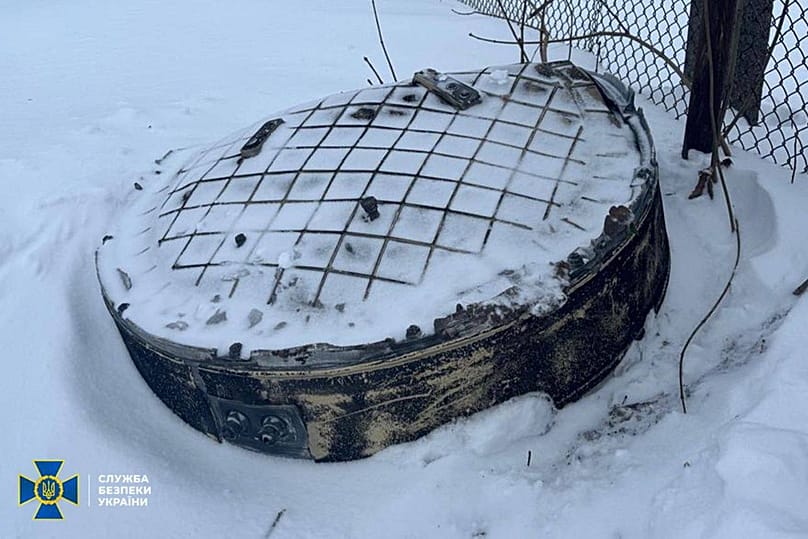
Ukraine’s security service SBU released photos it said showed fragments of an Oreshnik missile recovered in Ukraine’s western Lviv region.
The SBU said it is investigating Russia’s use of the weapon against civilian infrastructure as a war crime under Article 438 of Ukraine’s Criminal Code.
Half of Kyiv left without heating
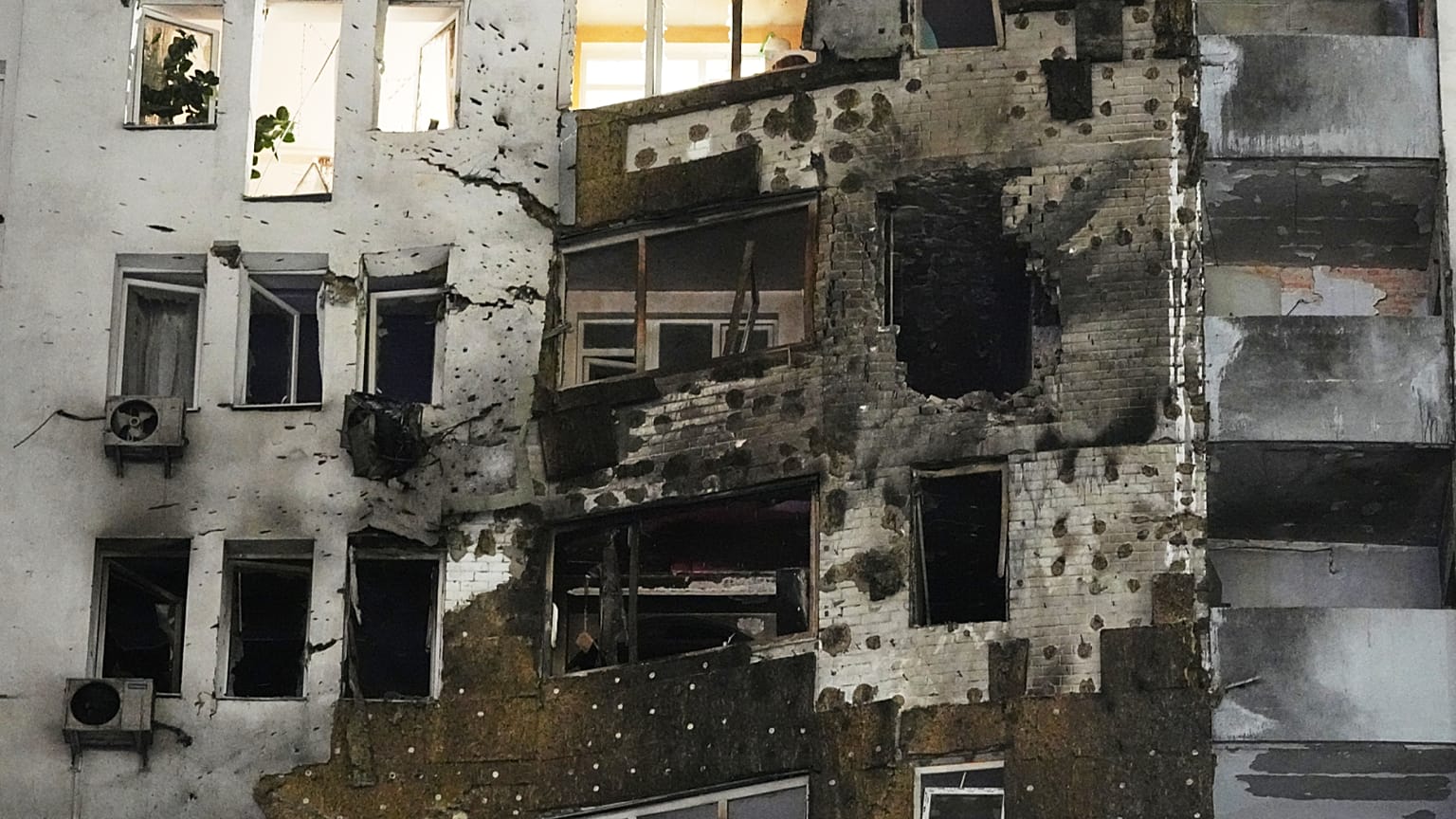
Also overnight into Friday, four people were killed and 24 were injured in the capital Kyiv during a massive missile and drone attack by Russia.
A paramedic was among those killed as a result of a double-tap strike, Kyiv Mayor Vitali Klitschko said.
"One paramedic died, and four were injured while assisting people in the Darnytskyi district," he said.
The Russian attack left about half of Kyiv’s apartment buildings — nearly 6,000 — without heating amid temperatures going down to about minus 16 degrees Celsius Klitschko said.
While municipal services restored power and heat to public facilities, including hospitals and maternity wards, he urged the capital's residents to temporarily relocate if possible.
"We are doing everything we can to resolve this as quickly as possible. However, the combined attack on Kyiv last night was the most devastating for the capital's critical infrastructure," Klitschko said.
The city is also facing water supply interruptions, with emergency power outages being introduced.
"I appeal to the residents of the capital, who have the opportunity to temporarily leave the city for places where there are alternative sources of power and heat, to do so," Klitschko pointed out.