




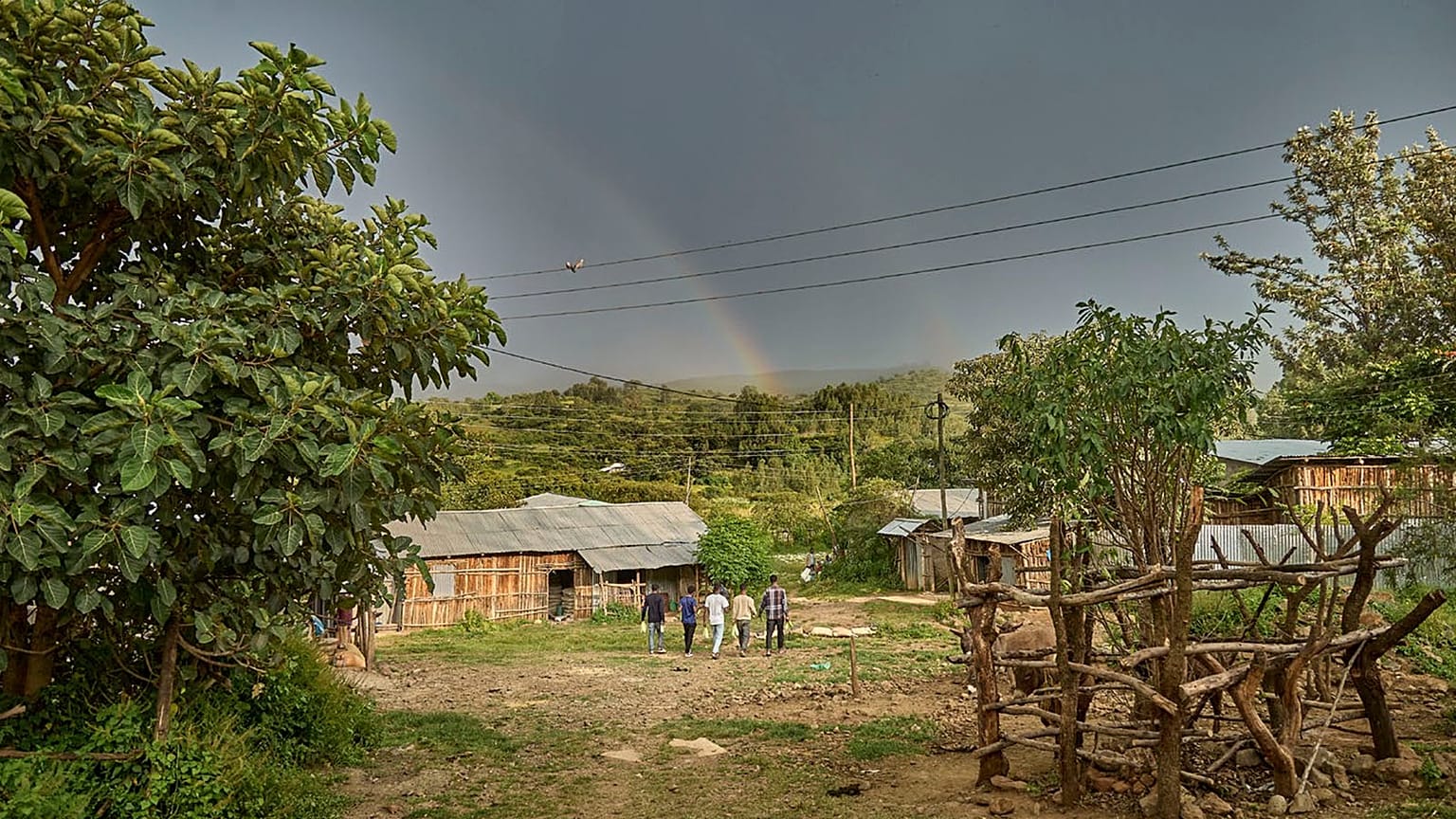













The Arwa Amba in northern Ethiopia has been widely hailed for its radical commitment to equality, peace and pacifism. Now, fighting has erupted on its doorstep, and the community is struggling to stay unaffected.
This tiny utopian community in Ethiopia's Amhara region has spent decades championing equality, peace, and pacifism. Today, it lives under the shadow of civil war in the area.
 ADVERTISEMENT
ADVERTISEMENT
ADVERTISEMENT
The Arwa Amba is a pacifist pocket of around 500-600 people nestled in the northern mountains of Amhara, over 550 kilometres from the capital, Addis Ababa.
Founded in the 1970s, this pioneering community has been praised by organisations including the UN for its efforts to combat poverty, exploitation and gender inequality.
As its prominence grew, the Arwa Amba would welcome thousands of visitors every year and guide them in its foundational ideas, hoping that they would spread far and wide.
However, the COVID-19 pandemic and conflict changed everything.
Visitor numbers collapsed, and fighting between the armed group Fano and federal troops from the Ethiopian National Defence Force (ENDF) has engulfed much of the Amhara region over the past two years.
"The civil war is near and all around our area, which is still worrying," Gebeyehu, a member of the Arwa Amba's "welcoming committee," told Euronews from Ethiopia.
"It is so disturbing."
Now, Arwa Amba members are loath to even leave the village for fear of violence. Its founder Zumra Nuru and others have been openly targeted, too.
"Zumra’s son is in Addis because they tried to kidnap him. There are many bandit groups," explained Claudio Maria Lerario, a photographer who spent months living in Arwa Amba documenting daily life.
Other members of the community have been kidnapped, with no side taking responsibility. Schools have had to close. This has been especially hard for a community founded on principles, including children’s rights and education.
What is the Arwa Amba?
The community’s founder, Zumra Nuru, was born in 1947 in Ethiopia. He has often said that from the age of four he was gripped by a single question: why should one person exploit another? Watching his mother work late into the night while his father rested, he later recalled, only deepened that sense of injustice.
"I have no other ideas to discuss, this is the only one. My entire being has been possessed by these thoughts and my mind dwells in continuous contemplation," he said in an interview in 2018.
By the 1970s, he had gathered a small band of followers around his vision, but they remained spread out across the country for years.
It was not until the following decade that they coalesced in one place: the village of Arwa Amba. From here, a coherent set of utopian principles was set out, which Gebeyehu and his colleague Aleme outlined to Euronews.
Respecting women's and children's rights, taking care of people who are sick or unable to work, eradicating "bad speech and bad deeds", and treating all human beings as "brothers and sisters". There is no religion in Arwa Amba, not even a cult of personality.
"We are equal in the work we do, in managing wealth, and in making decisions. There is no difference in status between men and women in the Arwa Amba community," Gebeyehu said.
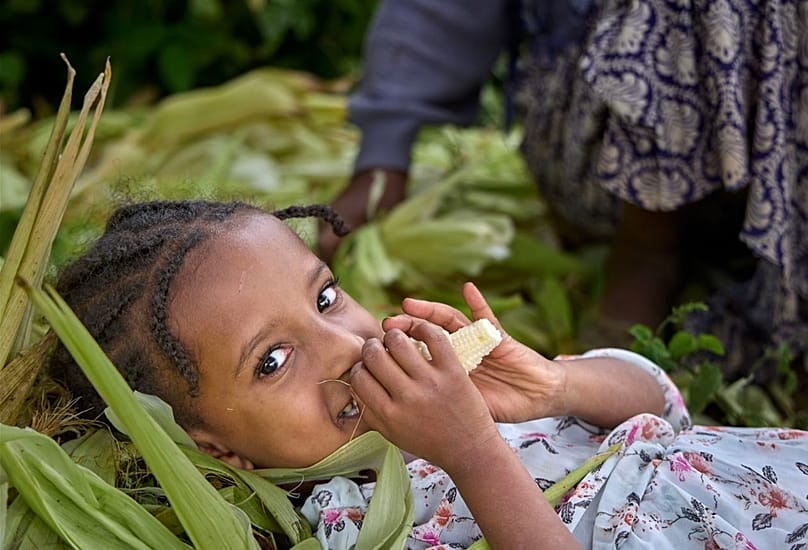
The community's commitment to these guiding principles has brought many people to the village over the years, including Ethiopian-American filmmaker Salma Mekuria.
"The reason I'm making a film (about them) is that these people who come from virtually nothing, no education, have an idea that it is possible to choose the kind of society you want to live in and work hard to build it," she told Euronews from Martha’s Vineyard, a wealthy Massachusetts island, where she now lives.
According to the documentarian and community members interviewed by Euronews, many people who grew up in Arwa Amba leave for university — a testament to the village's strong education system.
However, they later choose to return rather than pursue white-collar professional careers.
"It's literally a dirt-poor village, dusty," Mekuria said. "But there are all these young people running around with degrees doing work there. Maybe it’s not in their fields, but the work has no hierarchy."
Lerario elaborated on this point, saying: "You have no poverty at all. Everybody has a good house," he says, comparing the community to the wider country where the poverty rate has risen to 43%.
"Everybody has a good job. Everybody has a good education system for free. A welfare system. Just think of a Scandinavian country," he added.
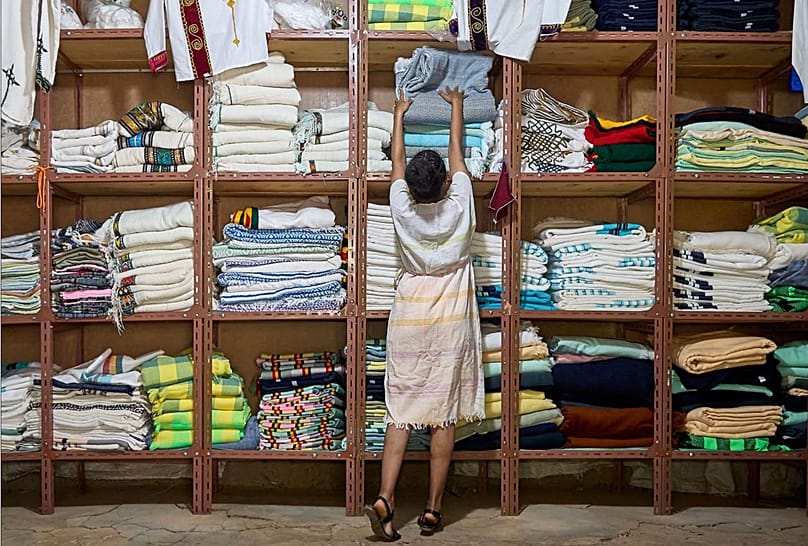
Unlike Scandinavia, the Arwa Amba has few natural resources to build a sovereign wealth fund. But it has also relied on oil, albeit of the cooking variety. This type of trade had allowed the community to build up healthy finances to fund their various forms of social security.
However, not everyone has been so enthused by Arwa Amba's model.
The perfect storm
Gebeyehu said that "most of the principles came to life just by challenging traditional Ethiopian culture, especially in rural Ethiopia."
This has at times put the community at loggerheads with significantly more conservative elements of Ethiopian society, made more remarkable by the fact that the Arwa Amba community numbers just a few hundred among Ethiopia's total population of more than 135 million.
Ethiopia's multi-ethnic society has witnessed profound violence in the decades that the Arwa Amba has existed.
The community has not always managed to stay out of the fray. In the 1980s, the village was forced to disband for years after the communist Derg regime accused it of supporting the opposition.
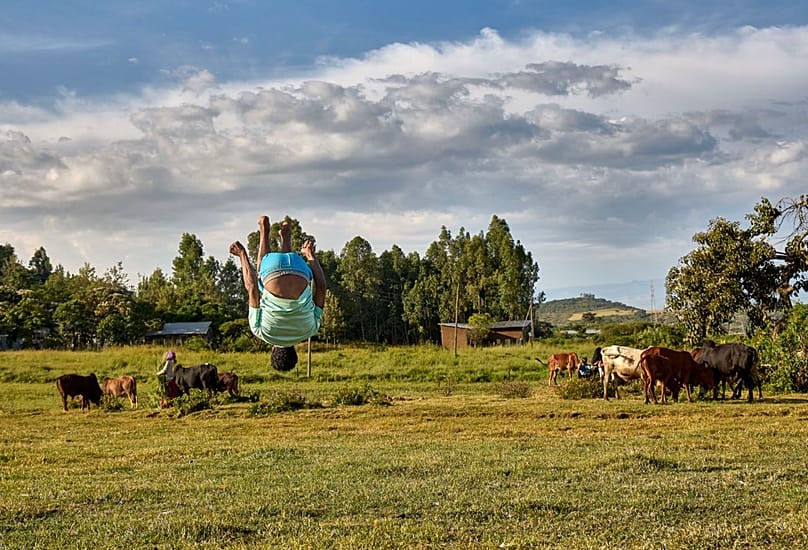
Aleme said that "there are some individuals who historically disliked our community, starting from its establishment."
"These individuals did not think well of us. During unrest, they tried to report false and distorted information to the government so that the government would take action against the community,” he said of tensions with the Derg regime.
More recently, the deadly conflict between federal forces and the Tigray People's Liberation Front (TPLF) in northern Ethiopia between 2020 and 2022 killed tens of thousands. Some estimates put the number at 600,000. Few people wanted to risk travel.
It also coincided with the pandemic. Borders were sealed and travel ceased. People stopped arriving at the village. Even as restrictions of the pandemic eased, fresh conflict erupted between federal forces and members of the ethno-nationalist Fano militia.
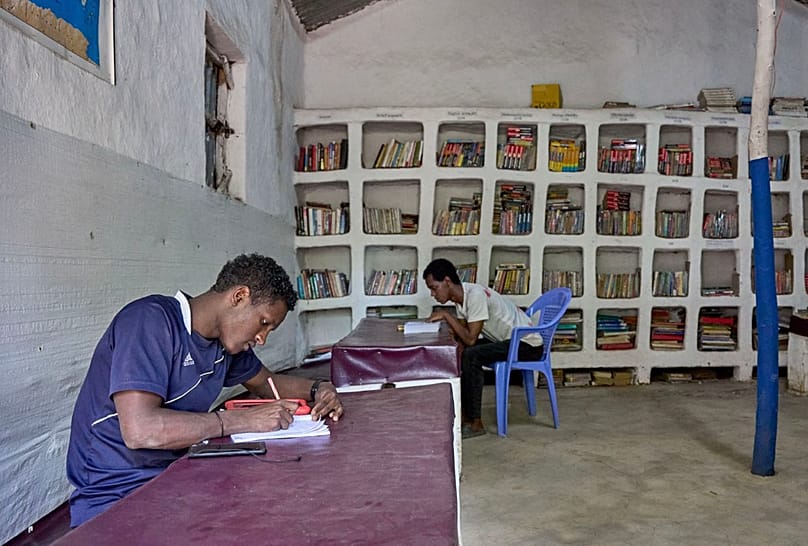
This time, the fighting was right on Arwa Amba's doorstep. Residents report regularly hearing the gunfire.
"Visitors have been almost nil for the past five to six years. There was an average of 14,000 every year visiting the community before," Gebeyehu lamented.
"Our movements are limited — going to the markets for the purchase of raw materials for our products and for the sale of our products are very much hindered."
He and Aleme, however, remained steadfast in their belief in the community's guiding principles and how they could help resolve conflicts in their country.
"If we could live by considering all human beings as sisters and brothers, there would be no difference or hostility among human beings," Gebeyehu added.