


















Poland is strengthening its presence in the Baltic Sea by investing in modern submarines. In an exclusive interview with Euronews, Lieutenant General Jaroslaw Gromadzinski stressed the importance of this decision for the security of the region and Europe.
Poland has agreed to purchase three Swedish submarines in a deal worth approximately 10 billion zloty (€2.3 billion) as part of its long-awaited Orka naval modernisation programme.
 ADVERTISEMENT
ADVERTISEMENT
ADVERTISEMENT
Deputy Prime Minister and Defence Minister Władysław Kosiniak-Kamysz announced Poland will acquire A26 Blekinge-class submarines from Swedish manufacturer Saab, with the first vessel due to arrive in 2030.
"Sweden presented the best offer according to the team and this was confirmed by the Council of Ministers in an objective analysis of all criteria, both arising from delivery time, price, value, ability to operate especially in the Baltic Sea," Kosiniak-Kamysz said.
Seven companies from six countries participated in the tender, including Germany's ThyssenKrupp, Italy's Fincantieri and France's Naval Group.
Sweden has pledged technology transfer and investment in Poland's shipbuilding industry to ensure the country can independently service and repair the vessels, according to the Defence Ministry.
The submarines will be able to dive to over 200 metres and operate autonomously for at least 30 days. They will be equipped with torpedoes and missile launchers capable of striking coastal and inland targets.
Polish Navy's fleet outdated?
The purchase addresses critical gaps in Poland's naval capabilities. The Polish Navy currently operates about 40 vessels, of which nearly 30 are combat ships stationed mainly in Gdynia and Świnoujście.
Their technical condition has raised concerns for years, as the naval forces have long been the least well-funded branch of Poland's military.
Poland's only operational submarine, ORP Orzeł, was built in the Soviet Union in 1985 and spends more time in overhaul than at sea.
The fleet's largest vessels are equally outdated. The Oliver Hazard Perry frigates have more than 45 years of service, while the corvette ORP Kaszub is 38 years old.
Most other ships serve mainly auxiliary functions, including numerous minesweepers and patrol vessels. The Kormoran II class mine destroyers remain the most modern element of the naval forces.
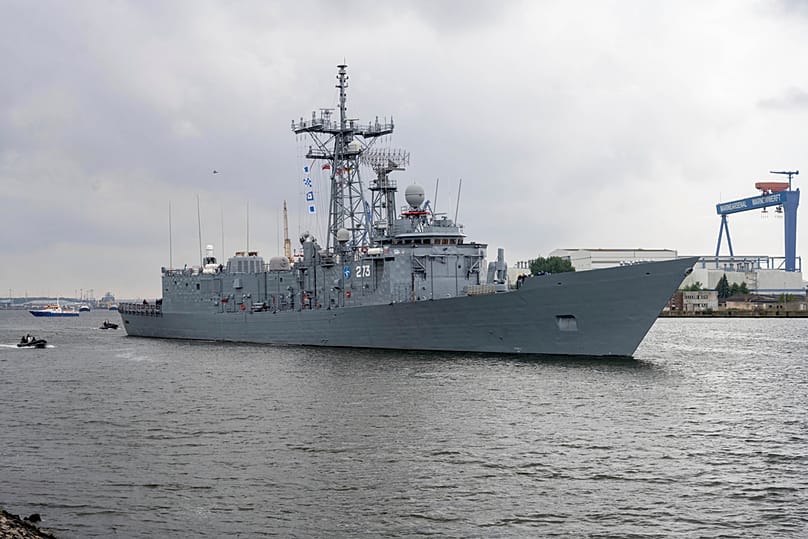
Retired Lieutenant General Jarosław Gromadziński told Euronews the Defence Ministry's decision was "very good", noting that three modern units guarantee continuity of combat capabilities.
"I am in favour of the contract with Sweden because the A26 submarine has a modular design that can be configured according to the needs of the ordering party," Gromadziński said. "This ship has the advantage of being designed with the specifics of the Baltic Sea in mind."
However, he noted the Navy has lacked strategic vision compared to Poland's land forces.
"We have the largest land army in Europe, but this is mainly due to the fact that we are bordering an aggressor. In my opinion, we have not been fully convinced of what role the Navy should play," he said.
Baltic Sea of strategic importance
Securing the Baltic Sea is crucial for Poland's economic and energy security.
Three Orlen oil platforms operate at sea, while Gdansk's oil port handles supplies for refineries in Poland and Germany.
The offshore wind energy sector is also developing, with the first 1.14 gigawatt farm due to be commissioned in 2026 some 23 kilometres offshore. It will provide energy for 1.5 million households and reduce CO₂ emissions by 2.8 million tonnes annually.
The LNG terminal in Świnoujście has a capacity exceeding 8 billion cubic metres per year, while the Baltic Pipe pipeline can transport 10 billion cubic metres. According to analysts, both investments cover Poland's full annual gas demand.
Numerous power and telecommunications cables also rest on the Baltic seabed. Poland operates three major container terminals: Baltic Hub in Gdansk, BCT and GCT in Gdynia, and facilities at the Szczecin-Świnoujście port complex.
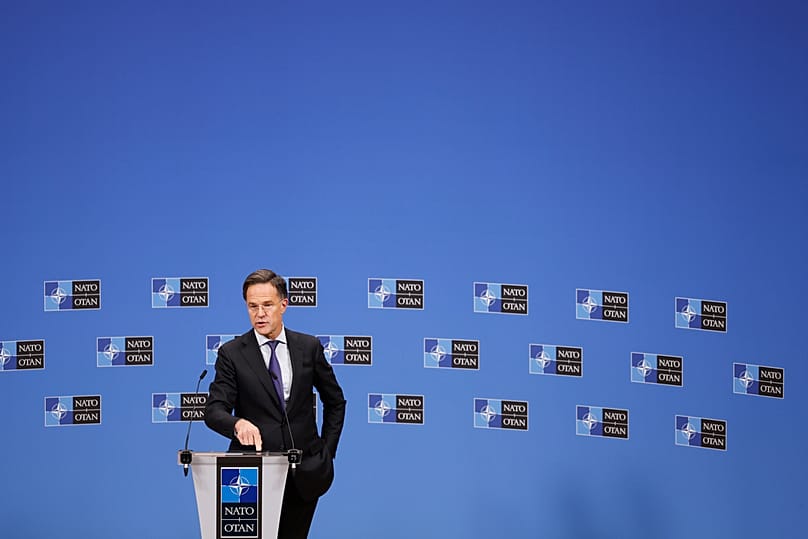
On 14 January, NATO Secretary General Mark Rutte launched the Baltic Sentry mission to counter Russian sabotage activities in the Baltic Sea and limit operations of the so-called shadow fleet.
Russian tankers, often sailing under third-country flags, have been transporting oil to India despite sanctions. There have also been reports of damage to undersea cables.
Gromadziński warned that continued underinvestment in the fleet increases risks to key facilities.
"We need to build two or even three lines of protection. Firstly, we need reconnaissance in various forms: submarines and surface ships, sensor networks and reconnaissance aircraft," he said.
"This is a very complex system that is not economically viable for one country to maintain. However, in cooperation with Sweden, Finland, Denmark or Germany, we could have a technological, informational and strategic advantage."
The second line of defence should be anti-aircraft systems on ships and platforms, while the third should be kinetic strikes against enemy objects in the Baltic, he added.
Russian Baltic Fleet and NATO
The Russian Baltic Fleet is stationed in Baltiysk at the entrance to the Vistula lagoon and in the Gulf of Finland. It includes a submarine, a destroyer, two frigates, four corvettes and a dozen small missile vessels and landing craft.
The accession of Finland and Sweden to NATO has shifted the balance of power in the region. Combined with support from Poland, Germany and Denmark, Russian vessels now face a much more difficult strategic position.
Ships stationed in the Gulf of Finland are particularly vulnerable, as the narrow body of water can be quickly closed off with mines or anti-ship missiles during conflict.
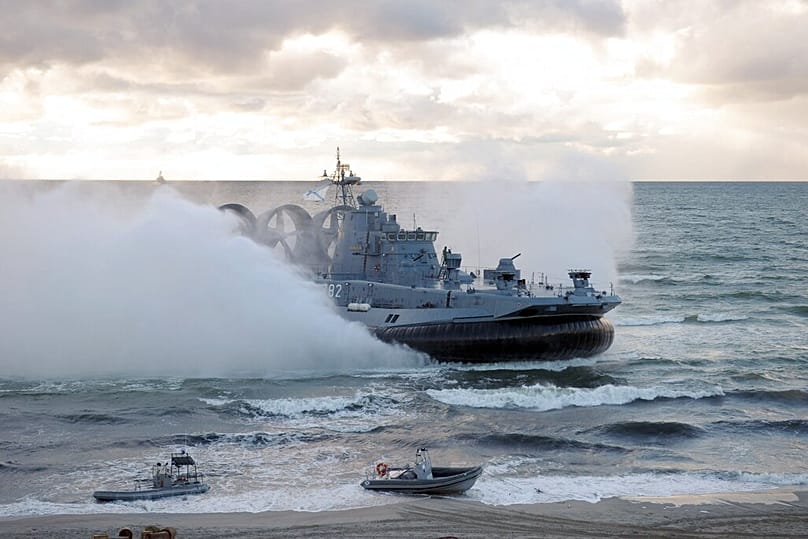
Strategic islands, especially Gotland, are also crucial. Control of Gotland determines dominance in the Baltic, prompting Sweden to increase its military presence there.
"Russia maintains a fleet in the Baltic, and our task is to lock it in the ports so that, if necessary, it provides an easy target for artillery. In the event of a conflict, we must not allow these vessels to go to sea," Gromadziński said.
He recommended relocating Poland's main naval defence forces and command to Świnoujście in the west, out of reach of potential eastern threats.