




























European stock markets lost their enthusiasm by the early afternoon following a positive trend in the first half of the trading lead by strong performances in Asia. Meanwhile, oil prices are rising further.
European stock markets turned early gains into losses by early afternoon, following a rally in Asian markets, as investors searched for direction nearly a week after the United States and Israel launched strikes on Iran that sent global markets on a rollercoaster.
 ADVERTISEMENT
ADVERTISEMENT
ADVERTISEMENT
By 2 p.m. CET, Germany’s DAX was down by 0.2%, similar to the CAC 40 in Paris and Britain’s FTSE 100.
Madrid’s IBEX stood out by gaining 0.3% as the European benchmark European Stoxx 600 was down by a few points.
Before noon, European trading followed strong gains in Asia, where South Korea’s Kospi jumped by more than 9%, recovering much of Wednesday’s 12.06% fall.
“A decent showing on Wall Street last night and a solid performance from Asia on Thursday helped to spur part of Europe into a higher gear,” said Dan Coatsworth, head of markets at AJ Bell, commenting on the morning trade.
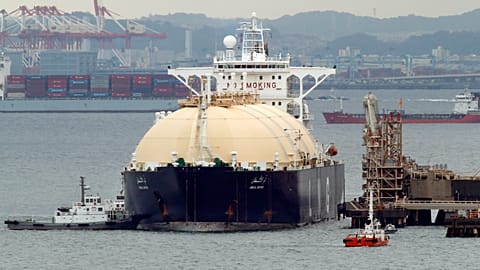
Uncertainty about the war in the Middle East has continued to rattle financial markets, with investors closely watching movements in the oil price.
Crude prices continued to rise. US benchmark WTI was trading 3% higher at around $76.8 a barrel, while the international benchmark Brent crude was up 2% after 2 pm CET.
“Brent crude continued to move higher, nudging above $83 per barrel and stoking fears that energy bills will go through the roof,” Coatsworth said.
“Oil is so important to the world economy and to see the price rise so quickly in just a week could leave investors feeling dazed and confused.”
He added that the situation in the Middle East was unfolding rapidly, making it difficult for investors to judge whether markets were facing a prolonged energy crisis or “just a short, sharp shock”.
Meanwhile, US futures slipped as Iran launched more missiles at Israel on the sixth day of the conflict.
The latest escalation included Iranian attacks on Israeli and American bases. Iran warned the United States would “bitterly regret” torpedoing an Iranian warship in the Indian Ocean, while a religious leader called for “Trump’s blood”.
Israel said it had begun a “large-scale” attack on Tehran.
On Wednesday, US stocks rose as oil prices steadied, albeit temporarily.
Investor sentiment was also supported by a report showing growth in US businesses in the real estate, finance and other services sectors accelerated last month at the fastest pace since the summer of 2022.
The S&P 500 rose 0.8%, erasing much of its losses since the conflict with Iran began.
The Dow Jones Industrial Average added 0.5%, while the Nasdaq Composite climbed 1.3%.
Another report suggested US private-sector employers increased hiring last month, a potentially positive signal ahead of a broader US government labour market report due on Friday.
Investors remain concerned about how long the conflict could last, how much inflation may rise due to higher oil prices, and what impact that could have on corporate profits.
Gains in major technology companies also lifted Wall Street.
Amazon rose 3.9%, while Nvidia added 1.7%. As two of the largest companies in the US market by value, their movements have a significant impact on the S&P 500.
Wednesday’s strong economic data was also welcome news for the Federal Reserve, which is trying to keep the labour market strong while bringing inflation under control.
However, the jump in oil prices could complicate that task by pushing inflation higher.
In other dealings on Thursday, gold trade was slightly down by early afternoon, losing 0.3% and traded at $5,120 an ounce.
The US dollar traded at 157.64 Japanese yen, while the euro slipped to $1.1623 from $1.1636.
Analysts said the dollar has strengthened partly because the US is seen as facing less direct risk from the conflict than other countries.