


















Leaders from across Central Asia gathered to discuss progress in universities, highlight new partnerships and explore how strengthened cooperation can improve academic quality and research opportunities.
Uzbekistan’s capital Tashkent has taken centre stage in Eurasia’s rapidly evolving higher-education landscape, hosting the inaugural QS Eurasia Forum 2025. It was a gathering that signalled Central Asia’s growing ambition to shape global academic trends, rather than simply follow them.
 ADVERTISEMENT
ADVERTISEMENT
ADVERTISEMENT
Organised by QS Quacquarelli Symonds, the body behind one of the world’s most influential university rankings, the event brought together more than 300 leaders from universities, government and industry across Central Asia, Europe and the Middle East.
The forum underscored a message repeated throughout the day: Central Asia is no longer a peripheral player in global education — it is becoming a region to watch.
Uzbekistan’s rising profile in global education
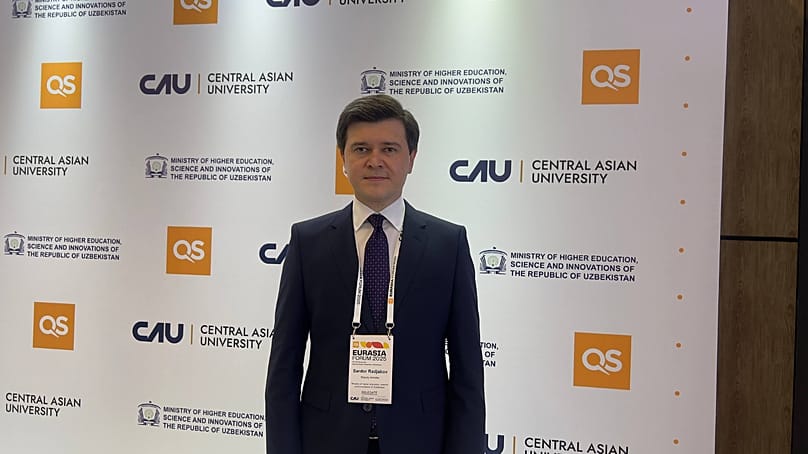
Uzbekistan's transformation in higher education was a prominent feature. Sardor Radjabov, first deputy minister of higher education, science and innovations, detailed reforms that have reshaped the sector.
The country has expanded international partnerships with institutions from the UK, US, South Korea, Japan, Singapore, Turkey and the EU. Seven Uzbek universities now appear in the latest QS World University Rankings, three in the top 1,000.
More than 86 internationally accredited academic programmes operate across over 20 universities. The higher education system has tripled from 69 institutions a decade ago to 204 today.
New partnerships take shape
Kazakhstan's Minister of Science and Higher Education Sayasat Nurbek praised Uzbekistan's progress and urged closer regional cooperation.
He said Eurasia has a "historic window of opportunity" to build a stronger academic space, pointing to Uzbekistan's partnerships with around 20 British universities as a model.
Azerbaijan's Minister of Science and Education, Emin Amrullayev, said student numbers in his country have nearly tripled, though raising academic quality remains the ultimate goal.
The forum produced new cooperation agreements. An Uzbekistan-Germany Rectors' Forum yielded more than 50 agreements, with similar high-level meetings held with China and Japan.
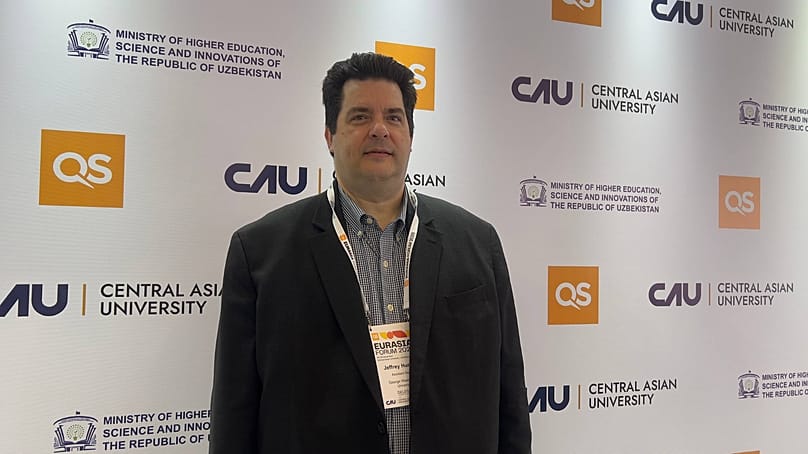
Jeffrey Hunter of George Washington University said his institution is pursuing memorandums of understanding, exchange agreements and joint programmes, citing Uzbekistan's rising academic standards.
Svetoslav Spassov, Professor at the University of National and World Economy in Bulgaria, invited Uzbek students to apply for a fully funded IAEA-supported Master's in Nuclear Security.
QS President Nunzio Quacquarelli said Central Asian universities listed by QS have grown from 14 to 32 in recent years, with Uzbekistan jumping from zero ranked universities to seven.
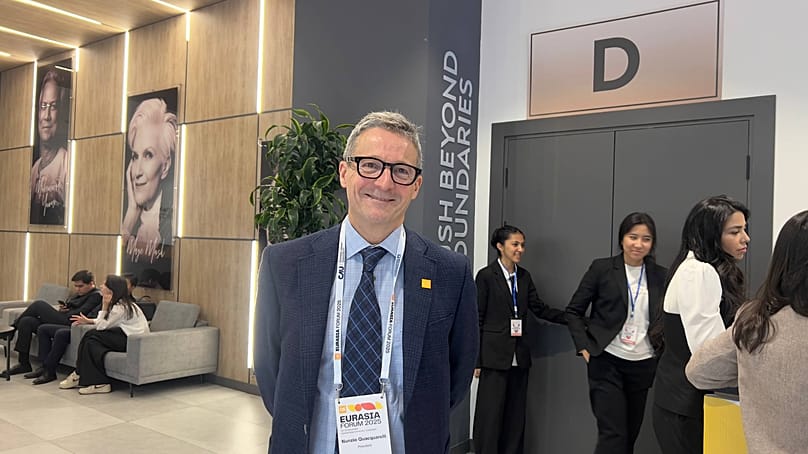
He said Kazakhstan, Uzbekistan and Azerbaijan are improving research output, teaching quality and curriculum standards, opening new opportunities for joint degrees, student mobility and research cooperation.