




























From AI-powered appliances and smart beds to connected pet gadgets and robot dogs, Euronews went to IFA 2026 in Berlin to see how new technology could reshape life at home.
Artificial intelligence is advancing at a rapid pace, and its growing role in everyday life is on full display at this year's IFA in Berlin, the world's largest consumer electronics and home appliances trade fair.
 ADVERTISEMENT
ADVERTISEMENT
ADVERTISEMENT
Under the theme "The Future is Now," the event showcases how emerging technologies are reshaping daily life, from mobility to the increased use of AI in devices and services, with more than 1,900 brands from 49 countries represented at IFA 2026.
Nowhere is this transformation more visible than in the home. The industry is increasingly looking beyond the "smart home" towards what it describes as the "intelligent home" where technology does more than simply respond to commands, learning, adapting to and anticipating people's needs.
With IFA opening its doors to the public today, Euronews took a closer look at some of the innovations on display to explore one key question: What could the home of the future look like?
A simpler everyday life?
For years, one of the main promises of smart home technology and AI has been to make everyday life easier. At IFA 2026, that remains a major focus, with home appliances on display across the exhibition designed to take over tasks that many people would rather not do themselves.
But the next step goes beyond simply doing the work. Manufacturers are increasingly developing appliances that can also help with the planning and decision-making behind everyday household tasks.
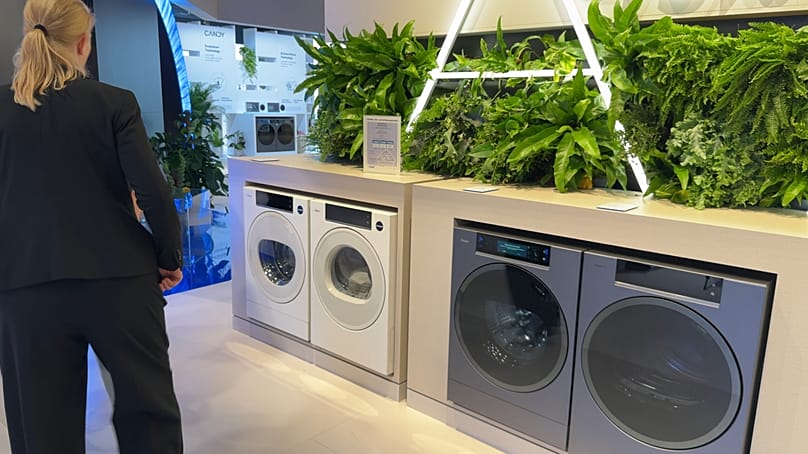
One example is a washing machine presented by Haier. Equipped with an integrated camera and AI, the appliance can detect what has been put into the drum and alert users if, for example, a red sock has accidentally ended up among white clothes.
The idea is to remove some of the thinking involved in sorting laundry and potentially save a white shirt from the classic red-sock-turns-it-pink mistake.
For Neil Tunstall, CEO of Haier Europe, cooking is another area where this shift is becoming visible. He points to appliances that can identify what has been placed inside appliances and adjust how food is cooked, reducing the uncertainty for people who may not be confident about choosing the right settings or knowing when a dish is ready.
"The product now will do that for you. And that hopefully means then that we can actually enjoy eating much more at home," Tunstall told Euronews.
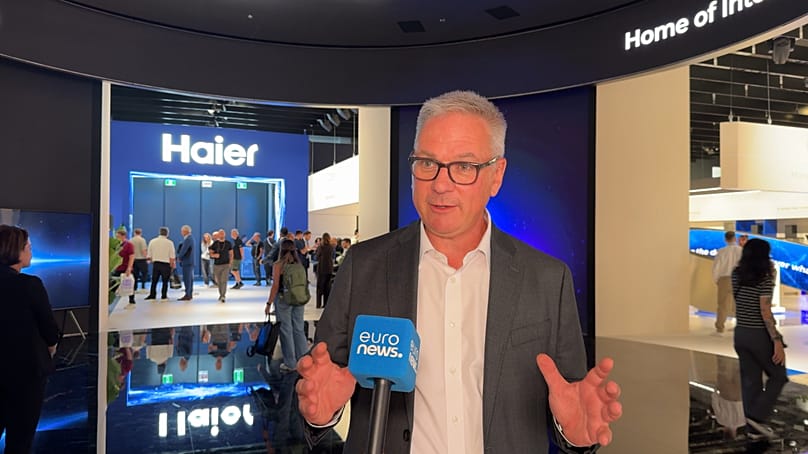
"We are talking less about products, much more about experiences, we're talking less about consumers trying to think about things and the products and the system itself thinking, making life much, much smarter," he continued.
Helping consumers spend less time thinking about everyday tasks is also a focus for US-based company Cozyla, particularly when it comes to planning and organising a household with several people.
At IFA 2026, the company is demonstrating how AI could be used to coordinate different aspects of everyday life, from family schedules and work to meal planning.
Its stand takes visitors through a simulated day in a connected home. Interactive displays and digital calendars are used to coordinate routines and schedules, while the kitchen setup shows how a recipe can be scanned and used to help plan a meal.
The demonstration then moves into the living room, where the system is used to organise tasks and coordinate plans between family members, before ending with a bedtime routine.
Smarter ways to relax
But the technology does not switch off when everyone goes to bed.
Hong Kong-based BestQi, founded in 2020, is showing how connected technology could extend into the bedroom. Its AMADA Smart Adaptive Sleeping System combines an adjustable bed with a mattress that uses sound and vibrations and can be controlled through an app.
Each side of the bed can be adjusted independently, allowing two people to choose different positions and settings. Users can also control massage functions, vibration intensity and programmes designed for activities such as sleeping, relaxing or reading.
For those looking to take relaxation a step further, South Korean company Bodyfriend is bringing more technology into the traditional massage chair.
Its Quantum Beauty Capsule combines a full-body massage chair with LED modules designed for the face and scalp. Another model, the Davinci AI, incorporates a fingertip PPG sensor that measures biometric data including heart rate, heart rate variability and blood oxygen saturation.
The company says the system uses changes in these measurements to provide users with information about their physical condition, stress and recovery.
Bigger screens, fewer distractions
But relaxing at home is not only about switching off. For many people, it also means entertainment.
Over the past few years, screens have become bigger, picture quality has improved and home sound systems have become more powerful. Now, as with other household technology, the focus is increasingly shifting from individual devices towards a more connected experience.
TCL, one of the major brands exhibiting at IFA 2026, is showing how that could work across different forms of entertainment. Its displays include a gaming setup designed to bring screens, sound and other connected devices together into a single environment.
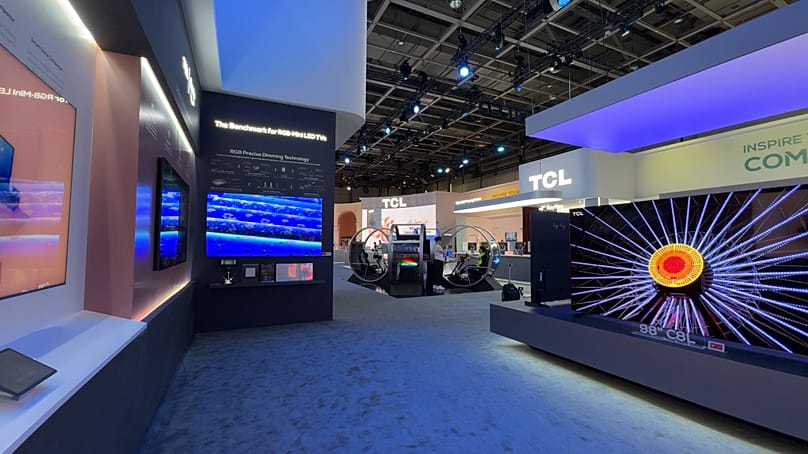
But alongside making home entertainment bigger and more immersive, TCL is also exploring the opposite idea: using technology to help people disconnect from the constant stream of screens, notifications and other distractions around them.
One example is the company's NextPaper technology, which allows users to switch their phone into a simplified e-reader mode. TCL says the display is designed to reduce blue light and eye strain, while the mode also limits some of the phone's functions.
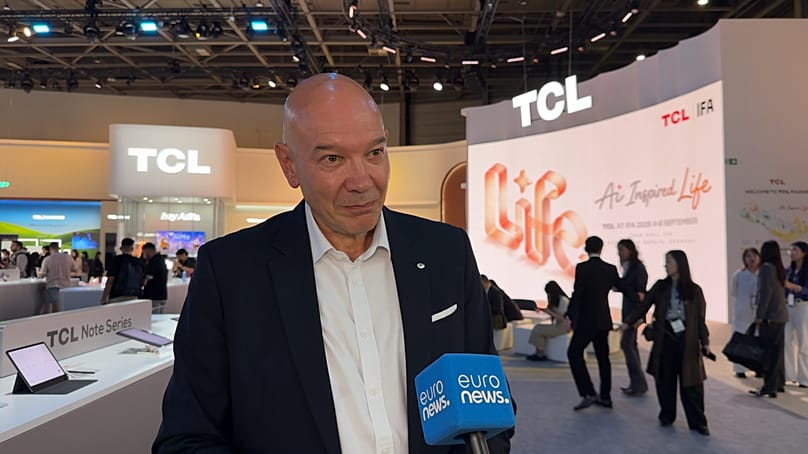
"When you want to read on a weekend, you don't want to have the disturbance of every app that gives you a notification," Stefan Streit, Chief Marketing Officer TCL Europe, told Euronews.
Smart homes go beyond humans
But the idea of a more connected home does not stop with the people living in it. Even the smallest members of the household have been considered at this year's IFA, with pets also being brought into the increasingly connected home.
Singapore-based Petgugu, for example, is presenting its own ecosystem of connected pet devices. These include a self-cleaning smart cat toilet as well as a robot designed to move around the home, clean up pet hair and interact with animals when their owners are away.
And for those who would rather avoid the need for a cat toilet altogether, there is a more radical option on display at IFA: a robot dog.
One example is the MagicDog Y1, developed by a Chinese robotics company founded in 2024. Unlike the pet-focused devices, however, the four-legged robot is not primarily designed as a companion. It is intended to follow people across different environments, carry equipment and use its integrated cameras and sensors for tasks including monitoring and security.
Could intelligent homes lead to more human connections?
So, what could the home of the future look like?
If the technologies on display at IFA 2026 are any indication, the biggest change may not be a single new device, but how different devices work together.
The key difference from many smart products already on the market is the combination of connectivity and AI. Instead of operating individual devices separately, the aim is to create an ecosystem in which appliances and services communicate, share information and increasingly anticipate what needs to be done.
In that vision, people would spend less time managing individual devices or organising everyday household tasks themselves. Instead, they would become part of a connected system designed to take over some of that work and planning.
Whether that vision becomes reality remains to be seen. But the promise being presented at IFA is clear: technology that requires less attention, with the goal of leaving people more time for family, friends and the things they actually want to do.
IFA lasts until 8 September
Visitors can get a glimpse of what that future could look like until 8 September. Different areas of the exhibition focus on specific aspects of technology and everyday life, including the Beauty Hub, where products can be tried out with experts on hand, and the Creator Stage, which hosts a range of live shows and events.
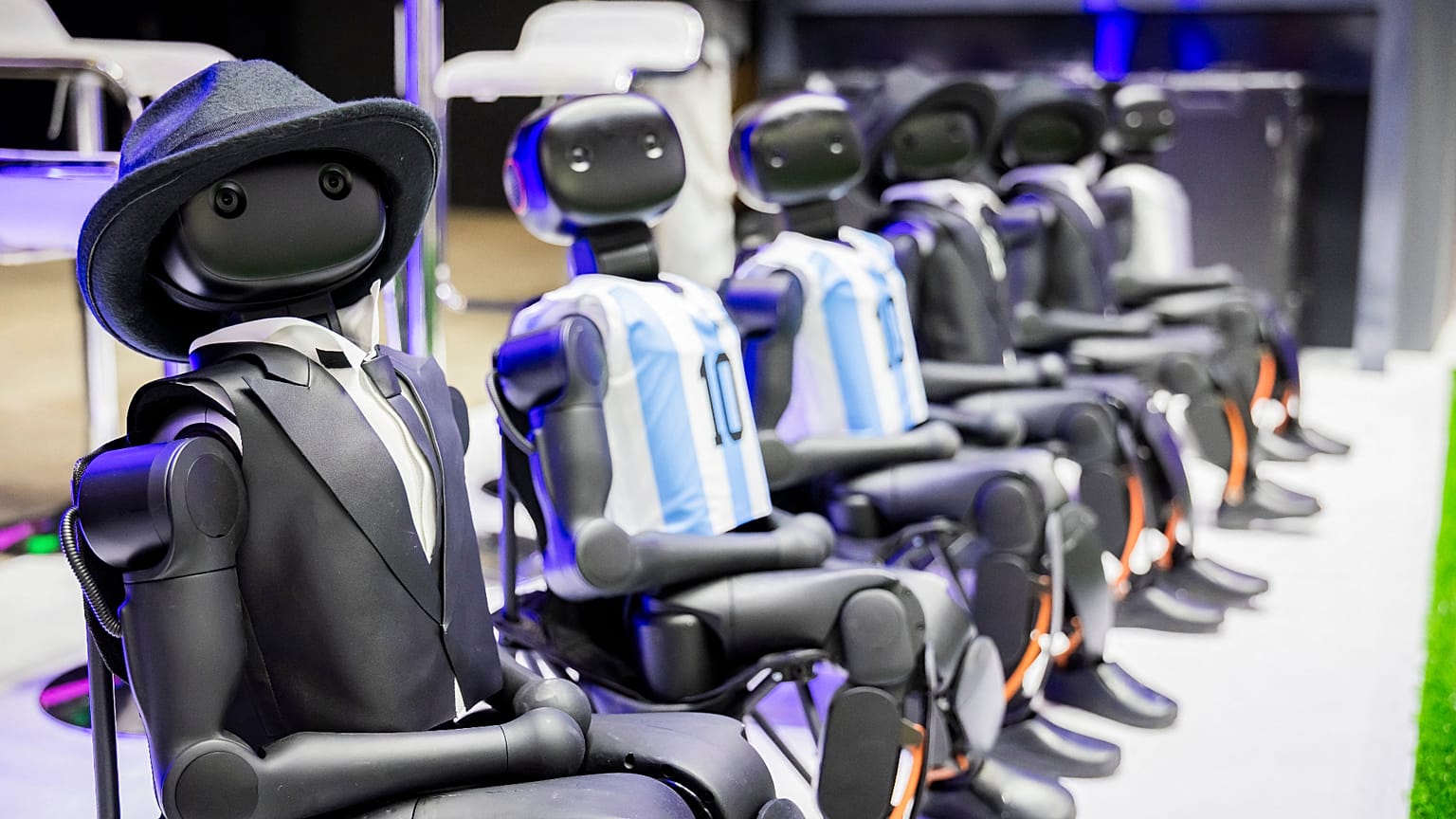
Another highlight is a dedicated robot show, bringing together humanoid robots and other robotics innovations from around the world.
With so many technologies and ideas on display, IFA offers a look at how everyday life at home could change in the years ahead. Ultimately, however, which of them become part of our homes is a choice everyone will have to make for themselves.