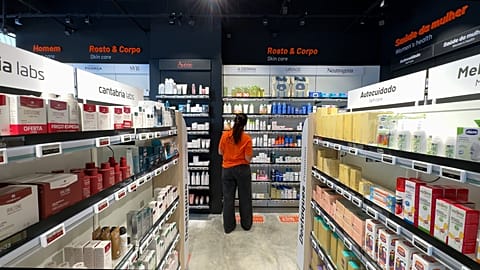
















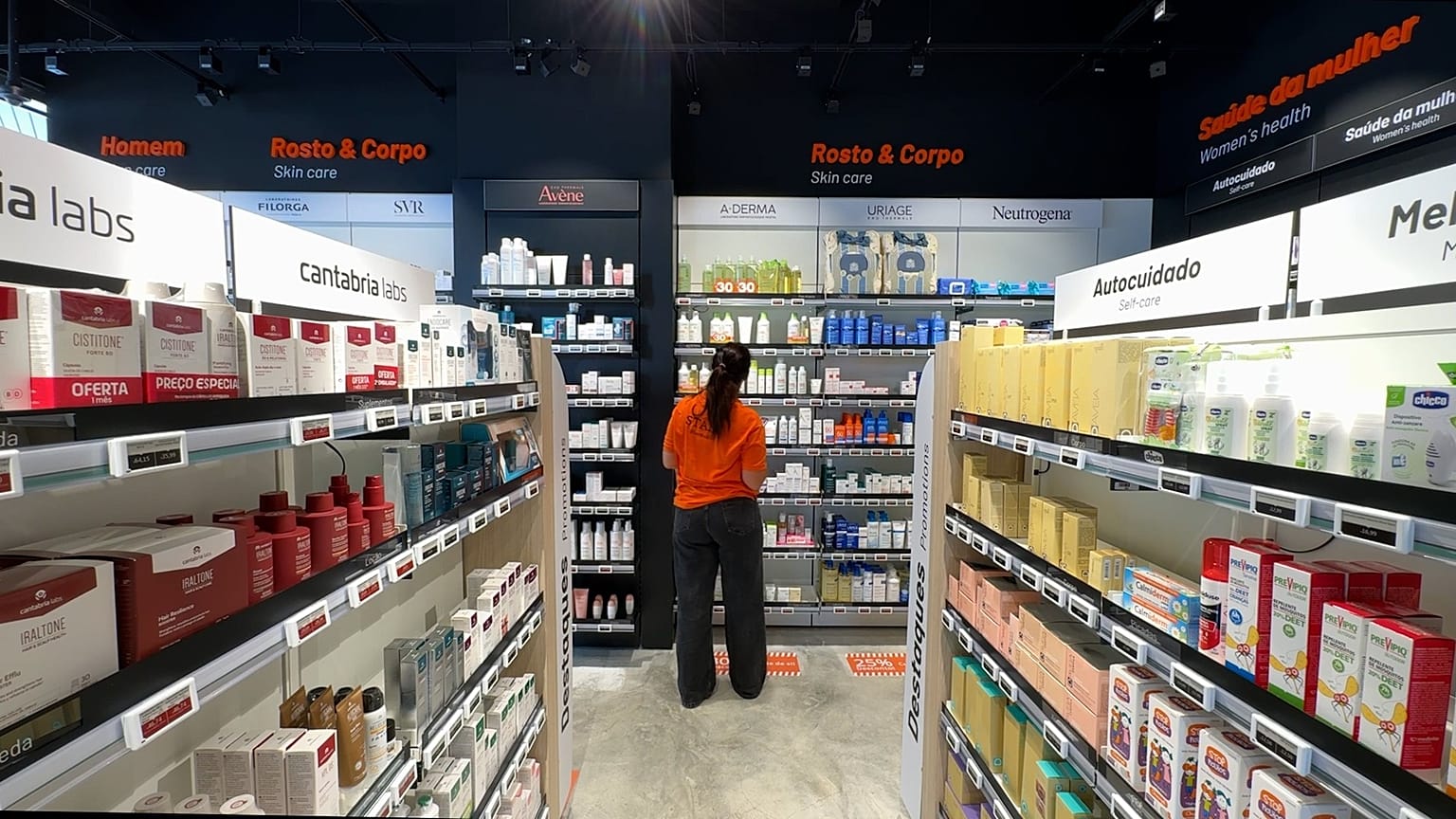













A combined system of cameras, sensors and artificial intelligence keeps this parapharmacy running, with staff entering only to restock empty shelves.
No queues, no waiting, no staff. In Lisbon, this parapharmacy only contains the products for sale inside.
 ADVERTISEMENT
ADVERTISEMENT
ADVERTISEMENT
There is no one to serve customers at this innovative pharma sector vendor, designed to allow pharmacists to focus on specialist duties, located in the Parque das Nações area.
"More and more, we are investing in solutions that allow us to keep pharmacists and the professionals we have focused on the clinical side, and to reduce the time they spend on purely commercial tasks," explained pharmacist Catarina Dias, who runs Pharma&Go.
"It is a parapharmacy, and what we have tried to bring here is everything people can buy on their own, on any day of the week, at any hour of the day. The project responds to what people are looking for in terms of convenience and practicality," she told Euronews.
The purchasing process may seem strange at first, but it is, in fact, simple.
The customer journey starts at the shop door by presenting a means of payment such as a credit or debit card. Once it has been validated, the customer can go inside and begin shopping.
Here, it is important to keep a few details in mind: once the door is closed, the card that was presented is linked to everyone who enters at that moment and, as a result, to all the products they take with them until checkout.
"The door opens, they walk into the shop, pick up the product they want to buy and leave. Automatically, once they have left, the products they take with them are charged to the card they used to validate entry. There are no tills, no queues, no friction, no complications," said Catarina Dias.
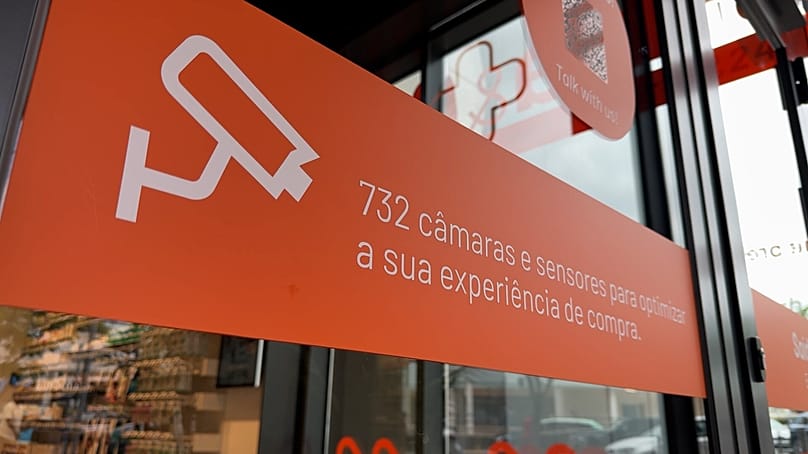
Monitoring is done using a combination of hundreds of cameras and sensors, which track both customers and products in the shop. This is coupled with artificial intelligence technology that can determine which items have been picked up and taken through to the moment of purchase.
Customer has full control over the shopping process
Full automation gives each customer privacy and control over their shopping journey.
"The customer comes into the shop and can stay as long as they want. They can have a quick shopping experience, come in, grab what they need and leave in under a minute. There are no queues, no checkouts, nothing that makes their journey round the shop harder. Or they can come in, read the ingredients of 30 products and spend half an hour choosing before they buy," explains the manager, pointing out that the shop offers consumers "the option of going through their shopping journey at their own pace".
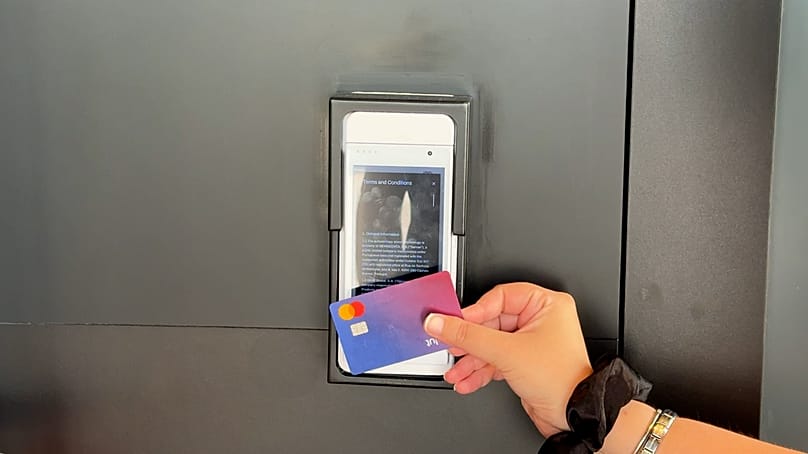
The shop opened in November and has been gaining new customers month after month. "Every month we have more customers than the month before. I think people are starting to lose their fear of this new technological solution," says Catarina Dias.
Despite being new, the margin of error of this solution is minimal. "We are talking about error rates below 2%, so very low. More and more customers buy, come back, tell their friends and, in fact, it has been growing over these months."
Most errors are human
The project is constantly evolving, with the technology being refined with every customer. The software’s margin of error, although small, does exist, but is largely down to human behaviour.
"Day by day, we have more and more people coming into the shop and understanding how it works, which reduces the error rate. Because most of the errors that occur in terms of how the shop operates are actually human rather than technological, which is interesting," she explains.
"For example, even though we tell people that once they come in, they have to close the door, because they are responsible for the purchases of everyone who comes in with them, in Portugal it is chivalrous for a man to hold the door open for a woman. And we have already had a case where a man came into the shop, held the door for the woman coming in behind him and, of course, both their purchases were charged to his card, because the AI doesn’t know whether people are together or not."
Young people are the target, but uptake spans several age groups
The location was chosen to attract a younger audience with greater spending power.
"At first, we thought it would be younger customers who would seek out and embrace these solutions. And it has been very interesting to see that the more experienced generations have also taken to them. People come in, even at 70 or 80, and already have a level of digital literacy that allows them to use the shop perfectly well," says Catarina Dias.
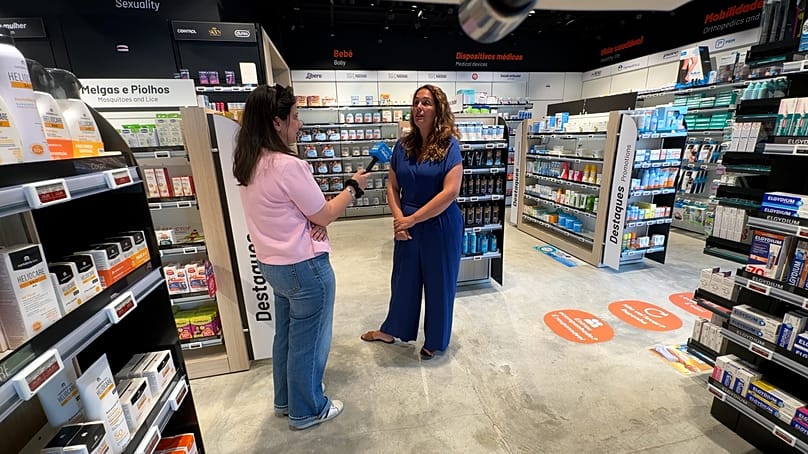
"Because using the shop really is very simple. You don’t need to understand the technology to use it. You just tap your card, come in, pick up your products and leave. And very often, the fact that we have easy pedestrian access, with no steps and no queues, means that even this more senior public has taken to it in a big way."
Covering around 90 square metres, the shop, created through a partnership between Sensei and Glintt Life, was financed entirely with private funds.
"We applied for funding under an Artificial Intelligence and Innovation strand of the Recovery and Resilience Plan (PRR). And I would say it was very disappointing for us that our project was not considered sufficiently innovative," she laments. In a project that is constantly evolving, Catarina Dias is adamant: "The future is promising."
At present, the shop offers virtually everything you can find in a pharmacy, from dermocosmetics and baby products to supplements and oral hygiene products. Over-the-counter medicines and, of course, prescription-only medicines are excluded for now.