

















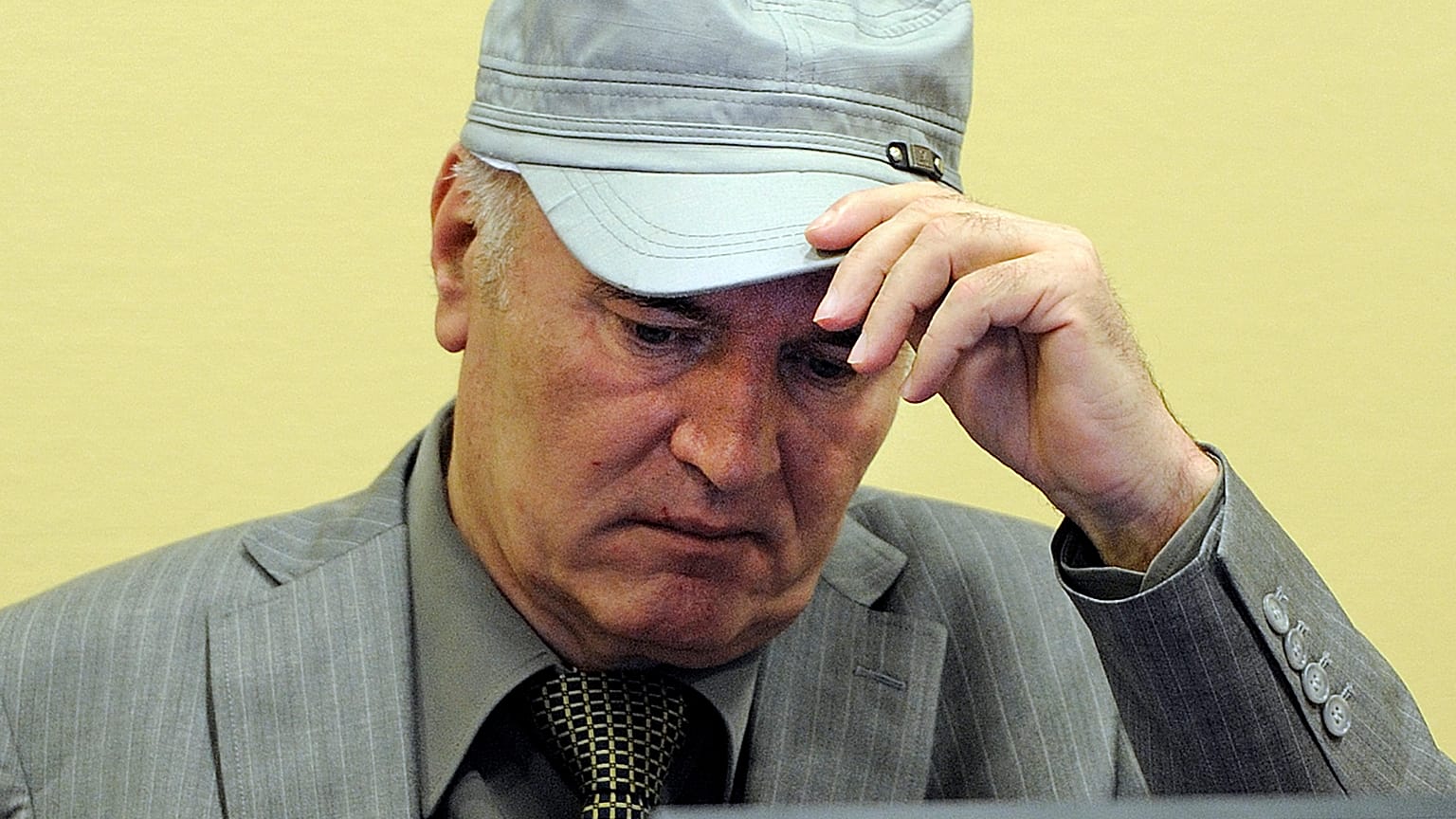














The former Bosnian Serb military commander, sentenced to life for the summary execution of more than 8,000 Bosniaks in July 1995 and the years-long siege of Sarajevo, died at 84. He spent 15 years as a fugitive before his arrest in Serbia in 2011.
Former Bosnian Serb military leader and convicted war criminal Ratko Mladić has died in a prison hospital in The Hague at the age of 84, according to Serbian state broadcaster RTS.
 ADVERTISEMENT
ADVERTISEMENT
ADVERTISEMENT
Considered the most infamous war criminal in the Balkans, Mladić was dubbed the "Butcher of Bosnia" for his role in the 1995 Srebrenica genocide during the Bosnian War.
He was sentenced to life by the International Criminal Tribunal for the former Yugoslavia (ICTY) for turning large swathes of Bosnia into a bloodbath during the war in the 1990s.
Among other war crimes, Mladić was convicted of genocide for the summary executions of over 8,000 Bosniaks in Srebrenica in July 1995 committed by the Bosnian Serb army under his command — an atrocity considered the worst since the end of World War II.
"Mladić worked openly and systematically toward the destruction of an entire people," prominent author and political analyst Dragan Bursać told Euronews.
"He will remain on record as someone who had not a trace of remorse, who was predominantly a coward whenever force wasn't standing behind him, and who died the way he lived," Bursać added.
'Scatter their brains'
After Bosnia declared independence from Yugoslavia in early 1992 following in the footsteps of Slovenia and Croatia, Bosnian Serb leaders, backed by the government in Belgrade led by Slobodan Milošević, created their own parastate.
The ensuing military offensive led by Mladić — a career Yugoslav army officer who also took part in the fighting in neighbouring Croatia — aimed at ethnically cleansing as much of the country’s territory as possible of the other two ethnic groups, Bosniaks and Croats.
Mladić played a crucial role in the years-long siege of Sarajevo, the longest siege of a capital city in modern warfare.
Positioned on the surrounding hills, Bosnian Serb units under his command went on a campaign of sustained shelling and sniper attacks on civilians from early 1992 until the end of the war in late 1995.
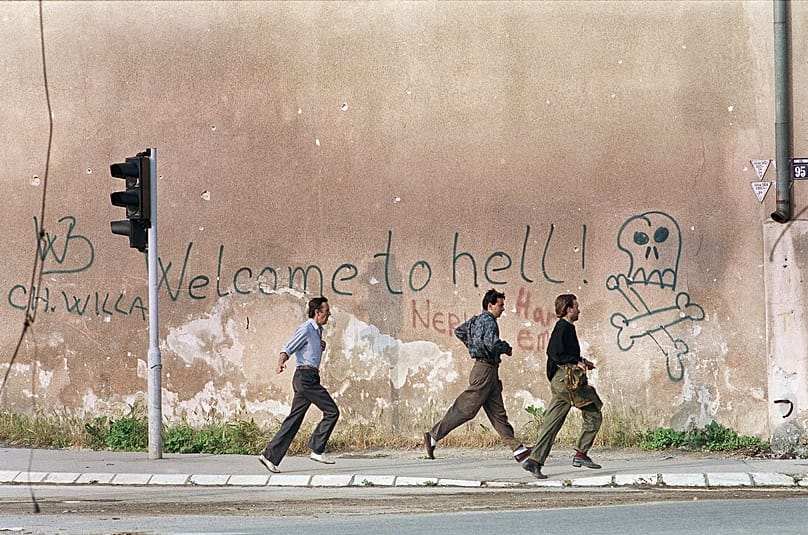
The troops were also ordered to target key civilian sites, including Sarajevo's National and University Library, an Austro-Hungarian-era landmark in the Old Town that was deliberately firebombed in August 1992, destroying 1.5 million volumes and more than 155,000 rare books and manuscripts.
During the siege, Mladić issued his orders through a military radio system, not bothering to scramble the signal, which the Sarajevo police picked up and taped.
In the recordings that were made public and later used as evidence in court, he is heard ordering his artillery to bombard two of Sarajevo's neighbourhoods: "Pound Velešići and pound Pofalići, there aren’t that many Serbs there.”
“Scatter their brains,” he told his gunmen in an explicit edict to instil terror, according to Bursać.
"That was a classic case of starving out a city, with the aim of erasing and destroying it," Bursać said.
"In a sadistic way, he saw the city as a crown jewel if it were to fall into the hands of the Bosnian Serb army, something even he wouldn't have known what to do with," he added.
The siege of the Bosnian capital formally ended in February 1996, followed by the reintegration of Bosnian Serb-held neighbourhoods — where Mladić's units conducted campaigns of persecution, terror and forced displacement.
"We saw on 11 July (1995) what he would have done if he had entered with his army," Bursać said. "Plain urbicide, elitocide, and genocide."
No remorse
Mladić commonly justified the atrocities committed by his troops as "revenge" for the Ottoman rule of Bosnia — which ended in 1878.
When his troops overran the UN-protected area of Srebrenica in 1995, which was meant to act as an internationally backed safe haven for the residents of the eastern Bosnian town and the surrounding villages, he said that “the time has come ... for revenge against Turks in these regions."
Bosnian Serb units under his command then separated 8,372 men and boys, summarily executed them and bulldozed their bodies into mass graves in a brutal rampage that lasted for over a week.
Meanwhile, Mladić was filmed by a TV crew handing out candy to Bosniak children — patting one child on the head — and reassuring them that everything would be all right.
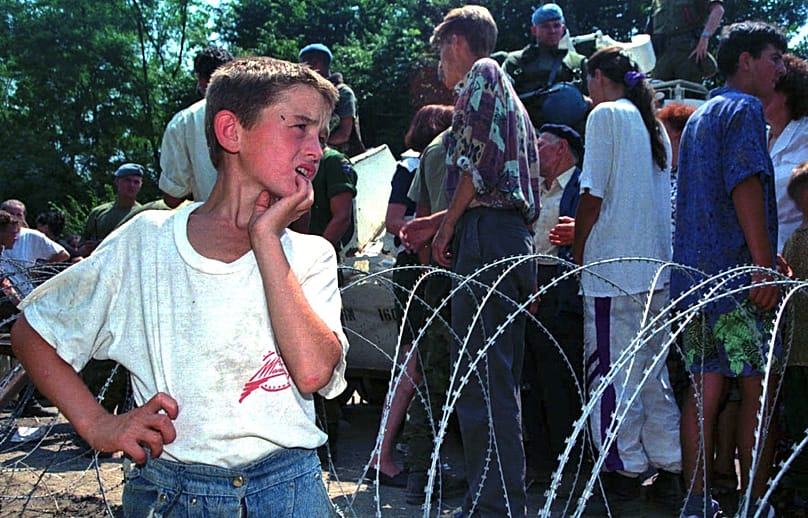
After the ICTY issued the first indictment against him in July 1995, Mladić stayed Commander of the Main Staff of the Bosnian Serb army until he was relieved of his duty in November 1996. From then on, he was a fugitive from justice.
He spent 15 years hiding or being hidden with help from contacts in the intelligence service and military. After Milošević's downfall, support slowly dwindled until he was finally apprehended at the home of a relative in Serbia in 2011.
Mladić, who never repented, acted bullishly during his trial and yelled at the judges when sentenced to life in prison.
In recent years, he had been in increasingly poor health after suffering several strokes, according to his family members.
He was not without supporters among Bosnian Serbs, who see him as a hero and consider his time at The Hague an unjust punishment.
It is a sentiment that often comes hand in hand with genocide denial in a country that is yet to come to terms with the war that resulted in 100,000 casualties and 2 million people — or more than half of its population — becoming either refugees or internally displaced.
Activist and journalist Refik Hodžić from Prijedor, where Mladić's troops established concentration camps for detained non-Serb civilians and systematically killed prisoners, believes support for the late Bosnian Serb commander and his actions still runs strong.
"There will be plenty of people who, for various reasons, will try to profit from his death to drive this legacy’s achievement of division and polarisation even deeper," Hodžić told Euronews.
"But 30 years later, his crimes and cowardly acts are being defeated by the victories of the Bosnian national football team and the youth from all ethnic groups collaborating, living with a strong desire to forget him, to forget his legacy, to forget what he stood for," he added.
"The best way to mark his death is to simply not say anything about him."