

















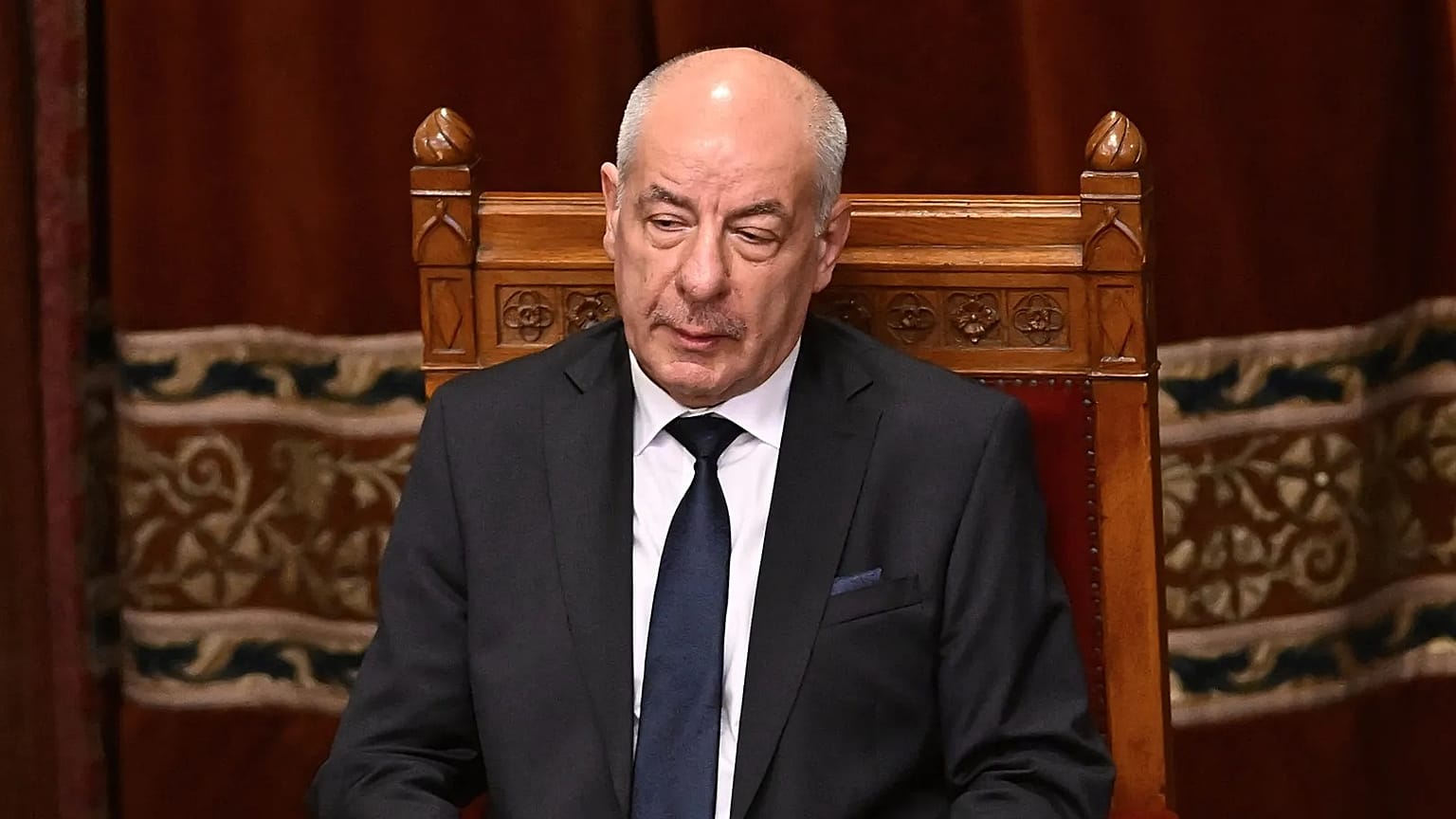














President Tamás Sulyok signed the seventeenth amendment to the Fundamental Law on Saturday, he announced on Facebook. The sitting president’s mandate will end the day after it takes effect.
Tamás Sulyok has signed the seventeenth amendment to Hungary’s Fundamental Law, a move that brings his own mandate as president of the republic to an end.
 ADVERTISEMENT
ADVERTISEMENT
ADVERTISEMENT
In a speech posted on Facebook, the head of state described the constitutional amendment forcing his resignation as unprecedented and shameful.
"With a single sentence this amendment terminates the mandate of the sitting President of the Republic. That sentence joins the ranks of those forced Gordian-knot fixes that will remain for posterity as grave and shameful historical examples of abuse of political power," he said.
The outgoing head of state sharply criticised the law that compelled his departure, calling it an open attack on the rule of law and the independence of institutions and an unprecedented restriction of suffrage. At the same time, he acknowledged that refusing to sign the amendment would itself be unlawful, and therefore he signed it.
"My signature is the final seal of my presidential obligations and of my full and unconditional respect for the institution of the presidency. It is a sign that I have always observed Hungary’s Fundamental Law and never violated it. Yet it will also stand as lasting proof that the core values of a free society – the rule of law, democracy and the principle of the separation of powers – have been trampled underfoot for reasons of power. The exclusive responsibility for this decision lies with the power that amended the constitution," the departing Sulyok said.
Forsthoffer to serve as interim president
Under the law, the mandate of the incumbent President of the Republic ends on the day after the amendment enters into force.
From that moment until the election of a new head of state, the Speaker of the National Assembly, Ágnes Forsthoffer, will serve as interim president. After that, until the new constitution enters into force, but for no longer than five years, parliament will elect a head of state.
The seventeenth amendment to the Fundamental Law, which brings Tamás Sulyok’s mandate as President of the Republic to an end, also introduces a 12-year (or three-term) time limit on parliamentary mandates, a maximum age of 70 for constitutional judges, the possibility for judges to initiate the recall of the presidents of the Kúria (Supreme Court) and the National Judicial Office (OBH). It also allows for the creation of a National Asset Recovery and Asset Protection Office.
Among the closing and miscellaneous provisions of the Fundamental Law, a clause was inserted that makes it possible to remove the current president, Tamás Sulyok.
During the election campaign, and repeatedly since the 12 April vote which gave the Tisza Party a two-thirds majority, Prime Minister Péter Magyar has urged the president and other heads of state institutions to resign, arguing that they had acted as puppets of the Orbán government.
The amendment to the Fundamental Law, signed by Justice Minister Márta Görög, introduces a time limit on parliamentary mandates: in future, anyone who has already held such office for at least 12 years, or who has been elected to parliament at least three times, will no longer be eligible to stand as an MP. The change does not affect the current mandates of sitting members of parliament.
The law brings major changes to the composition of the Constitutional Court. In future, the 15 members of the court will be elected by a two-thirds majority of parliament for nine rather than twelve years, and their term of office will end when they reach the age of 70.
The president of the Constitutional Court also dismissed
This provision affects Péter Polt, the court’s president, and three other judges. From now on, the president of the court will be elected not by parliament but by the members of the Constitutional Court for a three-year term.
The review powers of the Constitutional Court are restored. These had been curtailed by a 2013 amendment to the Fundamental Law, which restricted the court’s ability to review, among other things, legislation on the central budget and on taxes, fees and social contributions.
The rules on the election and term of office of the presidents of the Kúria and the OBH have also been amended. In future, under procedures laid down in a cardinal law, judges may nominate up to three candidates each for the posts of president of the Kúria and of the OBH. From among them, the President of the Republic will select one candidate for each post and submit their election to parliament.
For the presidents of the Kúria and the OBH, the term of office is shortened from nine to six years. The amendment defines the grounds on which their mandate can end and, under procedures specified in a cardinal law, allows for their recall at the initiative of judges.
The Fundamental Law now also provides that, in order to protect public assets and to assist in tracing and recovering public assets that have been handled or used unlawfully, a National Asset Recovery and Asset Protection Office will operate. The office is independent and, as defined by law, participates in the administration of justice as a public prosecutor enforcing the state’s criminal claims. Its president and vice-presidents are elected by parliament for six years by a two-thirds majority.
The amendment reverses the change introduced by the Orbán government in 2023, which renamed the counties "vármegye"; the Fundamental Law now restores the term "megye" (county). It also stipulates that the "vármegye" designation may continue to be used after the amendment enters into force on 1 October, as long as the transition to the "megye" name cannot be carried out in line with the principles of responsible management.
The Parliamentary Guard will also be abolished as of 1 October.
In several areas the amendment removes the requirement for regulation by cardinal law. In future, rules on the use of the coat of arms and the flag, and on state decorations, can be amended by a simple majority. Laws on the National Authority for Data Protection and Freedom of Information, the Hungarian National Bank and the State Audit Office, as well as legislation governing the investigative activity of parliamentary committees and the basic rules of taxation and the pension system, will also cease to be cardinal.
Contrary to the original draft amendment to the Fundamental Law – and following a proposal by the legislative committee – the land law and the law on the protection of national assets will remain cardinal.
The requirement for the Budget Council to give its prior consent to the adoption of the state budget law is abolished, and the statutory definition of "public money" – which currently states that public money is the state’s revenue, expenditure and claims – is repealed. The justification given is that its detailed codification unduly narrowed the scope for interpreting the term and restricted the exercise of freedom of information.
On 13 July, parliament adopted the amendment by 139 votes in favour to 6 against, with no abstentions. The bill was submitted to the National Assembly by Prime Minister Péter Magyar on behalf of the government. The Fidesz and KDNP parliamentary groups boycotted the sitting.
According to the preamble, the purpose of the amendment is to guarantee, until the new constitution enters into force, the essential institutional conditions for the lawful functioning of the state and to lay the foundations for the restoration of constitutional democracy. It states that, following broad social and professional consultation, parliament will draw up Hungary’s new constitution based on popular sovereignty, the separation of powers, the rule of law and the protection of fundamental rights.