












An initial round of talks aimed at permanently ending the conflict failed to produce an agreement last weekend. The White House said Iran’s nuclear ambitions were a central sticking point.
Diplomats worked through back channels on Tuesday to arrange a new round of peace talks between the United States and Iran after Washington enacted its blockade of Iranian ports, while Tehran threatened to strike targets across the war-weary region.
US President Donald Trump said a second round of talks could happen "over the next two days," telling the New York Post the negotiations could be held again in Pakistan’s capital.
United Nations Secretary-General Antonio Guterres concurred, saying it’s "highly probable" that talks will restart. He cited a meeting he had with Pakistan’s deputy prime minister, Ishaq Dar.
"There is no military solution to this crisis. Peace agreements require persistent engagement and political will. Serious negotiations must resume," he said.
An initial round of talks aimed at permanently ending the conflict failed to produce an agreement last weekend. The White House said Iran's nuclear ambitions were a central sticking point.
Though the ceasefire appeared to hold, the showdown over the Strait of Hormuz risked reigniting hostilities and deepening the regional war's economic fallout.
Pakistan proposes second round of talks
Pakistan has proposed hosting a second round of US-Iran talks. Two US officials said on Monday that discussions were still under way about the negotiations.
A diplomat from one of the mediating countries said that Tehran and Washington had agreed to the talks. The US officials and the diplomat spoke on condition of anonymity to discuss sensitive diplomatic negotiations.
The location, timing and composition of the delegations had not been decided, although Islamabad and Geneva are being considered as host cities, they said.
The war, now in its seventh week, has jolted markets and rattled the global economy as shipping has been cut off and airstrikes have torn through military and civilian infrastructure across the region.
The fighting has killed at least 3,000 people in Iran, more than 2,000 in Lebanon, 23 in Israel and more than a dozen in Gulf Arab states. Thirteen U.S. service members have also been killed.
Tankers turned around after blockade takes effect
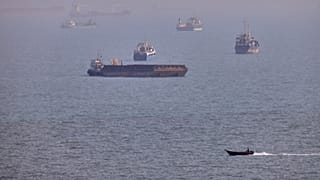
The US military said on Tuesday that it successfully stopped six ships from sailing out of Iranian ports during the first 24 hours of a naval blockade against the Islamic republic.
Central Command (CENTCOM), which is responsible for American forces in the Middle East, said more than 10,000 US troops, over a dozen warships and dozens of aircraft are taking part in the mission.
"During the first 24 hours, no ships made it past the US blockade and six merchant vessels complied with direction from US forces to turn around to re-enter an Iranian port on the Gulf of Oman," CENTCOM said in a post on X.
"The blockade is being enforced impartially against vessels of all nations entering or departing Iranian ports and coastal areas, including all Iranian ports on the Arabian Gulf and Gulf of Oman," it added.
But despite CENTCOM's assertion that no vessels made it through the blockade, tracking information from maritime data provider Kpler showed at least two ships sailing from Iranian ports crossed the Strait of Hormuz on Monday.
Tehran's forces effectively closed the strait after the start of the US-Israeli air campaign against the Islamic republic on 28 February, and the US on Sunday announced its own blockade after peace talks with Iran failed.
The waterway is one of the world’s most critical energy chokepoints, handling roughly a quarter to a third of global oil shipments and around a fifth of liquefied natural gas (LNG).
Its closure has sent shockwaves through global markets. The EU estimates gas prices have risen 70% and oil by 50% resulting in an extra €13 billion bill on fossil fuel imports.