






























As heatwaves become more frequent and intense, pregnant people face significant consequences. But are they all equally at risk?
Europe experienced an "unprecedented and historic" heatwave in the last week of May, with temperatures across parts of the continent reaching around 10°C to 15°C above the average for this time of the year.
 ADVERTISEMENT
ADVERTISEMENT
ADVERTISEMENT
The central Portuguese town of Mora, for example, saw a new record high temperature of 40.3°C for the month on 27 May.
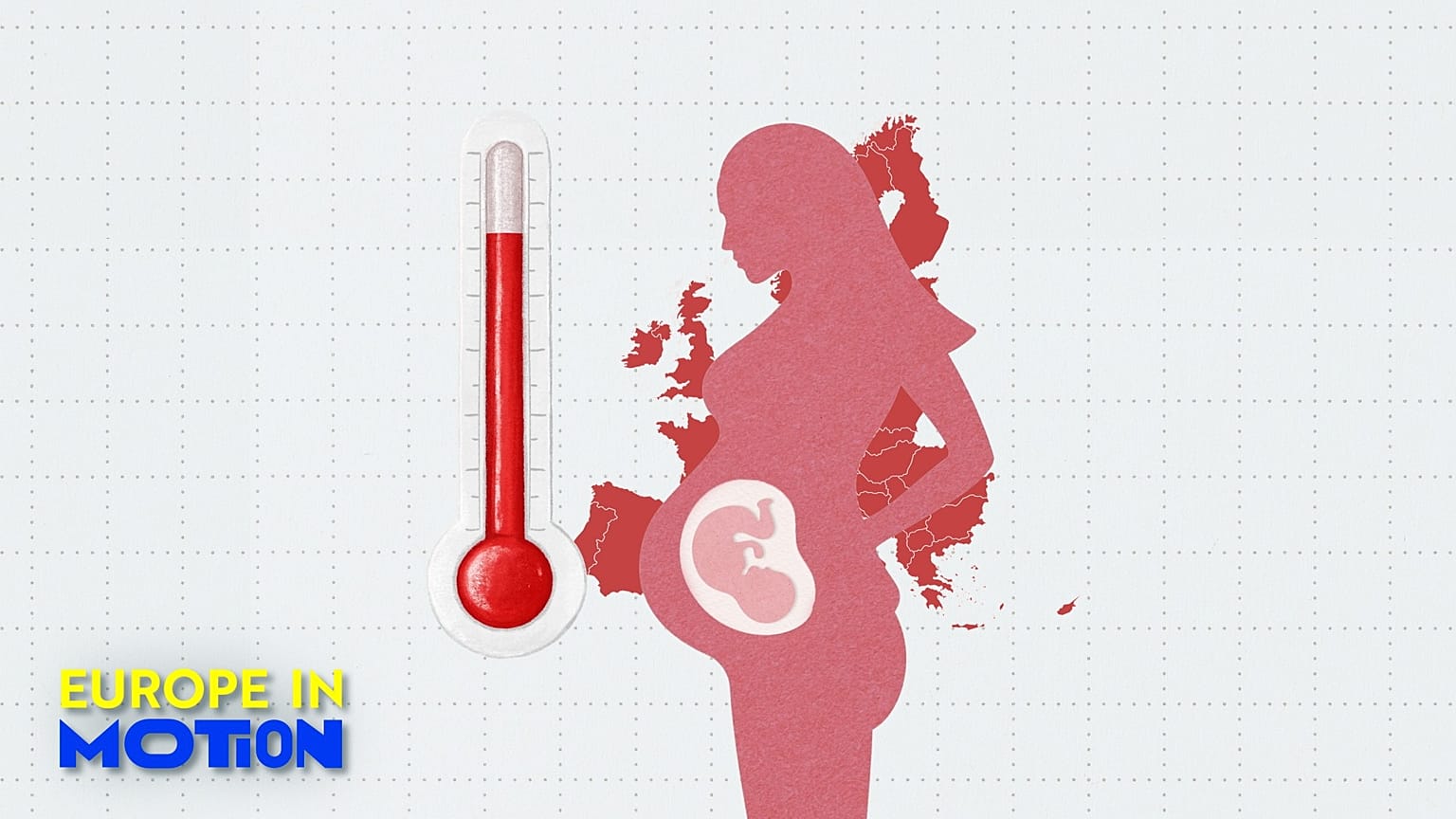
A new study shows pregnant people and their newborns are particularly vulnerable to high temperatures, with heat being an important environmental factor that can trigger early labour.
It is estimated that 1.41% of all premature births occurring during the summer are attributable to heat.
On days of moderate heat, this risk increases by 2.8%, while on days of extreme heat, it reaches 3.8%.
A baby born before 37 weeks of gestation faces a significantly higher risk of mortality, as well as health complications that can impact the rest of their lives.
The study, published in the scientific journal Environment International, analysed 36.6 million births that took place during the summer in 250 towns and cities across 13 countries, including Estonia, Italy and Spain, between 1979 and 2019.
Which countries are the most and the least affected?
Among the European countries analysed, Spain registered the highest rate at 1,080 preterm births per million during the warm season, with the city of León being the most affected.
It was followed by Italy, with 974 early births per million, and Estonia with 814 preterm births per million.
In contrast, Switzerland had the lowest rate of all countries analysed, with 628 preterm births per million.
But heat does not affect all women equally: factors such as climate, socioeconomic characteristics and healthcare infrastructure may change the vulnerability of pregnant people to heat, according to the study.
In fact, young single mothers with lower levels of education and in a vulnerable socio-economic situation may be at greater risk of heat-induced preterm birth.
The most sensitive gestational window where preterm birth is most likely is from week 31 to week 40.
How does the heat trigger earlier labour?
Heat can raise body temperature and trigger uterine contractions.
The dehydration caused by heat disrupts the process of maintaining the proper concentration of essential minerals, like calcium and magnesium, in your body and reduces blood flow to the placenta.
In addition, heat triggers inflammatory processes and an imbalance between production and accumulation of oxygen reactive species in cells and tissues, which can compromise foetal development and accelerate cervical ripening.
Pregnant women are particularly vulnerable because their bodies generate more heat than usual due to foetal growth, while also having a reduced ability to dissipate that heat because of weight gain.