






























From royal palaces and Silk Road artefacts to avant-garde art and interactive science exhibitions, Uzbekistan’s museums offer visitors a journey through centuries of history and cultural exchange.
Museums reveal a country beyond headlines and guidebooks. They preserve objects, stories and memories that explain how societies evolved, what people valued and how cultures intersected. In Uzbekistan, where civilisations have crossed paths for centuries, museums serve as guardians of this shared heritage.
 ADVERTISEMENT
ADVERTISEMENT
ADVERTISEMENT
For visitors like Benny Chang, discovering these collections offers a deeper connection to history. After visiting the Afrosiab Museum in Samarkand, he reflected on its significance. “I will definitely come back here,” he says. “Hopefully, in a few years’ time, there will be even more artefacts to see. This is definitely one of the places to visit.”
His experience reflects the broader role museums play across Uzbekistan, helping visitors understand the country through the traces left behind.
Khiva and a palace shaped by transition
In Khiva, history is visible in the city’s architecture, where fortified walls and madrasas have stood for centuries. Just outside the historic Ichan-Kala lies Nurullaboy Palace, a residence that reflects a period of transition at the beginning of the twentieth century.
Unlike the medieval structures inside the old city, the palace combines traditional Central Asian design with European decorative elements. Built on land once owned by a wealthy local merchant, the palace later became a residence for the Khiva khans and their families.
Tour guide Anaposhsha Boltaeva explains that the palace served both private and ceremonial functions. “This complex includes separate courtyards for different members of the royal family,” she says. “It was used mainly during the summer, when open terraces provided relief from the heat.”
Today, Nurullaboy Palace functions as an exhibition space, offering insight into Khiva’s history. One of its most important displays features the work of Khudaibergen Devanov, Central Asia’s first photographer. His images document daily life and architecture in Khiva during a time of political and social change, preserving moments that might otherwise have been lost.
Nukus: preserving art against the odds
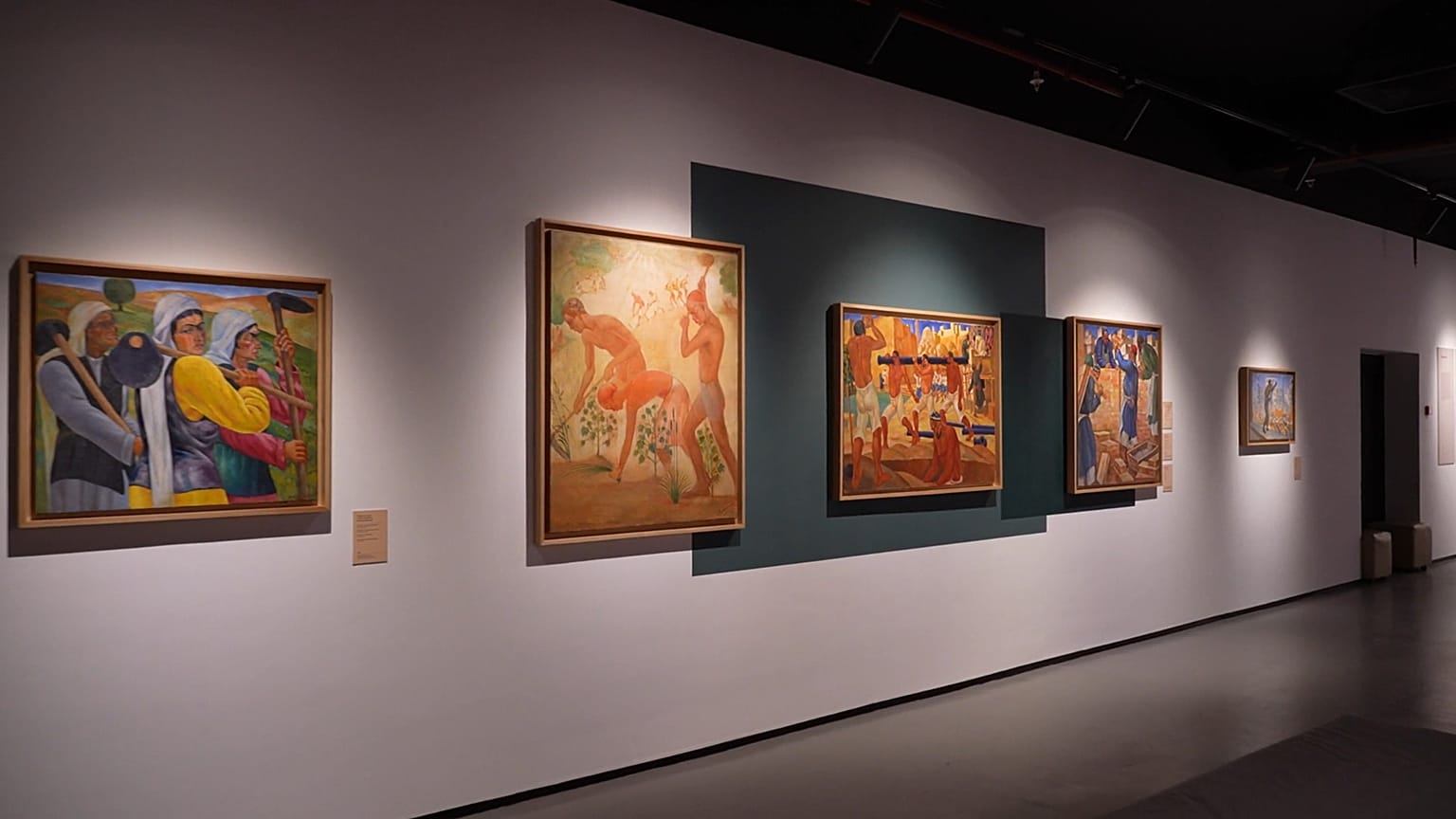
Further west, in the city of Nukus, the State Museum of Arts houses one of the most significant art collections in Central Asia. Founded in 1966 by artist and collector Igor Savitsky, the museum holds more than 100,000 works, including paintings, applied arts and archaeological artefacts.
Savitsky devoted much of his life to preserving artworks that were at risk of disappearing. His efforts created a collection that now attracts both local and international visitors.
According to museum representatives, interest continues to grow each year. Visitors come not only to see paintings, but also to explore archaeological objects and traditional crafts that reflect the region’s cultural diversity.
The museum’s collection offers insight into artistic movements, historical change and everyday life, showing how creative expression has developed across generations.
Samarkand and history at its original site
In Samarkand, one of the oldest continuously inhabited cities in the world, the Afrosiab Museum stands on the site of the city’s earliest settlement. Built in 1970 following the discovery of ancient wall paintings, the museum offers a rare opportunity to experience history where it originally unfolded.
Tour guide Samariddin Mustafakulov explains that the museum was established after archaeologists uncovered murals dating back to the seventh and eighth centuries. These paintings provide valuable insight into Samarkand’s role as a major centre along the Silk Road.
“Today, the museum holds nearly 20,000 artefacts,” says Samariddin. “Visitors are especially interested in the wall paintings, which reflect the cultural, political and artistic life of that period.”
Unlike many museums, the Afrosiab Museum stands directly within the archaeological site itself, allowing visitors to explore history in its original setting.
In recent years, new technologies have enhanced the visitor experience. Digital displays, video presentations and audio guides help to explain the historical context, making the museum more accessible to international audiences.
Tashkent and the story of modern innovation
While many museums focus on ancient history, others reflect more recent developments. In Tashkent, the Polytechnic Museum presents Uzbekistan’s technological progress, from early automotive engineering to modern manufacturing.
Established in 2015, the museum introduces visitors to the science and innovation that shape everyday life. Its exhibits trace the development of vehicles from early mechanical designs to modern cars produced in Uzbekistan.
Guide Azamat Sarkulov says the museum was created to inspire interest in science and technology. “Our museum helps visitors understand how engineering and physics are part of daily life,” he explains. “Interactive exhibits allow children and adults to learn through experience.”
The museum’s interactive zones encourage visitors to engage directly with scientific principles, offering a different perspective on how innovation has influenced society.
Preserving stories across generations
Across Uzbekistan, museums serve many purposes. Some protect ancient artefacts discovered through archaeological research. Others preserve artistic achievements, historical photographs or technological milestones.
Together, they offer a deeper understanding of Uzbekistan’s history and cultural development. Museums in Khiva, Samarkand and Tashkent each preserve different chapters, allowing visitors to see how the country has evolved.
For visitors, these spaces provide more than information. They offer context, helping people understand how history continues to shape identity and culture.
As Chang reflects on his visit to Samarkand, his impression captures the role museums play for travellers and locals alike: places where history is preserved, explored and experienced, and where each return visit reveals something new.
Read more