






























From Surkhandarya to Andijan and Tashkent, Nowruz brings people together through food, tradition and shared celebrations, marking the arrival of spring across Uzbekistan.
For centuries, Nowruz has marked the arrival of spring across Central Asia. In Uzbekistan, it is a time when nature awakens and communities come together.
 ADVERTISEMENT
ADVERTISEMENT
ADVERTISEMENT
Across the country, the holiday unfolds in different ways, shaped by local traditions, landscapes and people.
Surkhandarya: where spring begins
In the southern region of Surkhandarya, spring arrives earlier than anywhere else in the country. Here, Nowruz celebrations begin outdoors, where the warmth of the season is already felt.
Food plays a central role. Large cauldrons are set over open fires as pilaf is prepared for visitors and locals alike, turning cooking into a shared experience. In places like the Airitom Free Economic Zone, people gather around steaming kazan pots, offering food to guests and sharing meals with strangers.
“We organised a pilaf festival to show Uzbek traditions,” says Mirkhamid Mirpolatov, Head of the Termez International Trade Center. “Today, pilaf is being cooked in eight large cauldrons, including different varieties and even Afghan-style pilaf.”
Spring also marks the return of kupkari, a traditional horseback game closely linked to the season. After months of preparation, riders and horses return to the fields, where competition becomes a test of strength, balance and endurance.
“Kupkari is our national game, played since ancient times,” says horse breeder Feruz Jobirov. “It brings people together and attracts large crowds.”
The game is fast and intense, with dozens, sometimes hundreds of riders competing at once. For the winners, prizes range from money to livestock or other valuable goods. Yet beyond the competition, kupkari remains a social event, drawing spectators from across the region and turning fields into gathering places.
For many, it reflects the energy of spring itself – a new beginning marked by movement, strength and community.
Andijan: a shared celebration
Further east, in Andijan, Nowruz unfolds on a larger scale. Open festival grounds fill with thousands of people, creating a shared celebration shaped by music, performances and national games.
Across the celebration area, long tables called dastarkhans are covered with traditional dishes. Many feature fresh greens, such as kuk somsa and kuk chuchvara, symbolising renewal and the arrival of spring.
“People from all over the region have come together,” says Shukhrat Abdurakhmanov, Governor of Andijan Region. “You can see traditional dishes, songs and national games. Everything creates a festive atmosphere.”
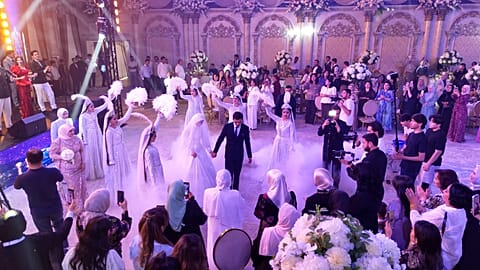
Celebrations include performances of folk music, lapar singing and traditional dances. Tightrope walkers perform for the crowds, while children and young people take part in games, drawing and outdoor activities. National sports such as kurash add a competitive edge to the festivities.
Hospitality remains at the heart of the celebration. Guests are warmly welcomed with warmth, and sharing food is central to the experience.
“During Nowruz, we welcome our guests with joy and see them off with the same spirit,” says singer Maksuda Khalilova. “Even at my age, I came to perform and share a song.”
The region’s diversity adds another dimension to the celebrations. Different communities take part, bringing their own traditions and cultural expressions.
“Our big family – Uzbekistan is our common home,” says Arseniy Sarkisov, Head of the Armenian National Cultural Centre of Andijan Region. “We share our culture, our traditions, our music and food with everyone.”
For many, Nowruz is also a moment of connection and mutual support.
“This is how people come closer to one another,” says Mirzabakhrom Botirov, representative of Andijan State University. “They share sumalak and green somsa and through this, our values are renewed.”
Nowruz here becomes a reflection of coexistence and cultural exchange.
Tashkent: a city in celebration
In the capital, Tashkent, Nowruz spreads across parks, streets and public spaces. People gather throughout the city, taking part in events ranging from performances to open-air markets.
At the centre of the celebration is sumalak – a traditional dish made from wheat and slowly cooked over 12 to 24 hours. For many, it symbolises patience, renewal and the arrival of spring.
In the Navruz Ethnographic Park, the atmosphere is especially lively. Hundreds gather to celebrate, moving between performances, craft stalls and food areas. Tightrope walkers and magicians entertain the crowds, while musicians create a festive rhythm throughout the day.
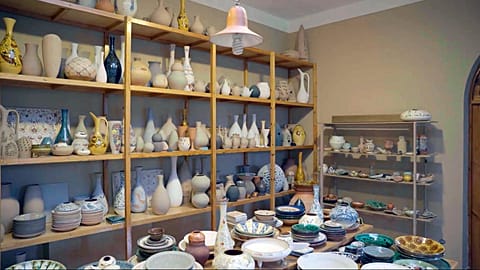
Visitors explore national clothing, jewellery and handmade goods, while others take part in games, listen to open-air concerts or simply enjoy the spring weather. Young people meet friends, draw henna on their hands, and take part in activities that turn the park into a space of discovery and interaction.
Among them are tourists from different parts of the world.
“We heard that Navruz is the New Year,” says Johanna Porkkala from Finland. “People make wishes and eat sumalak. It even reminds us of a similar dish we have in Finland.”
“I love the atmosphere here,” adds Emil Jäntti. “There’s music, people smiling and a very welcoming feeling.”
Local visitors also see the holiday as a chance to reconnect both with traditions and with each other.
“I came here from Khorezm to relax and take a break from work,” says Nabiba Matkarimova, a teacher. “We met foreign visitors, danced together, and I could see how much they enjoyed our traditions. This holiday brings kindness, respect and understanding between people.”
Beyond the parks, celebrations extend across the city. Streets, theatres and public venues host concerts and performances, turning Tashkent into a continuous celebration space.Tashkent into a continuous celebration space.
A tradition that connects people
Across Uzbekistan, Nowruz takes different forms from region to region.
Yet its meaning remains the same – a celebration of renewal, of community, and of the connections that bring people together at the start of a new season.
Read more