
















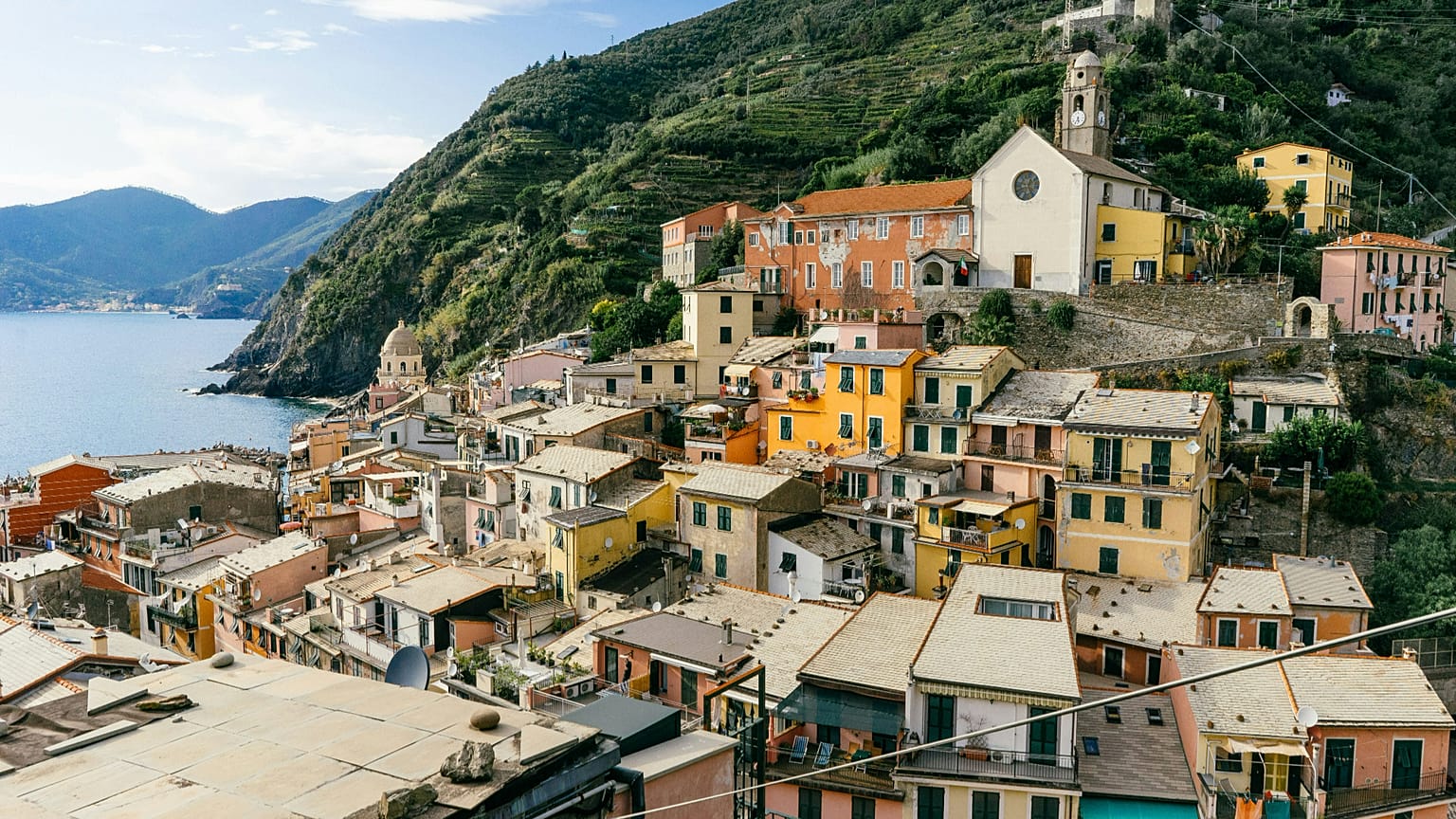













Americans are tracing their Italian ancestry with the help of genealogy experts, DNA testing, and a rise in roots tourism.
Jim Fiorini’s father was one of the more than two million Italians who emigrated to the US in the first decades of the 1900s, spurred by the promise of the American Dream. He established a successful construction business employing other Italians on work visas, but the Great Depression took its toll.
 ADVERTISEMENT
ADVERTISEMENT
ADVERTISEMENT
Fiorini recalls his father being “emotional about his childhood and how things changed for the worse for him by moving to the US.”
Now living in Pennsylvania, Fiorini has recently begun investigating his Italian ancestry, hoping to bring his father's “forced emigration full circle” and discover his ‘home’ in Italy.
And his story is not usual.
The rise of roots tourism
Americans are increasingly digging into their pasts to discover ancestral links in Europe, especially in Italy - a trend known as roots tourism.
“In recent years, Italy has become a central destination for roots tourism, a growing trend where travellers journey not just to see the sights, but to reconnect with their heritage,” says Jennifer Sontag, CEO and founder of ViaMonde, a relocation agency which helps Americans trace their heritage in Italy.
“We see so many people, young and old, who want to know more about where they came from.”
For many second, third and fourth generation American-Italians, tracing these origins can feel like a wild goose chase. Records are vague, names have changed, or documents have been lost.
But advances in genealogy, DNA testing, and the rise of specialist ancestry-tracing agencies are fuelling more and more success stories.
Why Italy has become a hotspot for roots tourism
Italy is one of the prime destinations for American tourists seeking their ancestral heritage. In the late 19th and early 20th centuries, economic conditions were dire, particularly in the south and the island of Sicily, and the political climate was unstable.
Multiple inhabitants of the same community tended to emigrate to the same place.
“The typical emigration pattern involved young men going abroad first, finding work, and then encouraging more men from their village to join them. Once established, they would send for wives and girlfriends,” explains Sontag, who also has Italian ancestry.
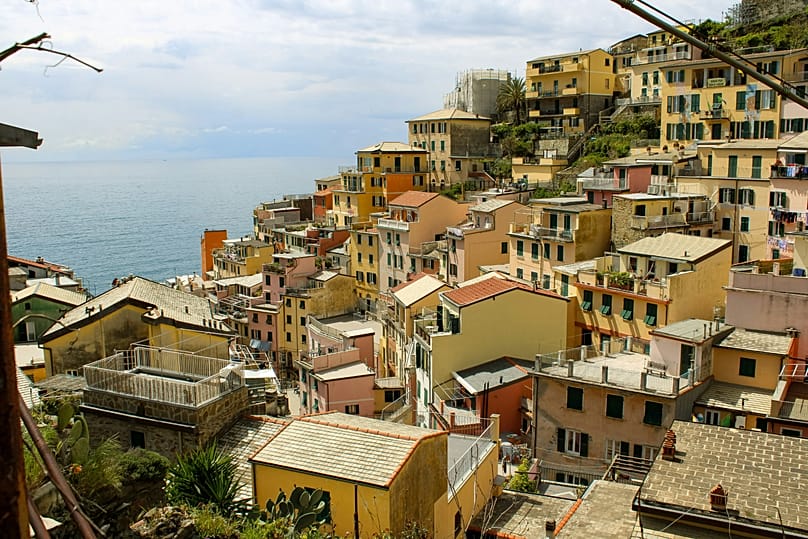
“This concentrated emigration naturally creates roots tourism hotspots across Italy.”
With technological advances, it is becoming easier for descendants to locate the birthplace of their ancestors in Italy, and an increasing number are pursuing the search - so much so that Italy declared 2024 the Anno del Turismo delle Radici (Year of Roots Tourism).
An agency of detectives researching Italian ancestry
Searching for decades-old data on family members often proves a laborious and unfulfilling process.
“A key difficulty is dealing with common misspellings or Anglicisation of Italian names that occurred to minimise the anti-Italian racism prevalent in the early 1900s,” says Sontag.
Many records are also not digitised or accessible to the public. As such, descendants like Fiorini turn to experts.
Sontag’s agency performs a kind of detective work to trace its clients’ roots.
“We have genealogists on staff who work with clients to search Italian birth registrations, ship manifests, divorce records and death certificates across multiple cities, states, and sometimes countries, leading up to the current applicant,” she says.
This initial tracing can take weeks to months.
Once the ancestral town is located, the team can pinpoint exact addresses, as street names were typically included in birth and marriage registrations. If these are not easily accessible, Sontag occasionally sends the team to sift through physical records in local archives, churches and town halls in Italy.
‘Arriving in my ancestral town offered me closure’
Given that tracing ancestors can take months, and that many descendants have often dreamt of finding their roots for years, the experience of returning ‘home’ is deeply emotional.
“The primary reaction is often tears of joy and awe as the pieces of their family history come together,” says Sontag.
“We frequently uncover unexpected details - what some might call skeletons in the closet - such as children born out of wedlock or from affairs, which only adds to the richness of the family narrative.”
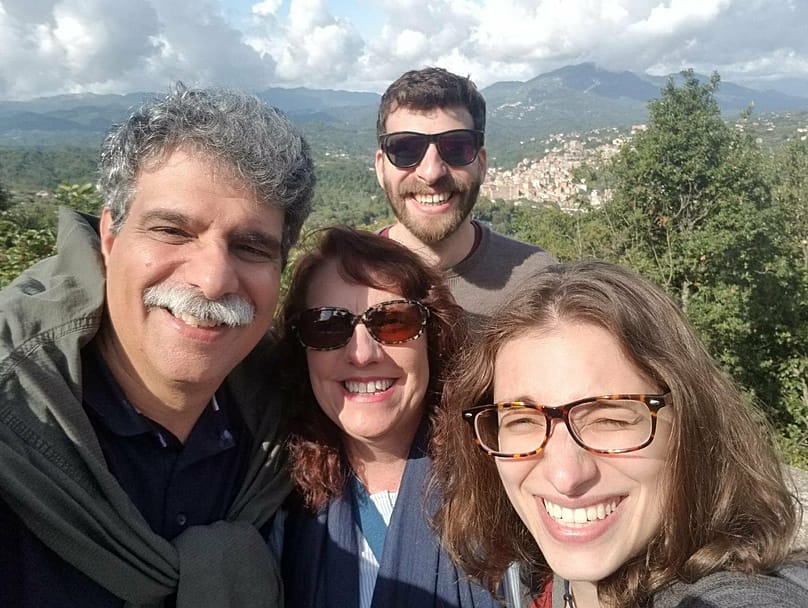
Fiorini can testify to how moving the experience can be. “Having positive confirmation of finding my ancestral town offered me closure in my father's life prior to his coming to the US as a child,” he says.
“To stand in the tiny piazza surrounding the community water fountain and sit on the stone steps my father played on as a child was a life-changing event for me.”
How has Italy’s citizenship law changed?
Many US citizens searching for their Italian ancestors are also looking for documentation to facilitate their application for Italian citizenship or relocation to Italy.
Here, Sontag’s team also lends a much-needed hand. Fiorini says he plans on using ViaMonde to help with his and his wife’s move to Italy next year, since “navigating the Italian bureaucracy is only slightly less difficult than quantum physics”.
But a recent change in Italian law has been a blow to many Americans looking to formalise their Italian roots.
In May, eligibility for Italian citizenship by descent was limited to two generations. This means that to qualify, applicants must have a parent or grandparent born in Italy.
Sontag says this has been a devastating change for her clients.
“Many, especially younger clients who gained remote work flexibility during COVID, had planned their lives around moving to Italy. This dream extends beyond retirees to a younger demographic eager to reconnect with family, establish businesses, and contribute to Italian life,” she says.
“For many of us who are fourth-generation descendants, the connection to Italy is deep - from cultural traditions like eating sugo and pasta for holidays to keeping Sicilian dialects alive.”
Sontag says this means Italy is now limited to a vacation spot rather than a place of residence for many third and fourth-generation American-Italians.
“This was a missed opportunity by the government to embrace and welcome descendants who would boost the economy and help revitalise dying towns.”