




























The SMILE mission will track the Earth’s magnetosphere, which protects the planet from charged particles that come from the Sun.
A European-Chinese mission that will X-ray the Earth’s magnetic atmosphere is officially in space.
 ADVERTISEMENT
ADVERTISEMENT
ADVERTISEMENT
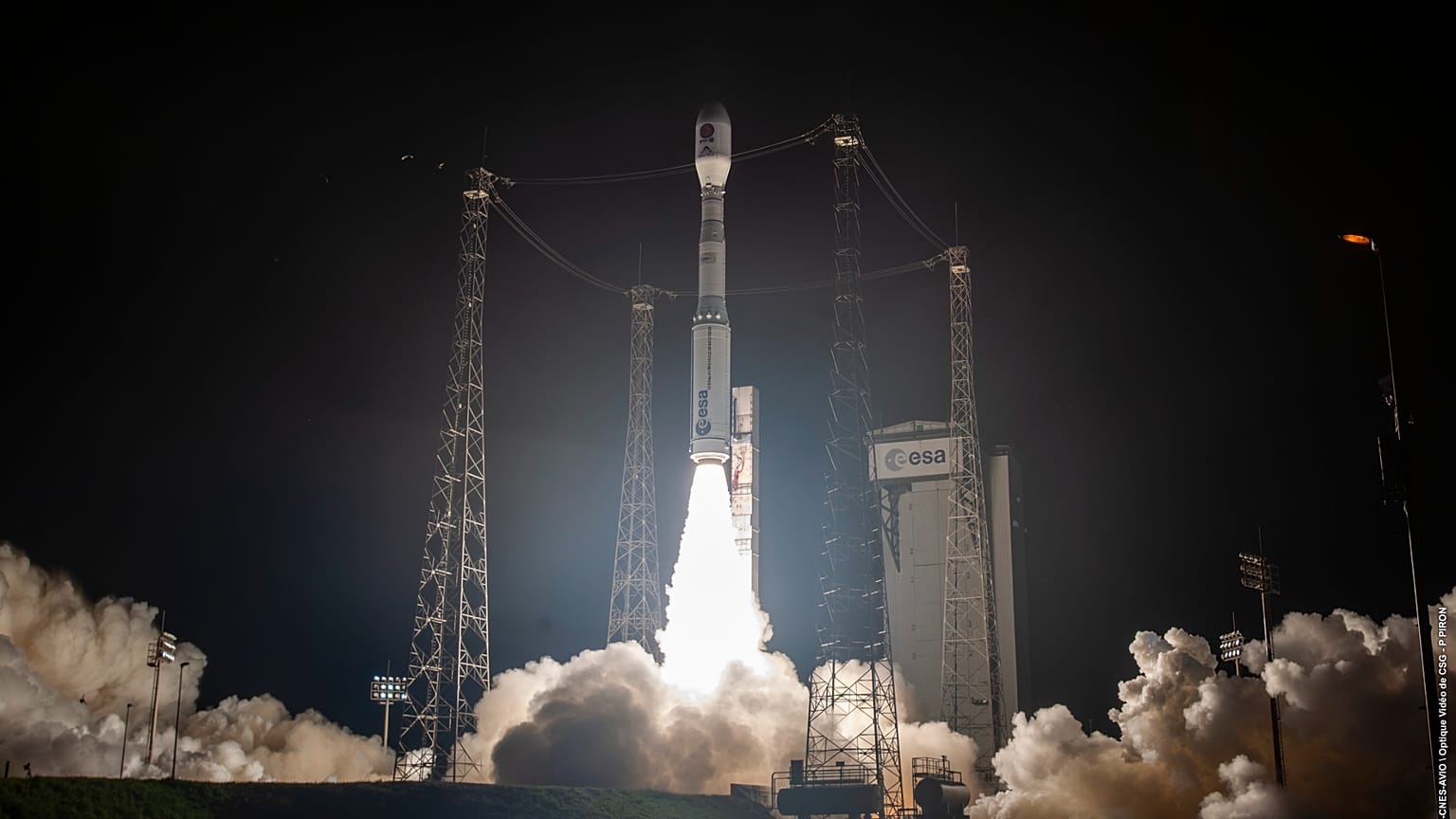
The European Space Agency’s (ESA) Solar Wind Magnetosphere Ionosphere Link Explorer (SMILE) mission sent a 3-metre-tall spacecraft equipped with trackers and antennas into orbit on Tuesday from its launch site in French Guiana.
The joint mission, launched with the Chinese Academy of Sciences (CAS), will track the Earth’s magnetosphere, which protects the planet from gentle streams of charged particles, called the solar wind, that come from the Sun.
The SMILE mission will help scientists understand a gap in the solar system and help keep technology and astronauts safe in the future, according to ESA.
“If it weren’t for the magnetosphere, life could not survive on planet Earth,” ESA said about the mission.
The craft will measure how, where and when the solar winds interact with our planet during the mission.
During the mission, the craft will go as far as 121,000 kilometres above the North Pole, or one-third of the way to the Moon. It will also gather up to 45 hours per orbit of continuous observations of soft X-ray and ultraviolet light.
Smile sent its first signal back to scientists just two hours after launch, and it deployed solar panels, which means it can collect sunlight to power its systems and science instruments.