















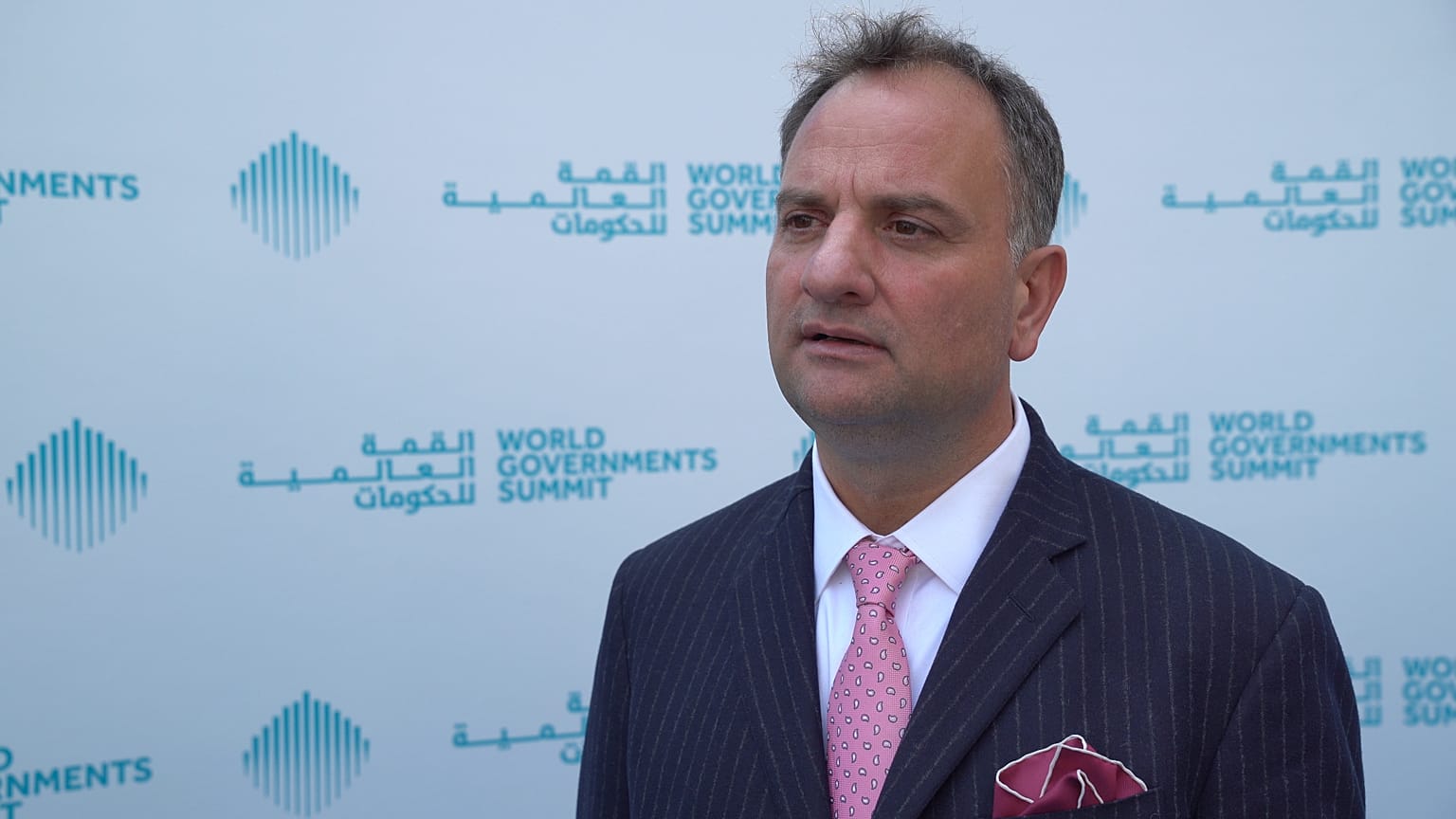














“This technology is the first technology that's going to start to take data away from big tech," says tech entrepreneur Eric Swider.
On the sidelines of the World Governments Summit in Dubai, Eric Swider, an American technology entrepreneur, told Euronews Next the event provides a platform for global discussions to translate into practical outcomes, as governments focus on data ownership, privacy and artificial intelligence (AI).
 ADVERTISEMENT
ADVERTISEMENT
ADVERTISEMENT
Asked about the function of international summits, Swider said the World Government Summit allows global conversations to move beyond theory.
“I think that having an opportunity to attend a summit like this is very unique because of the fact that you're able to meet so many people from around the globe but yet take those conversations to a very local level, a level that becomes something that you can actually act on and you can move a technology or an idea or a platform forward,” he said.
Swider was in Dubai to outline what he described as a new “reality intelligence-based platform”, which he said is designed to shift control of data away from large technology companies and back to individuals and governments.
“So just from a very high level of our platform, we're calling it the very first, the world's very first reality intelligence-based platform,” he said. “What we're doing is we're bridging the gap between the physical world and the data that you own.”
Swider said the platform differs from conventional artificial intelligence models by relying on user-owned data rather than large-scale external datasets.
“And the way that we do that is we take all of your data, we put it inside of a private blockchain that you control, and that gives data back to the sovereign, back to the individual,” he said.
“So now the individual controls their data, monetises their data, and that data becomes the LLM (large language model) that helps you in your life.”
Swider said the approach might significantly alter how personal data is used online, particularly in digital commerce.
“This technology is the first technology that's going to start to take data away from big tech,” he said. “Our users will make the money off of the data, not Google and not Amazon.”
He said Europe may be particularly receptive to the platform, citing the region’s regulatory leadership on data protection and privacy.
“I actually think that Europe is going to be one of the places that appreciates this technology the most,” he said. “Europe has been leading the charge in data privacy and getting data back to the owners.”
He added that potential applications extend to healthcare, allowing individuals to retain ownership of sensitive information.
“If you can imagine a unified medical record that's on top of a blockchain, now every citizen of Europe or the United States or Africa owns their own medical data,” he said. “They decide who to share it with, when to share, and they commoditise it if they so choose.”
Responding to concerns around security, Swider acknowledged scepticism but said blockchain-based systems offer strong safeguards.
“If you believe in the concept of a blockchain, then you can believe in the concept of data security inside of that blockchain,” he said, adding that encrypted records would be significantly harder to compromise than traditional databases.
Watch the full interview from the World Governments Summit in the video above.