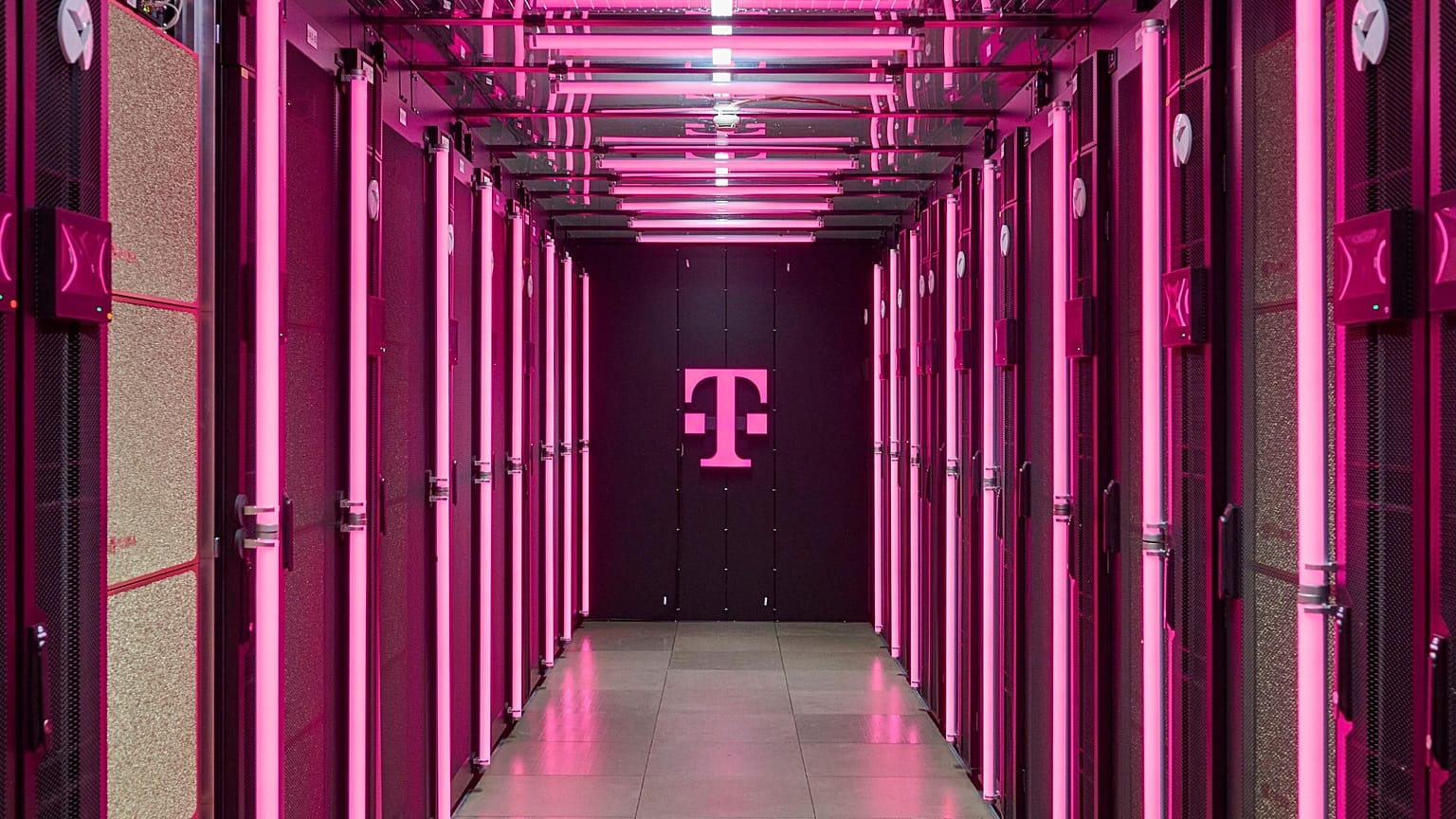













As the EU looks to build its own AI infrastructure and reduce reliance on foreign providers, one of Europe’s largest AI computing hubs has opened in Munich.
Germany has launched one of Europe’s largest AI factories, hoping to position the country - and the European Union - as a major player in sovereign artificial intelligence(AI).
 ADVERTISEMENT
ADVERTISEMENT
ADVERTISEMENT
Named the "Industrial AI Cloud" and developed by Deutsche Telekom with NVIDIA and data centre partner Polarise, it was unveiled in Munich on Wednesday after around six months of construction.
The facility has been designed to provide high-performance AI computing for businesses, researchers and public institutions, while keeping data and operations under European jurisdiction.
Telekom CEO Tim Höttges framed the project as a test of Europe’s ambitions, saying: "We are investing in AI, in Germany as a business location and in Europe… We are proving here that Europe can do AI," said Telekom CEO Tim Höttges.
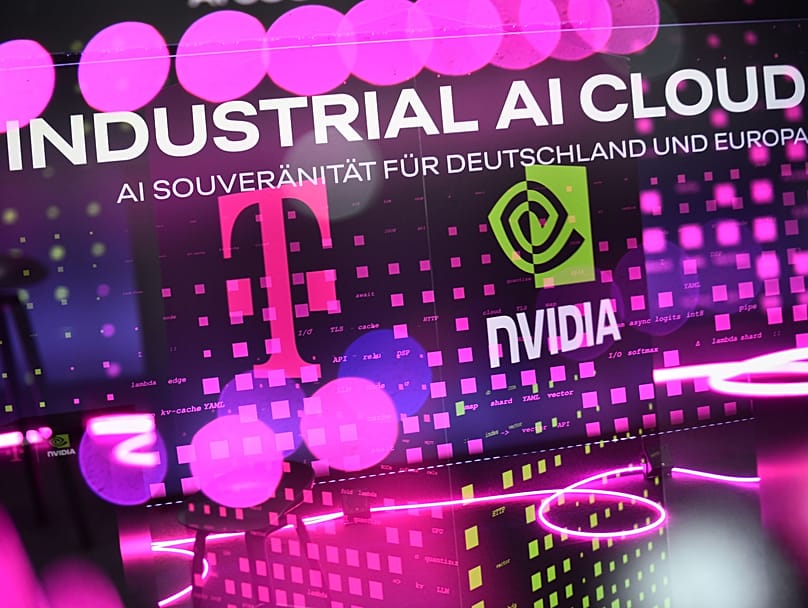
The AI factory is powered by nearly 10,000 NVIDIA Blackwell GPUs, delivering up to 0.5 exaFLOPS of computing power - enough, Telekom says, for all 450 million EU citizens to use an AI assistant simultaneously.
Crucially, the infrastructure operates under strict German and EU data protection rules, a key pillar of what policymakers describe as digital sovereignty.
Germany's Vice President and Finance Minister Lars Klingbeil said the project showed private investment was matching political ambition, adding that "technological leadership must be at the core of Germany's future business model” and that the factory “strengthens digital sovereignty".
The project also highlights the so-called "Deutschland stack", developed with SAP, which combines cloud infrastructure, business software and AI tools into a single platform for companies and public institutions.
Industrial use cases are central to the initiative. German tech company Siemens is integrating parts of its SIMCenter simulation portfolio into the AI Cloud, and a total of around 10 companies are already part of the new AI system.
Siemens executive Cedrik Neike said the setup “drastically reduce[s] our customers' simulation times," adding that "this is not a promise for the future… it is already a reality."
The factory also aims to be environmentally sustainable - it runs entirely on renewable energy, uses river water for cooling and plans to feed waste heat back into the surrounding Munich district.
The Industrial AI Cloud is now open to industry, startups, research institutions, and public authorities.