













In a six-week trial at Ford’s Cologne Innovation Centre, the Alpha HMND 01 moved heavy totes, lifted metal car parts and exceeded productivity targets.
Humanoid robots may be closer to revolutionising factory work than many expected, as demonstrated at a six-week trial at Ford's Innovation Centre in Cologne, Germany, which achieved results that exceeded targets.
 ADVERTISEMENT
ADVERTISEMENT
ADVERTISEMENT
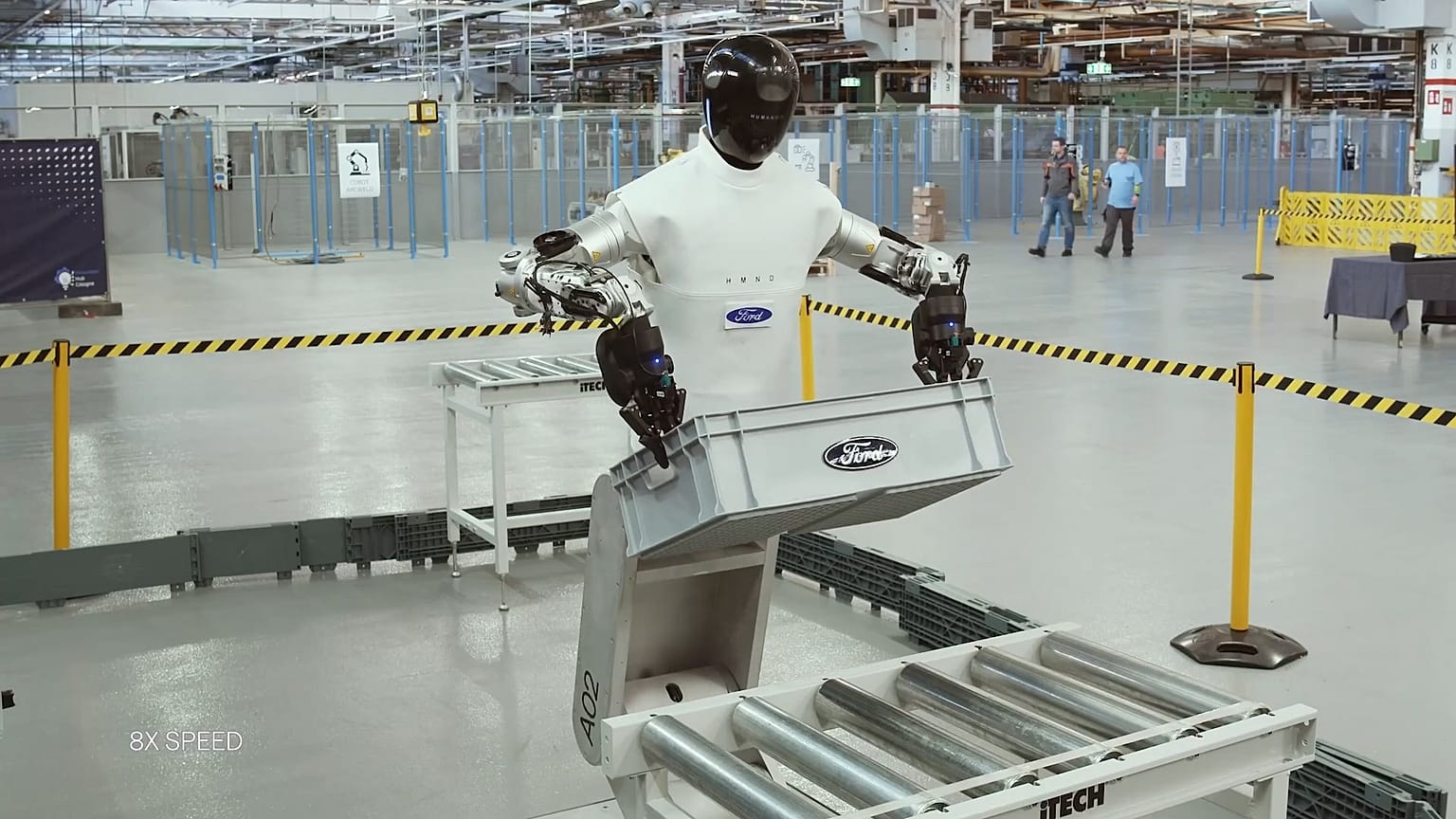
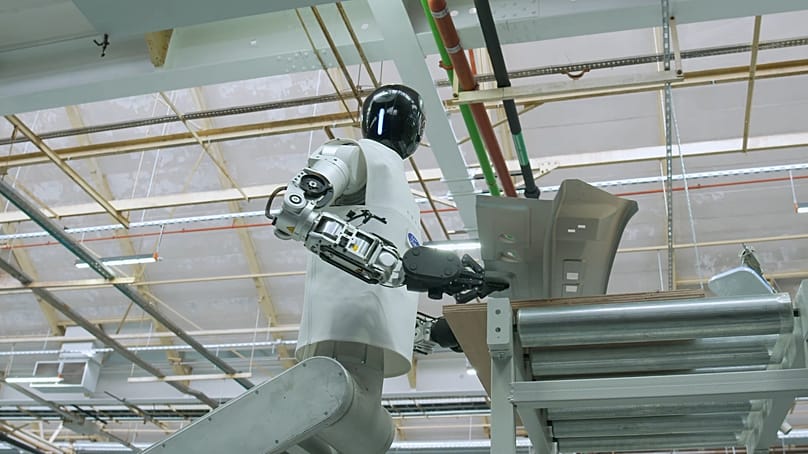
The UK-based company Humanoid, which develops AI-powered humanoid machines, said on Tuesday it had successfully tested its wheeled Alpha HMND 01 robot in two automotive manufacturing workflows: moving totes for kitting and handling large metal car body parts using two arms.
The trial aimed to assess whether humanoid robots can operate reliably in live factory-like conditions rather than controlled lab environments.
Humanoid said the robot autonomously transported totes weighing up to eight kilograms between workstations and sustained an hour of uninterrupted operation - double the original target.
During the trial, Alpha achieved 97 percent reliability in its fully autonomous pick-and-place tasks and exceeded its productivity benchmark, completing 83 pick-and-place units per hour compared with an expected target of 50.
A key part of the trial was how quickly the system was deployed. According to the company, its artificial intelligence (AI) models are trained on large, diverse datasets collected across multiple platforms, meaning the on-site work required just one hour of data collection to produce a high-performing autonomous model.
“Innovation only matters when it works on the factory floor. Our joint Proof of Concept (POC) with Ford in Cologne proves that humanoid robots are ready for real industrial tasks - not years from now, but today," said Artem Sokolov, Humanoid's founder.
"Our teams moved from discussion to a live on-site demonstration in six weeks, and the results exceeded every benchmark. The POC showed that rapid progress is possible when both sides align on scope and maintain commitment to safety."
Trials like this one in Cologne offer a glimpse of how humanoid robots could one day move from experimental technology to everyday tools on factory floors.