













An AI-powered fridge, electronic lollipops, and Amazon’s Ring cameras were named by consumer groups as some of the worst products at this year’s tech show.
Barely a week into January, artificial intelligence (AI) is already the defining feature of this year’s consumer technology landscape.
 ADVERTISEMENT
ADVERTISEMENT
ADVERTISEMENT
At CES 2026, the annual gadget fair that ended on Friday in Las Vegas, AI was everywhere. But critics and consumer protection groups are questioning whether too many products are being labelled “intelligent” without good reason.
“Worst in Show” is an annual contest that highlights what organisers see as the most wasteful technology on display at the show. It is judged by a panel of consumer and privacy advocates, including US nonprofit Consumer Reports, refurbished tech marketplace Back Market, and right-to-repair advocates iFixit.
Organisers published their list of losers on Thursday, saying they had chosen “the most overengineered, unrepairable and unsustainable technology disasters at CES” this year.
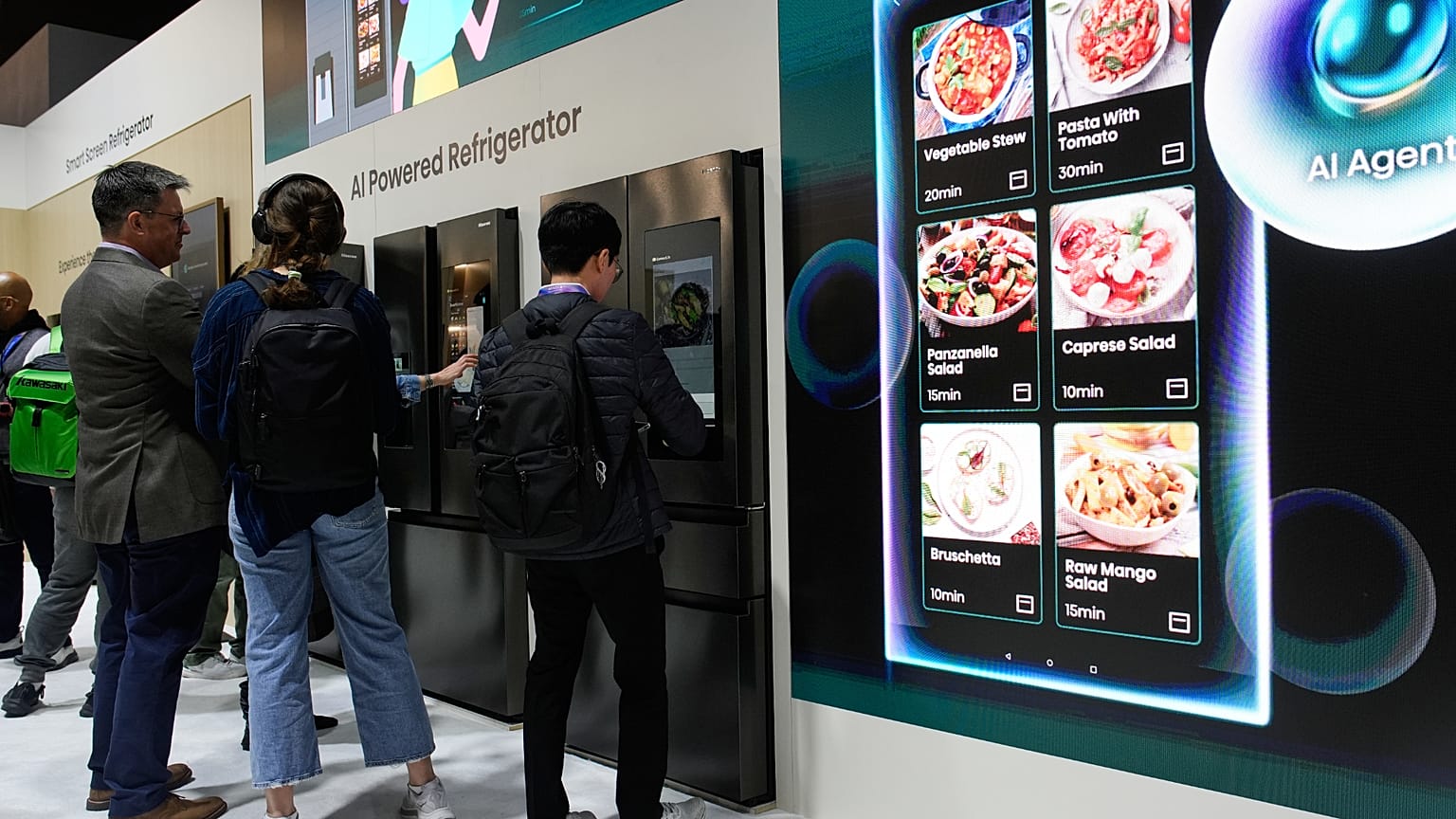
Topping the list was Samsung’s Bespoke AI Family Hub, an internet-connected fridge that can open and close its door using voice commands.
Judges said the voice controls, constant internet connection, and built-in advertising could make what’s normally a simple household appliance more likely to break, harder to use, and more costly to repair.
“The one thing a refrigerator should do is keep things cold,” Gordon-Byrne, the executive director of the Right to Repair organisation, which produces the anti-awards, wrote in the announcement.
Demonstrations at the trade show have shown that the fridge struggles to respond when there is high ambient noise, which can often occur in a busy kitchen. Organisers also pointed out the cameras on the fridge, which they deemed unnecessary.
“You don't want a camera on the front of your fridge watching you all the time,” said Elizabeth Chamberlain, the director of sustainability at iFixit, one of the groups behind the contest.
“Certainly, most people are not asking for voice-controlled, AI voice-controlled refrigerator door opening," she added.
Amazon’s Ring doorbell camera system was also named among the worst products.
The household tech was criticised over consumer surveillance linked to new AI features that were introduced across its cameras and doorbells.
Cindy Cohn, executive director of the Electronic Frontier Foundation, said the growing range of tools, including facial recognition, mobile surveillance towers, and third-party app features, risked becoming increasingly invasive.
Chamberlain said that even people without Ring devices could be affected.
"Your neighbours' cameras probably know who you are and know when you're coming home, know what you're doing, know when you’re leaving the house, when you’re going to the store, know when you’re out of town. That's creepy," she said.
Also on the Worst of Show list was Lollipop Star, an electronic lollipop that plays music as it’s licked using bone-conduction technology.
The edible device received the Environmental Impact award for its potential to create e-waste, due to its disposable batteries that only last one hour, along with single-use plastic and electronics.
“My colleague and I took it apart on the floor today. It's got two batteries in it, a speaker, a little board. It's a lot of electronics for something that's only gonna last an hour,” said Chamberlain.
The anti-awards contest was envisioned to call out technology that “undermines privacy, security, sustainability, and repairability” and has been running since at least 2023.
The judges are not affiliated with the Consumer Technology Association (CTA), which runs CES.
For more on this story, watch the video in the media player above.