




























A defence expert weighs in on whether Europe needs more nuclear-powered submarines amid growing tensions with Russia.
As tensions between world powers deepen, European leaders and the public are increasingly interested in new and high-tech military systems – including nuclear-powered submarines.
 ADVERTISEMENT
ADVERTISEMENT
ADVERTISEMENT
A nuclear submarine is a sensitive technology that is currently used by only six countries: France, the United Kingdom, the United States, Russia, China, and India.
But they have been attracting more attention lately. Last week, French military forces opened fire on unidentified drones that flew over a nuclear submarine facility in Brittany.
And in November, the US government said it would support South Korea in building nuclear attack submarines to counter North Korea – a significant departure in policy, given Washington avoided spreading naval nuclear propulsion technology for decades.
The US has long limited transfer of nuclear-propulsion technology to the UK, which it has provided assistance to since 1958. It opened to Australia in 2021.
Last month, Russia also deployed a new class of nuclear submarine named Khabarovsk.
What are nuclear submarines?
The term nuclear submarine can refer either to a submarine that is powered by a nuclear reactor or to a submarine that carries nuclear warheads, regardless of how it is powered.
This dual meaning is often used loosely and can lead to confusion.
Nuclear-powered submarines use heat from an onboard reactor to generate steam and turn their turbines, giving them extraordinary endurance.
They can remain underwater for months at a time and only need to surface for food and water resupply for their crews, which makes them far more difficult to detect.
“Having this enormous amount of energy for a long time is what is the key for them being important for countries that have nuclear-powered submarines,” Hans Liwång, a professor in systems science for defence and security at the Swedish Defence University, told Euronews Next.
On the contrary, a nuclear-armed submarine does not have to be nuclear-powered.
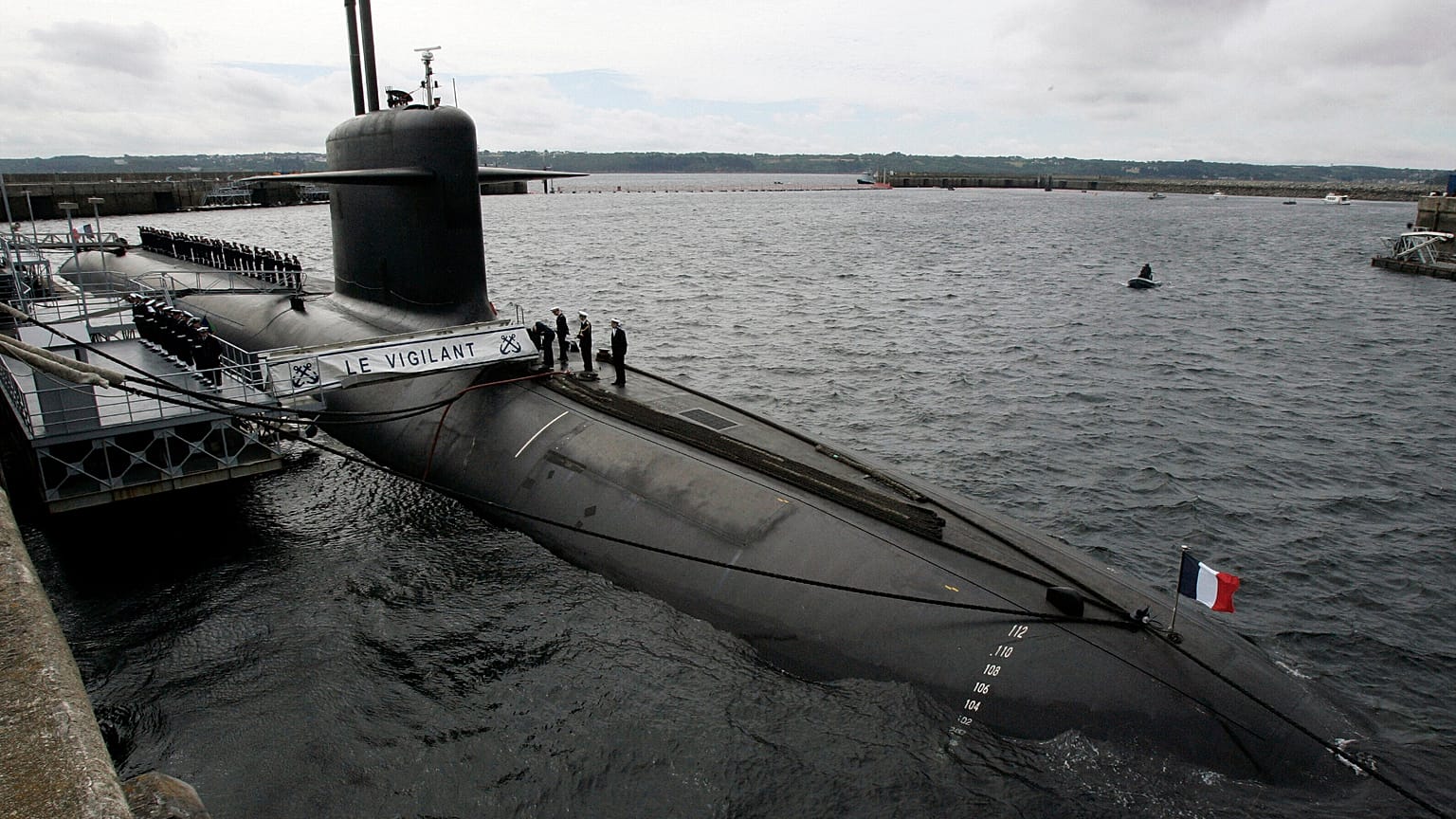
It can be a conventional diesel-electric vessel that carries nuclear missiles. A nuclear-armed platform can also be nuclear-powered, as is the case with France’s Le Triomphant class submarines.
Liwång also said that “we must assume that [Russia’s Khabarovsk] can carry nuclear weapons.”
Does Europe need more nuclear-powered submarines amid Russian aggression?
While nuclear-powered submarines can be powerful in stealth missions and surveillance, they may not be well suited to the kinds of conflicts Europe is facing today, according to Liwång.
When considering the war in Ukraine, for example, the most critical battleground for Europe and the NATO allies are land and sea, which are typically “more shallow and closer to shore” Liwång said.
That means developing a “nuclear-powered submarine isn't the core Marine activity,” he added.
He said the shallow waters and confined geography in the Baltic region make it difficult for such vessels to operate undetected. Meanwhile, missions in the deeper Mediterranean typically do not demand the size, endurance, or complexity of a nuclear-powered submarine.
Diesel-electric powered submarines tend to be smaller and cheaper to maintain. Liwång believes Europe is well off without having to invest to deploy more of them.
“For most European countries, it's much more important to have several conventional submarines] than having the specific specs that these submarines have,” he said.
Nuclear-powered submarines also come with practical challenges. Their reactors take up a lot of space inside the vessel, and refuelling them could take up to a year as they need to be disassembled to replace the old fuel source with the new one.
Still, he believes these submarines do have a place in Europe’s wider defence picture – especially when it comes to operations far out in the Atlantic – given Russia’s hybrid war tactics pose more threats on European territories such as Greenland and Iceland.
“I see a need for making sure that European countries can take a role in the defence of the Atlantic,” Liwång said.
“Nuclear-power submarines can be among them, but it also needs other things” such as conventional submarines and surface vessels, he added.
While Liwång does not see nuclear submarines as an urgent priority for Europe, he said the recent developments around the world may have knock-on effects for Europe’s security environment.
“The nuclear-powered submarine is more [a] case of power projection over the globe,” he said.
“So countries like Russia have that kind of vision, and of course it affects … their posture towards the US. And of course, Russia's posture towards the US affects how [the] US acts in Europe.”