

















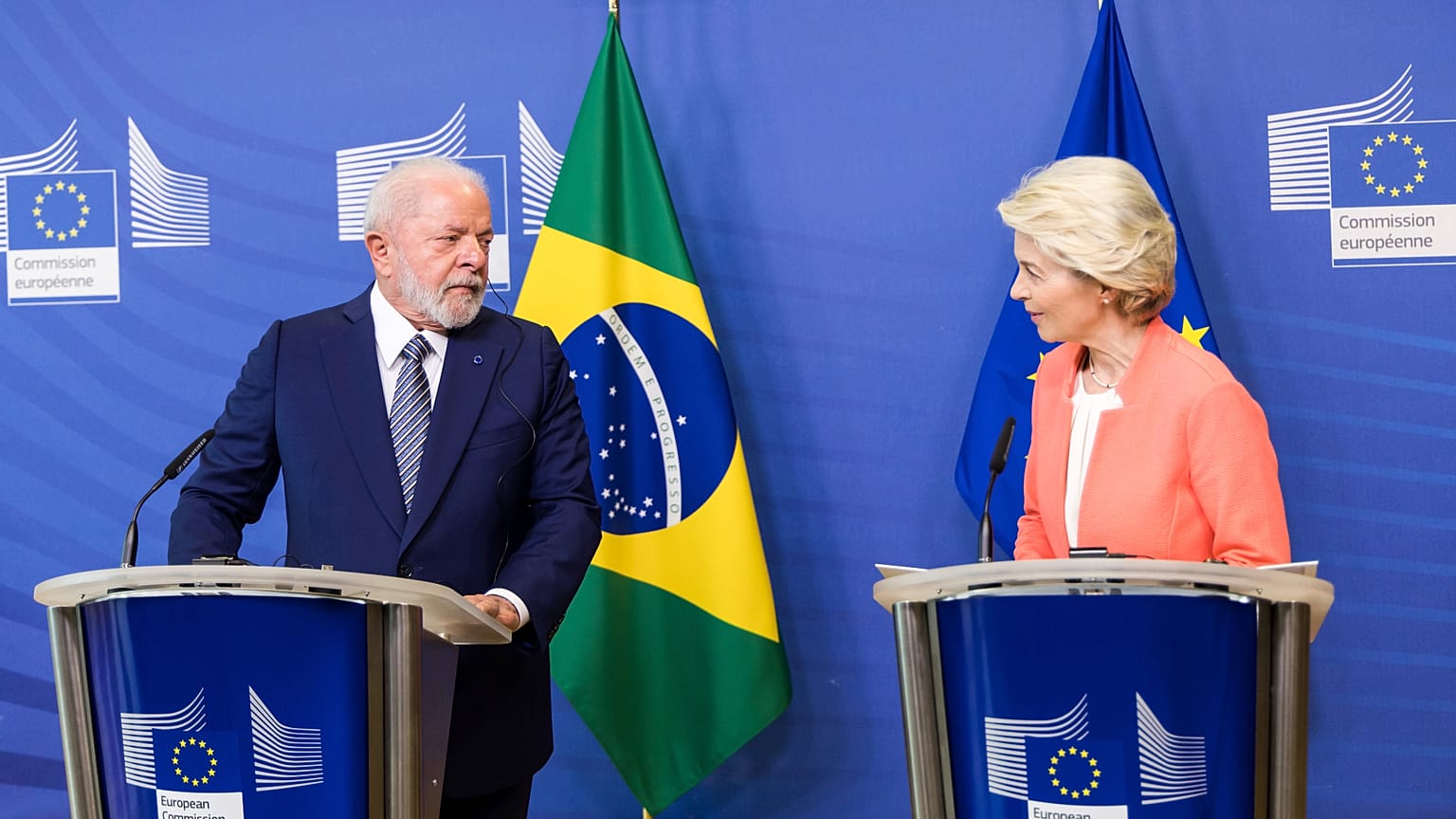













Brazil’s EU ambassador, Pedro Miguel da Costa e Silva, told Euronews "all options are on the table" after Brasília threatened retaliation over the EU’s ban on Brazilian meat imports due to antibiotic use.
Brazil’s EU ambassador, Pedro Miguel da Costa e Silva, told Euronews on Friday that an inspection of Brazilian meat was unnecessary, and threatened to retaliate against the EU ban on imports.
 ADVERTISEMENT
ADVERTISEMENT
ADVERTISEMENT
The European Commission’s decision came into force this week, after Brazil was removed from a list of countries complying with EU food safety rules over its use of antibiotics to stimulate animal growth.
An EU audit of Brazilian poultry and honey is ongoing, but the Commission said that Brasília had not provided guarantees that would allow for an audit of its beef.
The EU ban prompted anger from the Brazilian government on Thursday, which threatened to adopt countermeasures.
"Sufficient guarantees"
"There wasn't a need for an audit, not for poultry, not for honey, not bovine meat, because no audits were conducted for the other countries," da Costa e Silva said. "We have provided sufficient guarantees."
The ambassador added that while Brazil will continue discussing the issue with the Commission, "all options were on the table” if the imports did not resume and that Brazil could be "creative" when it comes to countermeasures.
The Commission pushed back on Friday against Brasília's accusation of unfair treatment, with the Commission's deputy Chief spokesperson Olof Gill saying: “Our approach is non-discriminatory, and we've given our partners sufficient time and all the information they need to adjust."
The dispute comes as a free trade deal between Mercosur countries — Brazil, Argentina, Uruguay and Paraguay — and the EU provisionally came into force in May, despite strong opposition from EU farmers, who fear that Latin American products that do not comply with the bloc’s phytosanitary and food safety standards will be dumped in Europe.
"Food safety rules are a matter of the highest priority for EU citizens," Gill added. "These rules have been well known for a long time, with third countries having been informed going back many years."
The EU introduced new rules to combat antimicrobial resistance in 2018, which have been applied to EU producers since 2022 and to foreign importers since Thursday.