
















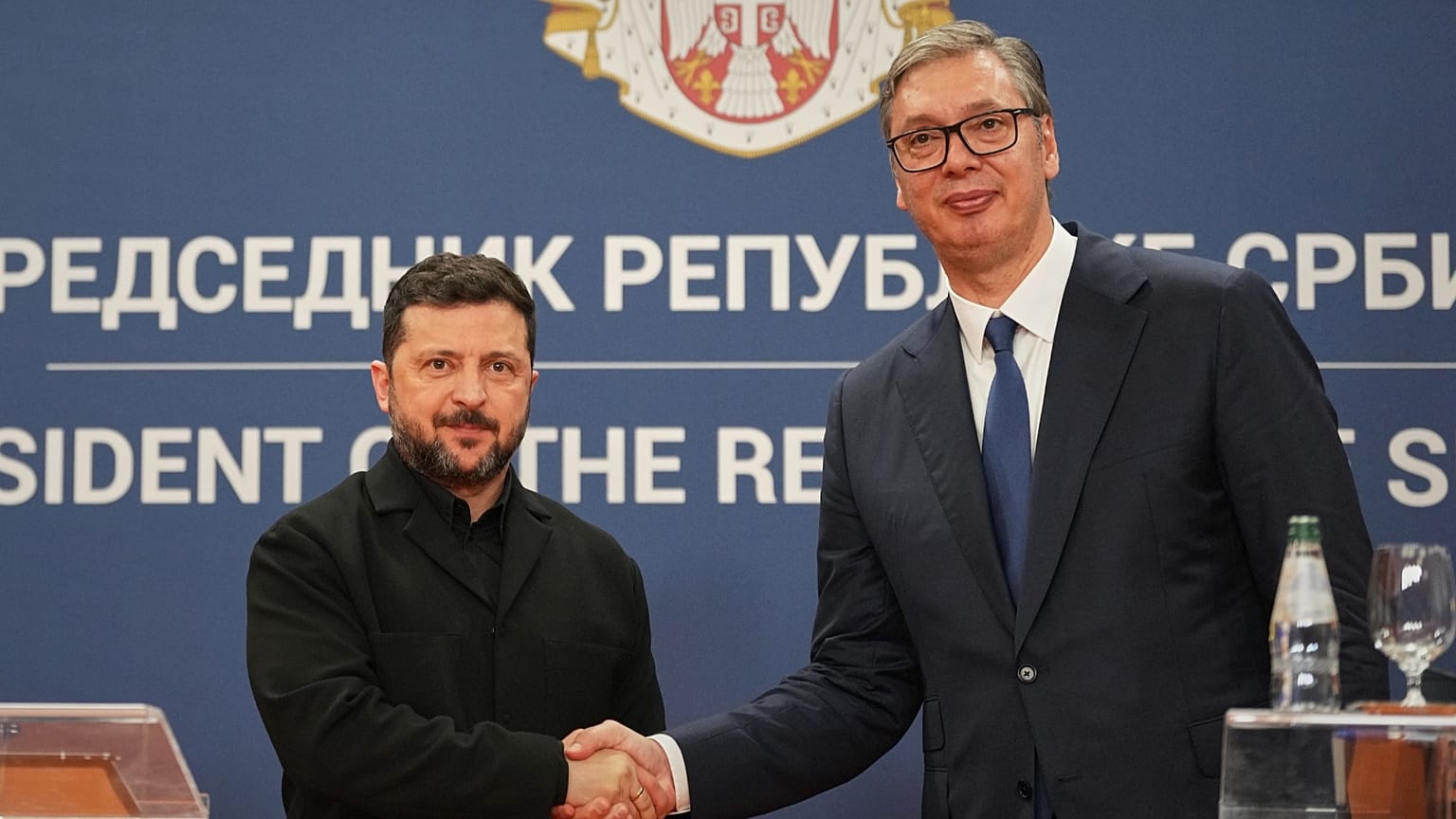














The talks between Zelenskyy and Vučić come as Russia's war against Ukraine once again intensifies. Despite Serbia’s historical ties to Russia, its bid to join the EU now seems to have taken the lead in considerations.
Serbian President Aleksandar Vučić said he hopes to see an end to the war in Ukraine, but doubts it will happen soon.
 ADVERTISEMENT
ADVERTISEMENT
ADVERTISEMENT
"If you ask me, and as a political veteran, I can tell you that I’m not sure about it, and I’m very much afraid that we’ll have another difficult winter," Vučić said during a joint press briefing with Ukrainian President Volodymyr Zelenskyy, who is visiting Belgrade.
“But I just hope, without any real facts behind these hopes, that this will end tomorrow," he added.
Zelenskyy arrived to Belgrade on Friday for his first official visit to Serbia since becoming president in 2019.
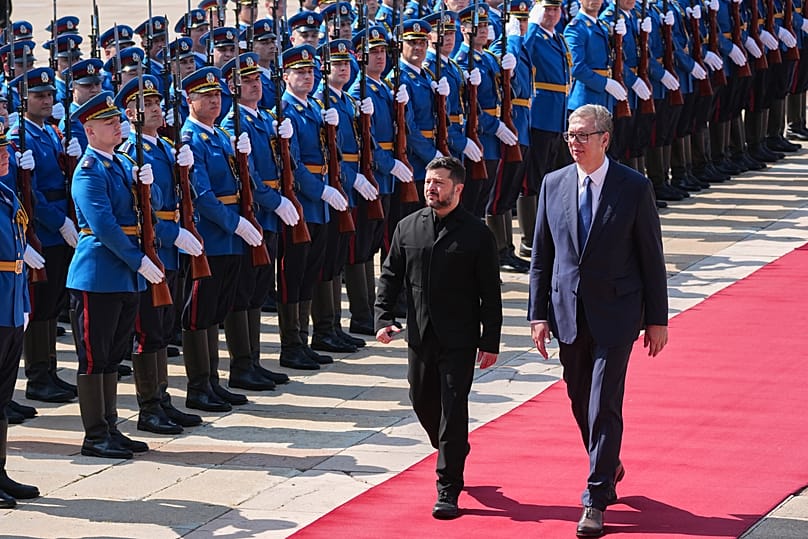
The Ukrainian president received an honour guard welcome on Saturday, followed by a meeting at the Presidential Palace with his Serbian counterpart.
As part of the visit, the Serbian Ministry of Agriculture and the Ukrainian Ambassador to Serbia signed a Memorandum of Understanding.
Following the bilateral signing, Vučić said the two nations will soon deliver a free trade deal, saying it is of "utmost importance for our country and Ukraine".
"We will work hard and I believe that swiftly and efficiently we will deliver it to our people," Vučić added.
While Ukraine seeks to strengthen international support amid Russia’s ongoing and intensifying strikes, Belgrade is seeking to balance this relationship with Moscow against pressure from the European Union to align with the bloc’s foreign policy.
By hosting Zelenskyy, Vučić is sending a strong signal to the EU, but also to Russia.
Serbia is one of the few European countries that has kept close ties with Moscow following Russia's full-scale invasion of Ukraine, relying almost entirely on Russia for its energy supplies.
Prior to the meeting with Zelenskyy, Vučić reiterated Belgrade's stance that it would not impose tougher sanctions on Russia. Serbia, however, has provided aid to Ukraine in the form of direct financial and humanitarian assistance, though not military.
Zelenskyy: Weapon agreements are in place, but supplies remain insufficient
Zelenskyy’s visit to Serbia comes as Moscow continues its strikes on Ukraine. Overnight, Russian forces launched several attacks on Kyiv, killing at least three people, including a child, and injuring several others.
Russia has significantly intensified its attacks on the Ukrainian capital in recent months, often by firing ballistic missiles that are difficult to intercept.
"There was another missile strike last night—ballistic missiles targeting our infrastructure. There were also attack drones. In particular, reactive Shahed drones were again targeting our energy facilities and railways," Zelenskyy said during the joint press conference with Vučić.
Speaking on Ukraine's defence against Russian aggression, the Ukrainian leader said there are agreements in place for weapon distribution, but supply has not been sufficient.
"Who has ballistic missiles and systems? The manufacturer. That’s the United States of America, first and foremost. Can they help? We’re working on this. Will they provide us with missiles every month? Yes, we have agreements in place. But are these missiles enough? No," Zelenskyy said.
Several US media reported about Washington's dwindling weapons stockpile, claims that President Donald Trump has denied.
Zelenskyy said that supplies of air defence systems from foreign partners decreased in 2026 compared to last year, and called on Europe to contribute more.
"We say the Americans have to provide them, but the Europeans too—we’re working it out with them. The process for some of these licenses is also taking a long time. And that’s the truth," the Ukrainian president said.