




























In the global race for innovation, the winners are those who can finance, test, manufacture and scale up new technologies the fastest, writes Italy's former Prime Minister, Enrico Letta, in an opinion piece for Euronews, calling for a "fifth freedom" for the EU.
Europe faces a paradox. We produce some of the best science in the world, yet we rarely build the companies that turn this science into global success. We educate brilliant researchers and entrepreneurs, only to see too many of them take their ideas abroad to grow.
 ADVERTISEMENT
ADVERTISEMENT
ADVERTISEMENT
Europe struggles to turn excellent science into business
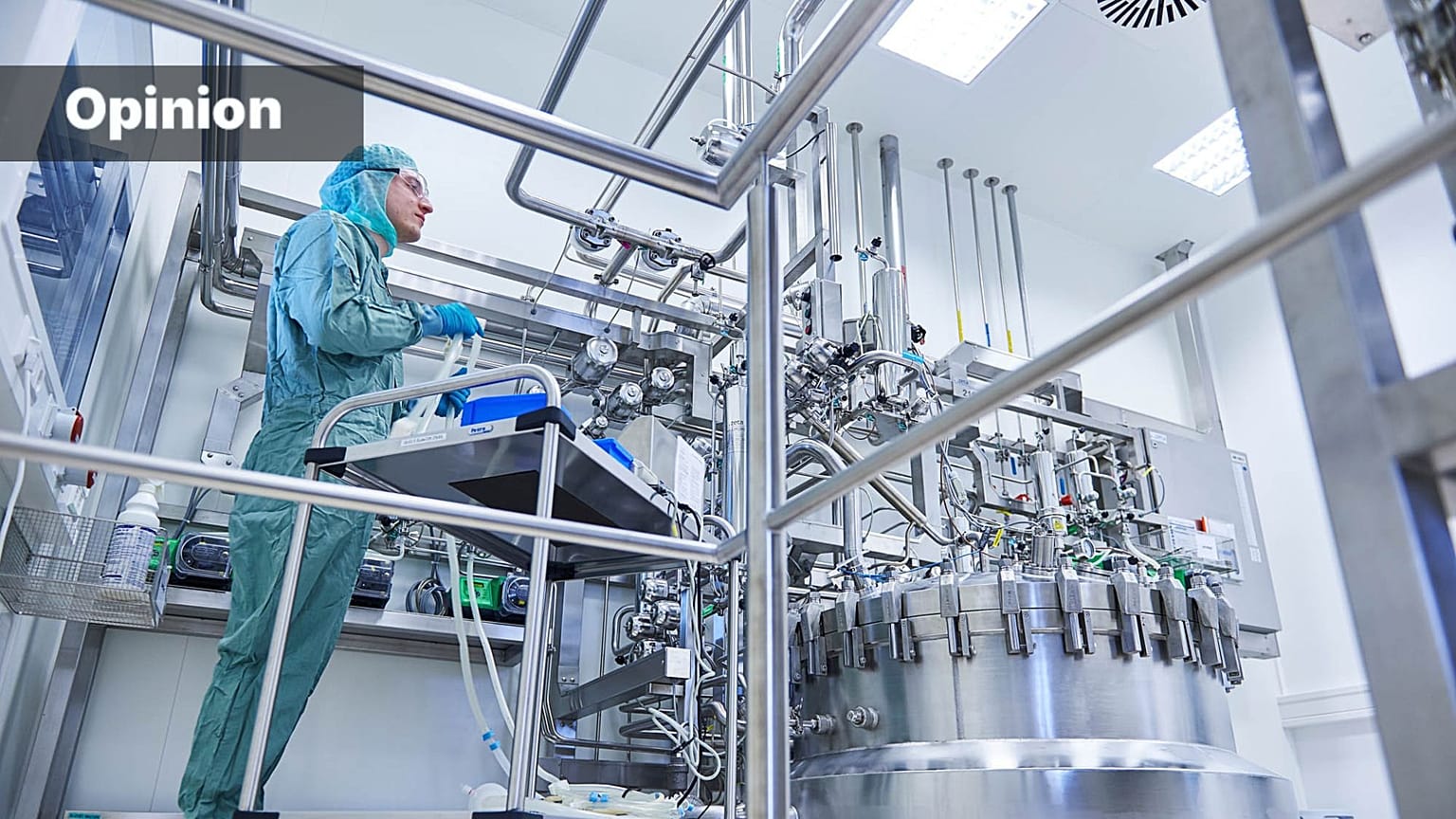
Nowhere is this clearer than in health and life sciences. Europe's scientific base remains formidable, yet we struggle to turn that excellence into business, and to keep the companies we did build in Europe. The European Commission's own diagnosis, set out in its 2025 Biotech Act, is blunt: financing and scaling increasingly take place elsewhere. Between 2015 and June 2025, biopharma start-ups in the United States drew around €219 billion in venture capital focused on health biotechnology; their European counterparts attracted just €25 billion, roughly nine times less late-stage funding.
The gap is just as visible in medical testing: the European Economic Area's share of global clinical trials fell from 18% in 2013 to 9% in 2023, while China's share rose from under 10% to nearly 30%. We see the same when it comes to the introduction of new treatments: they reach American patients before Europeans. And even after a medicine is approved in Europe, our fragmented market delivers it slowly and unequally across member states; not all Europeans are equal when it comes to health care. The moral of the story: strong science is not enough. Without capital and scale, Europe risks becoming a market for foreign industries.
Europe must keep its dreamers or risk its future
I heard this story again and again while preparing my report on the future of our Single Market. Young entrepreneurs told me numerous times that "We love Europe, but if we want to grow, we have to leave.” We should sit with how serious that is. A continent that cannot keep its own dreamers is one that is slowly giving away its future.
The race that will define this century is not won by whoever invents something first. It is won by whoever can finance it, test it, manufacture it, and scale it fastest. The United States pairs deep pools of capital with a vast internal market that rewards bold ideas almost overnight. China is pouring extraordinary public resources in not just science but in the commercialization of it.
Why the EU needs a 'Fifth Freedom'
Now that leaders on both sides of the Atlantic talk of ‘reshoring’ and bringing back industries, Europe first has to answer an honest question: bring back to what? As long as Europe does not have a large, open, and worth-betting-on health market, no amount of strategy documents will bring companies back or keep them here.
That is also why I launched the idea of a Fifth Freedom, alongside the free movement of goods, services, capital, and people: the free movement of knowledge, research, and innovation across our continent. So that a start-up in Lisbon can find investors in Paris, scientists in Warsaw, and a factory site in Milan without ever needing to cross an ocean.
European biotech founders should not have to leave Europe
Health shows both the problem and the promise. Through our public health systems, Europe holds some of the richest medical knowledge on earth, knowledge that, used responsibly and shared across borders, could make us a world leader in the medicine of the future. We have the science. What we lack is the courage to connect it, fund it, and let it grow on a continental scale.
Europe cannot afford to remain trapped between brilliant science and a fragmented economy. The Fifth Freedom is our way out - and the test is simple: the next generation of European biotech founders should be able to build their company, raise their funding, and reach their patients without ever leaving the continent.