




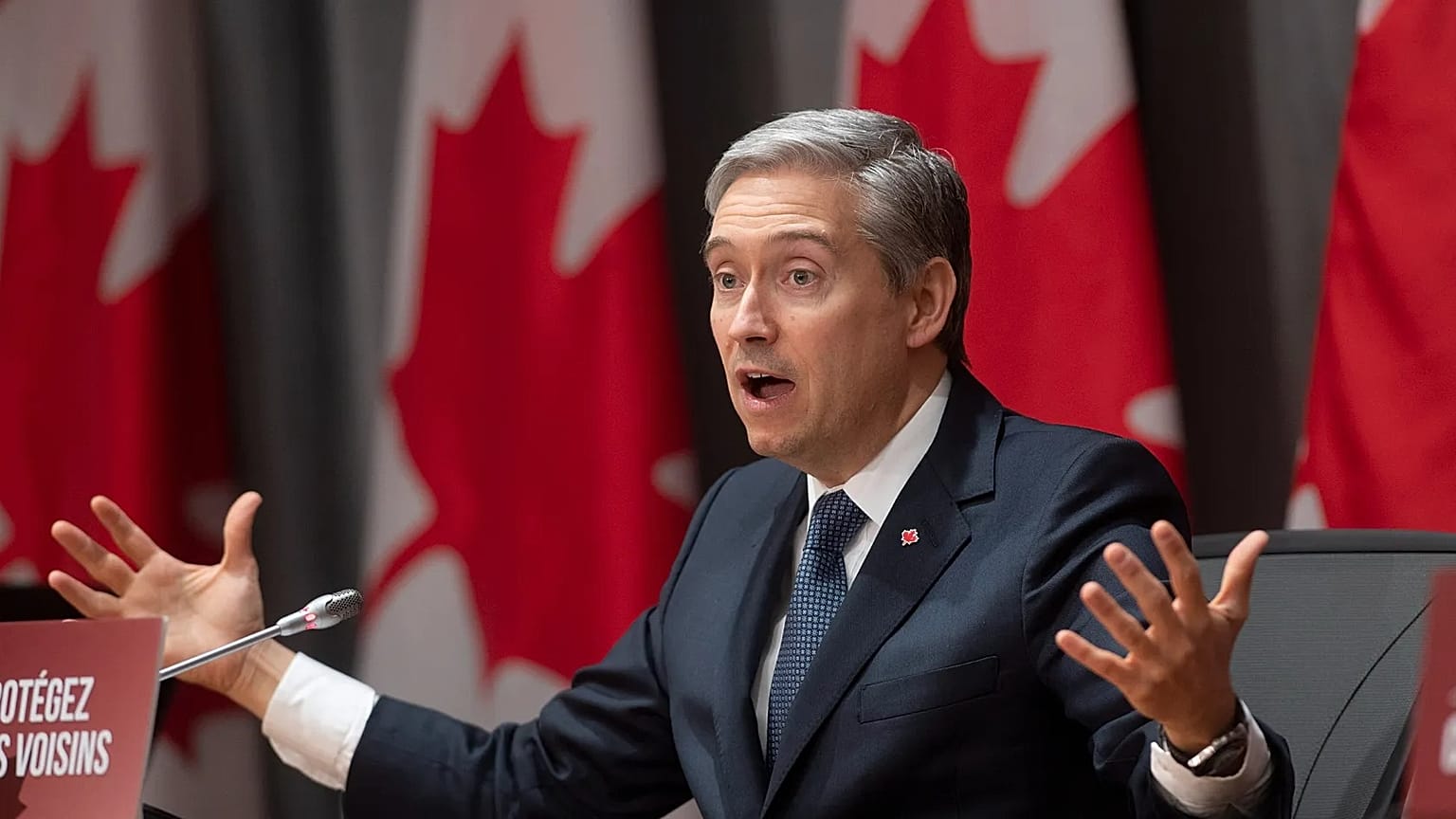













François-Philippe Champagne was the special guest at Monday’s meeting of euro area finance ministers in Brussels – the first time a Canadian representative had been invited to this restricted format, from which non-euro area ministers are normally excluded.
Canadian Finance Minister François-Philippe Champagne made a special appearance at this week's meeting of 21 ministers from the euro area, with the goal of discussing global macroeconomic imbalances.
 ADVERTISEMENT
ADVERTISEMENT
ADVERTISEMENT
With relations with the United States at an all-time low, Canada is looking for new global ties, including with the European Union.
In the discussion in Brussels, Champagne and the eurozone partners agreed to coordinate policy actions to promote rebalancing while at the same time containing geo-economic threats.
“As the rules-based international order is fading, Canada’s government is firmly committed to deepening our relationship with the EU and its Member States, particularly on security and defence, critical minerals, innovation and research, and trade diversification. Through strategic partnerships, we’re not only defending our shared values but also championing Canada on the world stage”, Champagne said in a statement.
The leaders said that discussion on the matter will continue in other formats, such as in the G7 and G20 upcoming meetings.
In addition to the discussions with the Canadian minister, euro area finance ministers began debating the euro’s global role in international trade and in digital monetary policy. Although no concrete strategies have been decided yet, the ministers indicated that this is the political direction the euro area intends to pursue.
Global macroeconomic imbalances occur when some countries consistently spend more than they earn, while others consistently save more than they spend, and this gap becomes large and long-lasting.
For example, the US imports more goods than it exports and therefore runs a trade deficit; in contrast, China exports more than it imports and runs a surplus. From the point of view of both the Canadian government and many European Union leaders, these and other major imbalances have left the world order open to coercive manipulation.
"Great powers have begun using economic integration as weapons, tariffs as leverage, financial infrastructure as coercion, supply chains as vulnerabilities to be exploited," Canadian Prime Minister Mark Carney said during his remarks at the World Economic Forum in Davos this January.
"You cannot live within the lie of mutual benefit through integration when integration becomes the source of your subordination."