

















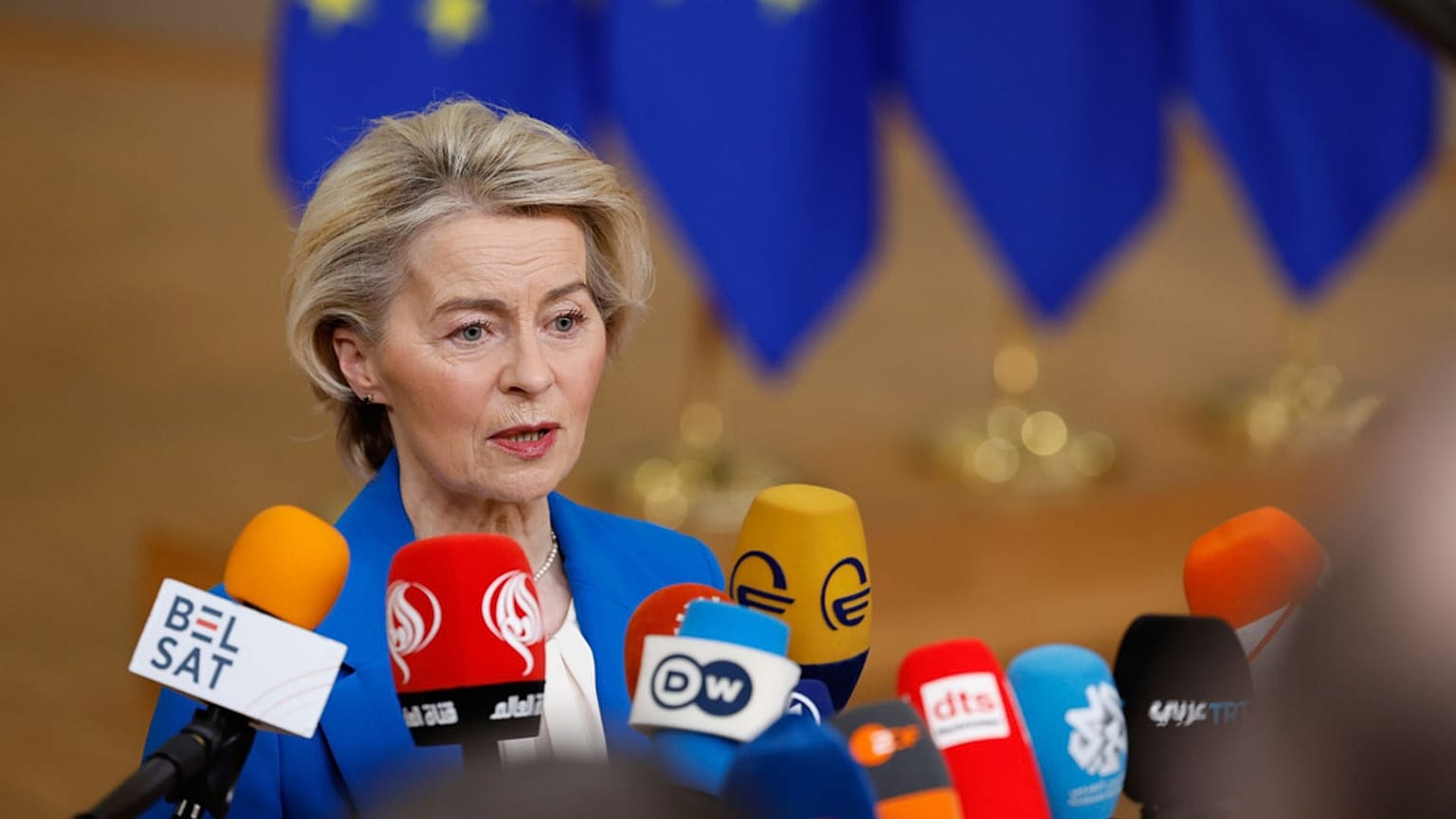














A report by Republican lawmakers in the US has slammed the European Commission for allegedly posing as a 'foreign censorship threat', claiming it unfairly targets conservative and populist views and tries to manipulate elections in EU member states. The Cube takes a look at the allegations.
The EU has been carrying out a decade-long campaign to censor American free speech and infringe on their rights by pressuring major social media platforms in secretive meetings to change their global content moderation rules, according to US Republican lawmakers.
 ADVERTISEMENT
ADVERTISEMENT
ADVERTISEMENT
In a report by the Republican-led House Judiciary Committee entitled 'The Foreign Censorship Threat, Part II', US politicians claim that European Commission officials aggressively pressured social media networks to censor content — particularly American and conservative publications — under the false guise of combating bigotry and fake news.
"In response to this pressure campaign, major social media platforms censored true information and political speech about some of the most important policy debates in recent history — including the COVID-19 pandemic, mass migration, and transgender issues, claiming it was combating hate speech and disinformation," the lawmakers said.
The Commission also allegedly interfered in national elections in EU member states France, Ireland, the Netherlands, Romania and Slovakia, as well as candidate country Moldova, between 2023 and 2025, in addition to the 2024 European elections.
"Nonpublic meeting agendas and readouts show that the European Commission regularly convened meetings of national-level regulators, left-wing NGOs, and platforms prior to elections to discuss which political opinions should be censored," the report reads.
Its claims have been seized on by far-right figures in Europe and amplified by X owner Elon Musk, who is a fierce critic of the EU's digital rules because he too believes they are censorship tools.
It comes after the EU recently fined X €120 million for violating the Digital Services Act (DSA) — an EU regulation designed to create a safer, more transparent online environment — for "deceptive" design, poor transparency in advertising, and restricted access for researchers.
However, the EU and independent experts alike have been quick to denounce the report's findings, with the European Commission labelling them "pure nonsense".
The allegations are "completely unfounded, and we all know that," European Commission spokesperson Thomas Regnier said in an emailed statement. "Freedom of expression is a fundamental right in Europe."
He pointed to the continent's consistently high ranking in global freedom of expression indexes and noted that the DSA often helps social platforms.
"In the first half of 2025, Meta has taken 24.5 million content moderation decisions in the EU. Out of these, almost 30% of the decisions were reversed," he said. "And this was only possible thanks to the DSA. This is not censorship, this is the opposite!"
On the claims that the EU is silencing political voices, Regnier said: "Online platforms can algorithmically influence elections, we all know that. But not in Europe, because we stand for free and fair elections."
"Here's another fact: we had to open an investigation against Meta for potential shadow-banning of political content in Europe," he added. "Here again, the DSA protects free speech."
What does the DSA actually do and does it target Americans?
Experts have also been quick to pour cold water on the report's allegations, highlighting a political agenda running throughout and a distortion of what the DSA actually says.
Researchers at the University of Amsterdam told Euronews' fact-checking team, The Cube, that the DSA seeks to moderate and block illegal content online, among other measures, and that it's blind to political ideology or stance.
"The goal of the DSA is to set out 'harmonised rules for a safe, predictable and trusted online environment that facilitates innovation and in which fundamental rights enshrined in the Charter, including the principle of consumer protection, are effectively protected'," said Natali Helberger, professor of law and digital technology.
There is no reference in the law to moderating conservative, populist or right-wing views. It only ever refers to "illegal content" (essentially any discriminatory content that goes against national law, such as racism and homophobia) and making sure that algorithms and systems have no negative effects on civic discourse, electoral processes and public security.
Pointing to the wording of the legislation, Helberger said that the DSA's goal, therefore, isn't censorship or interfering with elections, but rather a commitment to respecting fundamental rights and political freedom from the very first article.
"The threat of censorship of political speech is exactly what the DSA is trying to prevent," she said.
"The DSA is not directed at Americans, but has the objective to protect the fundamental rights of Europeans," Helberger continued. "Neither is it specifically directed at US companies, but at all companies, including European and non-European companies, that offer and sell their services to Europeans — leaving it perfectly free to US companies to not target their services at the European market if they decide they do not want to submit to the rules of that region."
It's true that some US platforms may feel that the "Brussels effect" is in play — where the EU's standards, while technically only applying in the bloc, force outside companies to adhere to them on a global scale for efficiency's sake — but the DSA certainly isn't targeting Americans specifically.
"In the past, platforms have taken after EU regulations and made that their global governance," said Claes de Vreese, professor of artificial intelligence and society. "But this is their choice — they could offer different services and requirements."
"The [House Judiciary] committee is construing an argument of hampering the free speech of Americans," he added. "But really, platforms such as Meta and X can do whatever they want; they choose to apply EU regulations to the US."
Ongoing pressure
According to experts, the report forms part of a consistent campaign by the House Judiciary Committee to construe the DSA as an exercise in censorship.
"The report is 'damaging' but not surprising, as it fits into this systematic effort," said de Vreese. "It's really important to stress that this is not a report that comes out of nothing — it has a history to it."
He said that the chairman of the committee, Jim Jordan, has been waging such a "crusade" for a significant amount of time, intensifying throughout 2025 as he homed in on the idea that EU regulations force US platforms to adopt restrictive moderation policies globally, harming US companies to the benefit of European competitors.
In addition to publishing aggressive studies against the EU, Jordan has personally confronted European officials about such regulations over their supposed "overzealous" approach and risks to free speech.
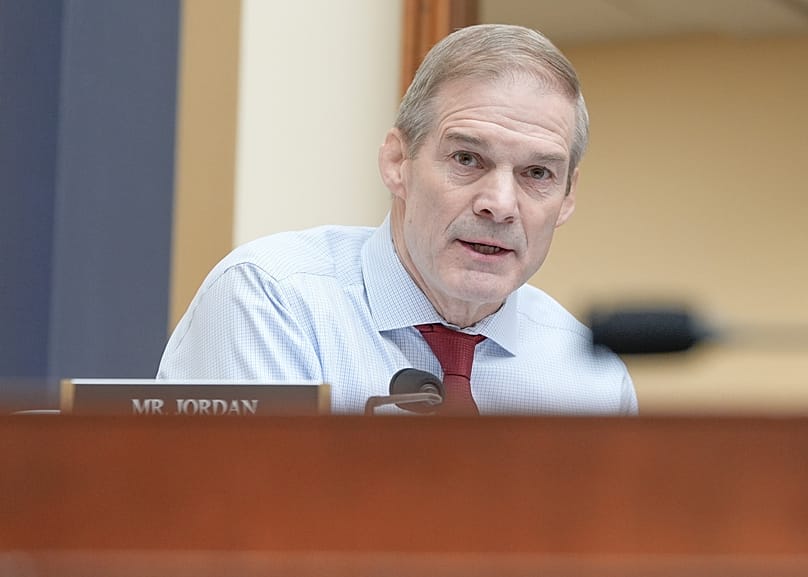
"This committee is feeling emboldened by the current political whims in the US," de Vreese said. "Earlier reports came when [US President Donald] Trump wasn't around, but having support from Trump now makes the impact even stronger."
Helberger said that she finds the committee's findings "deeply concerning", as it signals another low point in the US-EU relationship, amid Trump's previous threats on Greenland, tariffs and personal attacks on European leaders.
"There are good reasons to see this as part of the ongoing pressure of the Trump administration to pressure the EU in lowering its legal requirements for the safety and respect for fundamental rights of Europeans," she said, adding that this would benefit US technology companies and contribute to Trump's aims to have "unquestioned and unchallenged global technological dominance".
The report is also controversial because not only does it miscontrue policy efforts, but it singles out individual officials, regulators and organisations too, according to de Vreese. It contains photos of and specific references to former European Commissioner Thierry Breton and former vice president of the European Commission for Values and Transparency, Věra Jourová, for example.
"It's a highly problematic way of having a discussion," he said. "The discussion itself is important, but it shouldn't be like this, with ad hominem attacks."
"It's completely fair to have a healthy discussion about the implementation of the DSA and its scope — the proof of the pudding is in the eating — but the idea of putting the entire legislation in the box of censorship is ridiculous," de Vreese added.
Not-so 'secret' meetings
De Vreese also challenged the notion that European Commission officials held clandestine meetings where they pressured US platforms to censor content.
He said he was invited to two such meetings referenced in the report, including one with Dutch authorities, although he did not ultimately attend.
"All the Commission was trying to do in these meetings was to show working examples of risks," he said. "The meeting with the Dutch regulator was portrayed in the report as a covert attempt for censorship, but the meeting was published online; it was never a secret."
"The report paints the meetings as evidence of the EU and its member states trying to stifle free speech and harm the US," de Vreese said. "Really, they were designed to exchange views and activities in preparation of elections."
Ultimately, the House Judiciary Committee report only reinforces the need for the EU to speed up reclaiming its digital autonomy, according to Helberger.
"It highlights the importance of not simply replacing the services of US large tech companies with EU Big Tech companies but investing in, and incentivising European technology that respects and promotes European values," she said.
"The report also highlights how little the Trump Administration respect the sovereignty of foreign states, like the EU, and I worry that there is a real danger that the US is willing to use the current level of dependency on US tech against Europe," she added. "For the sovereignty, international standing and legitimacy of the EU, it is therefore crucial to not succumb to this pressure."