




























The Eastern Flank Watch is one of four flagship projects pitched by the European Commission to boost Europe's defence, but EU leaders have yet to endorse the proposal, which is currently light on details.
Leaders from member states on the EU's eastern frontier called on Tuesday for the "prioritisation" of European Union funds towards the so-called Eastern Flank Watch flagship project, arguing they are "at the forefront" of the threat posed by Russia and therefore the bloc's first line of defence.
 ADVERTISEMENT
ADVERTISEMENT
ADVERTISEMENT
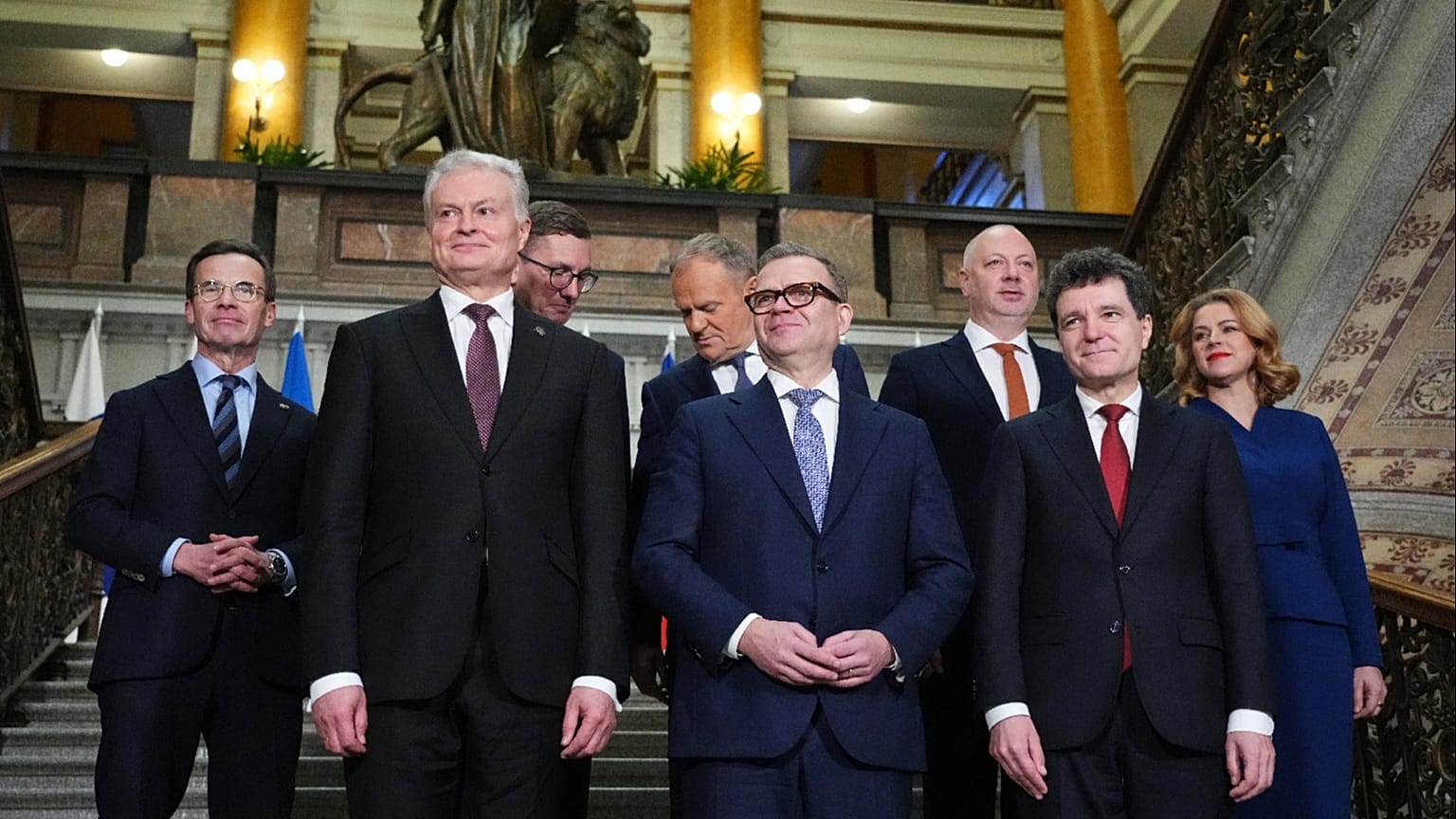
In a joint declaration released after a summit in Helsinki, the leaders of Sweden, Finland, Poland, Estonia, Latvia, Lithuania, Romania and Bulgaria said that since Russia poses the "most significant, direct and long-term threat" to European security, there should be an "immediate prioritisation of the EU’s Eastern Flank through a coordinated and multi-domain operational approach".
The Eastern Flank Watch is one of four flagship projects the European Commission pitched in mid-October to be funded as a matter of urgency in a Defence Readiness 2030 Roadmap. Also included were a European Drone Initiative and a European Space Shield.
The EU executive said in its proposal that the flagship project aims to build up eastern member states' capacity to face a wide range of threats, including hybrid operations, drone incursions, Russia’s shadow fleet and the risk of armed aggression.
It envisages the Eastern Flank Watch being labelled a European Defence Project of Common Interest, which would grant it access to more EU funding as well as accelerated planning and authorisation.
The proposal does not however include any details on what the project would look like or cost, and EU27 leaders have not yet endorsed the roadmap – though they are expected to do so at a summit in Brussels on Thursday.
The roadmap is part of a series of packages the Commission has put forward to turbocharge European defence production and acquisitions before the end of the decade following warnings Moscow could seek to test NATO's Article 5 over the coming four to five years.
These have included allowing member states more fiscal flexibility for defence spending, the creation of a defence loan scheme, and the simplification of rules for defence companies.
"The buildup of European defence will not happen or continue unless we, as states on the EU's eastern border, make our voices heard, explain our realities," Finnish Prime Minister Petteri Orpo told reporters after Tuesday's gathering.
"I am happy to announce that Finland is ready to take on the role of the lead nation, together with Poland of the Eastern Flank Watch. I want to underline that every EU member state is welcome to join," he added.
The eight countries committed to take work forward at technical level "to create concrete measures" and detail what the flagship project would entail, Oropo also said.
For now, the declaration only states that they believe the Eastern Flank Watch would necessarily incorporate capabilities including ground combat capabilities, drone defence, air and missile defence, border and critical infrastructure protection, military mobility and counter mobility, and strategic enablers.
It also states that it would require "broad EU support and engagement and the use of different EU instruments" including the recently-adopted €1.5 billion European Defence Industry Programme.
But the Eastern Flank leaders also called for a share of the funds from the bloc's next multi-annual budget. Set to run from 2028, it could see as much as €131 billion allocated to defence – a five-fold increase from the previous envelope.
"One of the goals" of this new format, Polish Prime Minister Donald Tusk said, is to "use effectively EU funds and EU money," with the eight countries also ready to use "political pressure and tough and united argumentation" to negotiate with their EU peers.
"The understanding of the need here in this part of the world is quite common," Tusk added. "We are very pragmatic. I'm absolutely sure that for our security, not only for my country, for all of us, this format and our common work is absolutely crucial and it can be a role model for other countries."