

















The European Union is prioritising domestic production of key raw materials to manufacture electric vehicles without becoming reliant on other world powers.
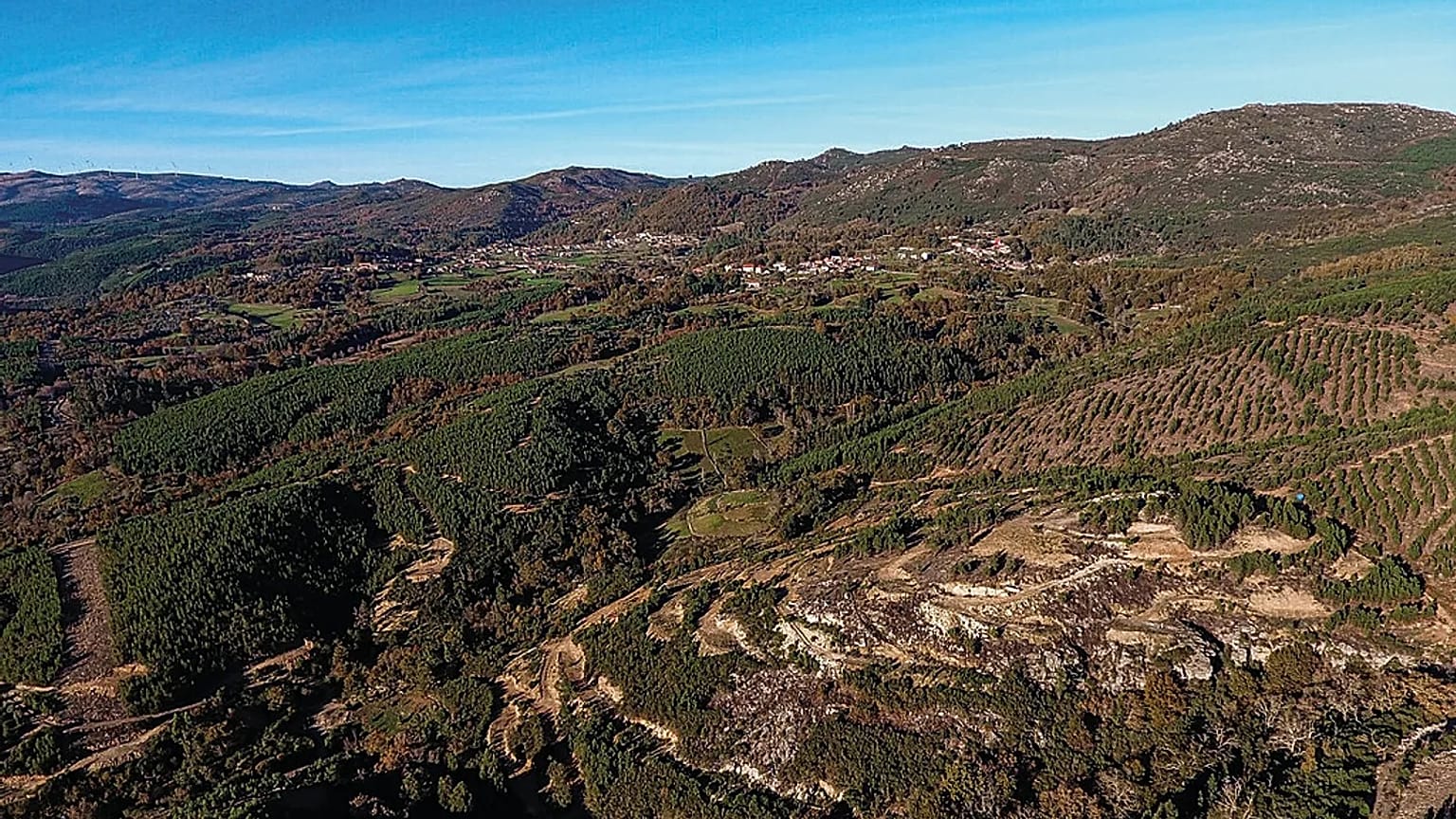
The controversial Mina do Barroso lithium project in northern Portugal will retain its official status as a "strategic" project after the European Commission concluded that the venture will not strain water reserves.
 ADVERTISEMENT
ADVERTISEMENT
ADVERTISEMENT
The project had been recognised by the Commission as "strategic" in March but a public backlash against its impact on the environment and legal challenges held up its development.
Meanwhile, Savannah Resources, the Anglo-Portuguese consortium behind the lithium project, conducted an impact assessment of the region's water resources.
The company said that several changes made to the initial project to monitor and minimise the impacts of extraction on surface and groundwater meant that the risks linked to water resource availability were "significantly reduced".
"Not only monitoring measures, but also mitigation measures were imposed to ensure that the contested project does not violate the objectives of the Water Framework Directive," it wrote in a statement.
Savannah Resources says the project has the potential to produce approximately 500,000 electric vehicle battery packs' worth of lithium annually, while some estimates suggest it could produce enough for up to one million battery packs per year.
EU's binding goals
The Commission's decision to retain Mina do Barroso's status as a strategic project comes as the EU27 rush to increase production of key raw materials for electric vehicle batteries.
Under the 2024 Critical Raw Materials Act (CRMA), 34 critical and 17 strategic raw materials are designated as “crucial” for the green and digital transitions, as well as for the defence and space industries.
The law sets three targets for the EU’s annual consumption of raw materials: 10% for local extraction, 40% to be processed in the EU, and 25% to come from recycled materials.
The CRMA was proposed by the Commission to reduce reliance on foreign producers, in particular China, and to ensure diversification of supply needed to deliver the European Green Deal, the EU’s plan to become carbon neutral by 2050.
Following the first call for businesses to secure the continent's supply of critical raw materials in March this year, the EU executive already selected 47 "strategic projects" across the bloc and 13 outside it.
ReSourceEU
The recent crisis surrounding the chipmaker Nexperia, which led China to impose tariffs on rare earth metals and disrupted the European automotive sector, was a wake-up call for Europe.
At the same time, the United States' pursuit of an "America-first" trade strategy has enabled the European Commission to develop a new de-risking strategy, dubbed ReSourceEU.
“We need clarity about our sources of supplies, stocks, and challenges, especially at a time of tensions with China. We need to assess the level of tension in the market," Commission's Executive Vice President Stéphane Séjourné said, noting that dialogue with Beijing "remains essential".
The ReSourceEU plan centres on monitoring both the extraction and the processing of raw materials, reducing the risk of supply disruption, diversification, recycling and stockpiling.
The EU executive said it will impose restrictions on exports of waste from permanent magnets and impose customs duties on such products in a bid to increase the use of recycled materials.
The EU27 will also set up a joint purchasing system for member states, with €3 billion in financing available to unblock projects in the immediate future.
"We expect additional financing from member states. There will be a call to mobilise cohesion and defense funds as part of our strategy to reduce dependencies," said Séjourné.
The European Commission will announce a new series of projects on critical raw materials in January.