




























Madrid's Gregorio Marañón Hospital has created the world's first personalised metamaterial bone prosthesis, successfully implanted in a 38-year-old with tibial sarcoma, avoiding leg amputation.
Madrid's Gregorio Marañón Hospital has managed to avoid the amputation of a leg thanks to a pioneering bone implant custom-made for a 38-year-old patient with a sarcoma in his tibia. It is the first personalised metamaterial prosthesis of its kind, a technology originally developed for the aerospace sector that reproduces the mechanical properties of bone through a titanium structure manufactured using 3D printing.
 ADVERTISEMENT
ADVERTISEMENT
ADVERTISEMENT
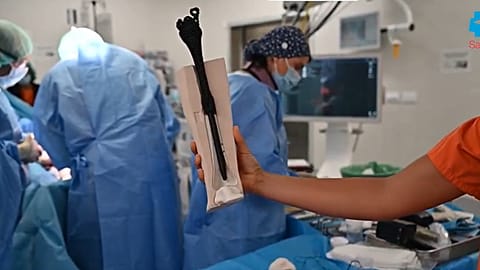
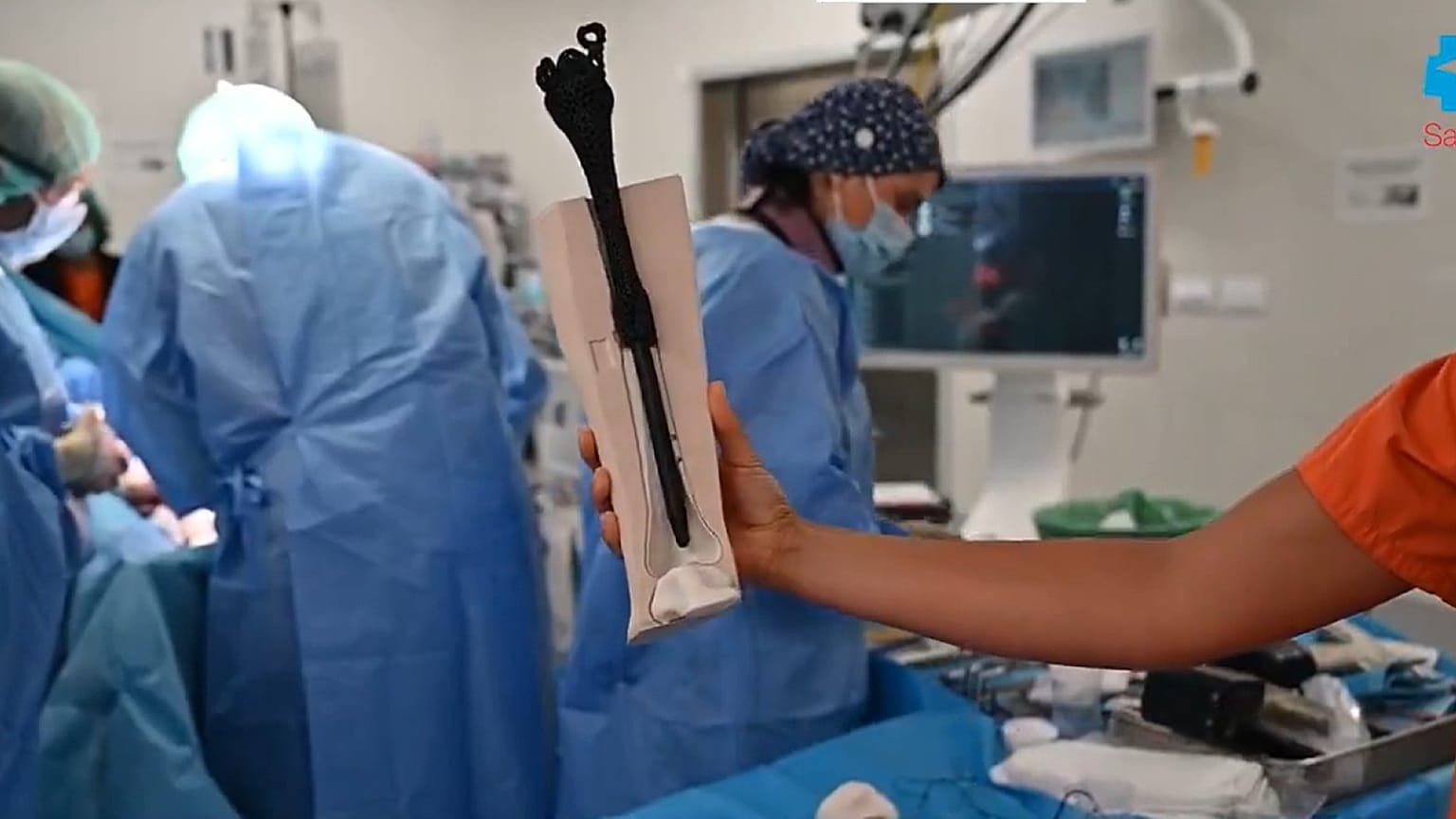
Developed together with engineers from the Polytechnic University of Madrid (UPM), the prosthesis is made up of a network of millimetre-scale titanium structures designed to distribute loads in a similar way to bone tissue. The implant has made it possible to preserve both the patient's leg and knee joint and avoid amputation.
A prosthesis that mimics bone
Unlike conventional prostheses, this implant does not replace the bone with a solid piece, but instead recreates its structure and strength through a network of fine titanium rods that distribute loads in a way similar to bone tissue.
Its design helps the patient's bone to grow and integrate the prosthesis, reducing the risk of rejection and complications. In addition, because it is 3D-printed and adapted to each patient, operating time is almost halved.
The implant weighs barely 300 grams, but simulations indicate that it can withstand more than 500 kilos, compared with conventional prostheses, which weigh several kilos and can bear only 100-150 kilos.
An implant designed for each patient
Pierre Chazel, aged 38, had a high-grade bone sarcoma in his tibia. After an infection and severe loss of bone density, his leg could no longer support a conventional prosthesis, so the medical team opted to design an implant tailored to his anatomy.
Using his radiological images, the researchers created a digital twin of his healthy leg and simulated the loads the tibia has to bear when walking, climbing stairs or stumbling. Based on these data, they designed the prosthesis's internal structure and placed the screws in the areas with the best bone quality, which allowed them to plan the procedure with millimetre precision.
A year after the operation, the patient is already able to walk. After almost two years without putting weight on the leg, he says that he has finally begun to regain his mobility. Gregorio Marañón Hospital has already carried out a second similar procedure and is preparing two further personalised implants, one for a wrist and another for a sternum. The aim is to roll out this technology in order to offer hyper-personalised medicine within the public health system.