
















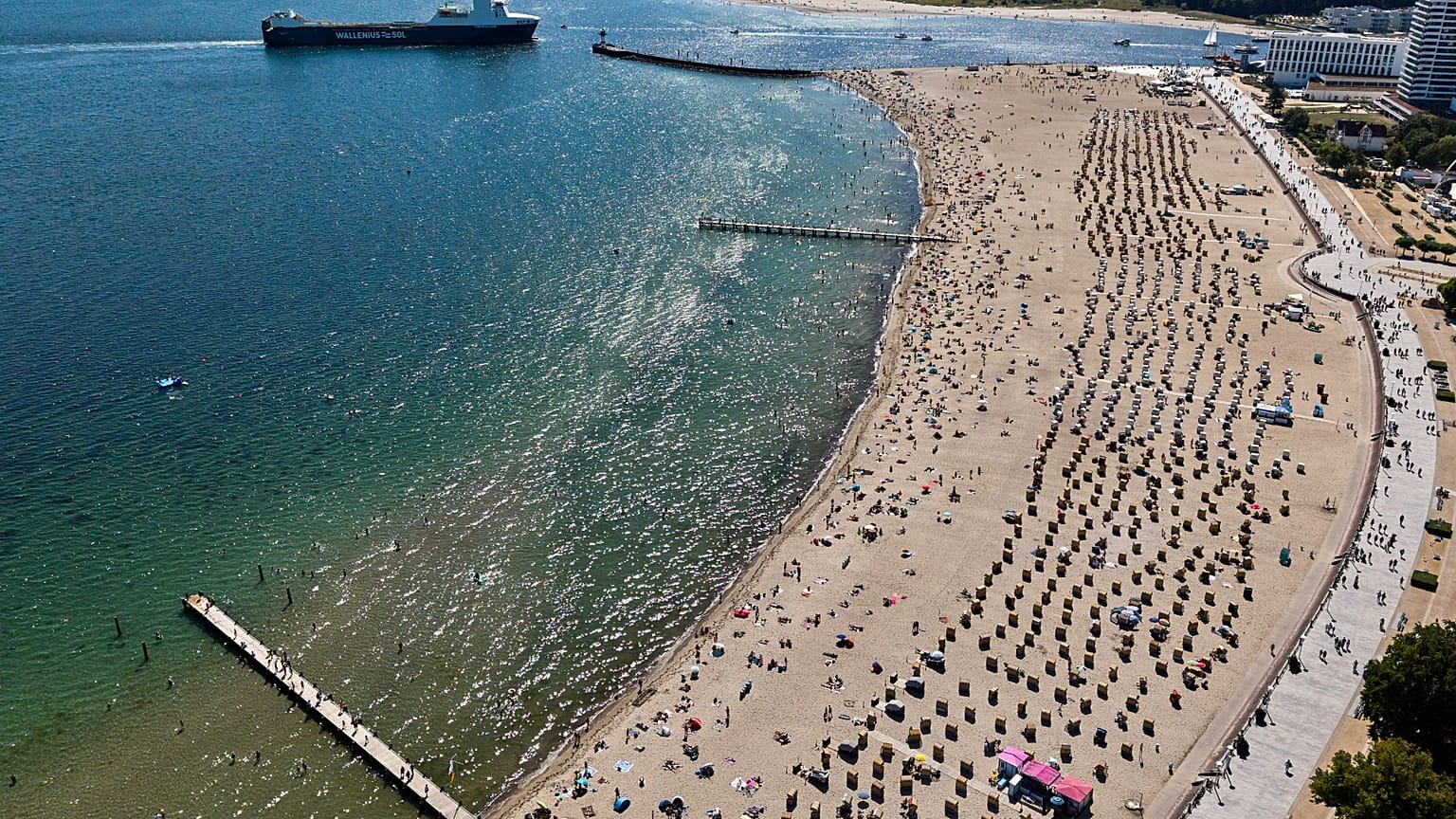













Attention swimmers: health authorities warn against bathing at some Baltic Sea beaches due to blue-green algae, which can cause skin irritation and stomach problems.
Prolonged high temperatures in the Baltic Sea are leading to increased algal blooms. Plenty of sunshine and high water temperatures are encouraging their reproduction.
 ADVERTISEMENT
ADVERTISEMENT
ADVERTISEMENT
The Hanseatic city of Rostock is now warning swimmers about certain Baltic Sea beaches.
Warning to swimmers issued
An algal mat has been observed in the Baltic Sea to the west of Warnemünde, the Hanseatic city of Rostock said on Saturday. There is suspicion that it could be blue-green algae, according to the Office for Fire Protection, Rescue Services and Disaster Management.
On Tuesday came an update: "Investigations have confirmed the presence of toxin-producing cyanobacteria, so-called blue-green algae," the Rostock health authority announced. The health authority confirmed that blue-green algae had been detected in the Baltic Sea.
The competent health authority therefore advises against swimming in these waters. Skin contact with blue-green algae can cause swelling, irritation or allergic reactions. In severe cases it can lead to vomiting and gastrointestinal illness.
The health authority urges particular caution for children and dogs. Dogs should not drink the water either.
Which beaches are affected?
No bathing ban has been imposed. The warning applies to the Baltic Sea coast off Warnemünde, specifically beach sections 30 to 36. On Google Maps this corresponds to the area shown in deeper colours.
However, Rostock city authorities also point out that the spread of the algae cannot be reliably predicted because it depends on wind and weather. Potentially, therefore, large stretches of the coast could be affected.
Blue-green algae can also occur again and again in bathing lakes throughout Germany. For more than 20 years, however, bathing waters in Germany have generally been safe. If health risks do arise in individual cases, the authorities respond quickly. State agencies test for various bacteria at intervals of two weeks or once a month.
The results are published in so-called bathing-water maps to help protect swimmers from potential health risks. Responsibility lies with the state health authorities. Click on the map in your region to access the relevant bathing-water map.
What exactly are blue-green algae?
An algal mat is the term used for a large accumulation of algae, a dense, continuous layer formed by the mass proliferation of algae or cyanobacteria.
Strictly speaking, blue-green algae are tiny bacteria rather than the long, green, hair-like plants. They often float freely in the water and form a slimy, bluish-green film on the surface.
"In warm, sunny weather and nutrient-rich water they can multiply rapidly and accumulate on the surface, forming visible mats," the city of Rostock explained in a statement. Wind and currents can cause these accumulations to shift or disperse at short notice.
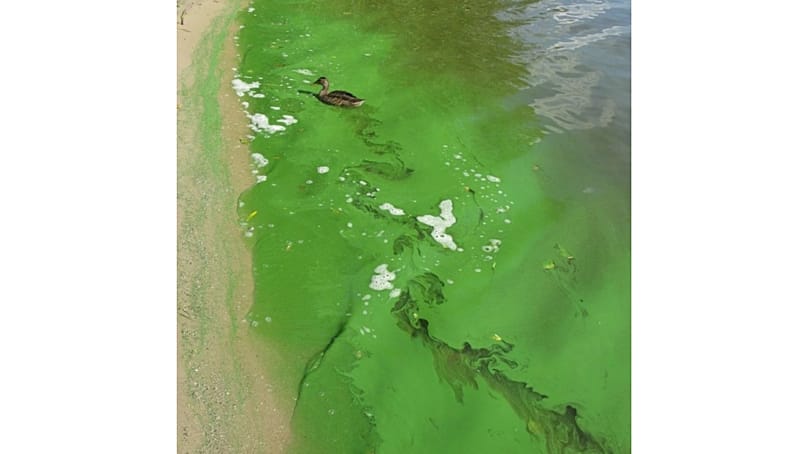
These so-called "blue-green algae" attract attention because they can produce toxins that are hazardous to health, according to the cyanobacteria factsheet published by the Leibniz Institute for Baltic Sea Research in Warnemünde. In general, the toxins produced by blue-green algae are harmless to healthy people in low concentrations. Not all types of blue-green algae produce these toxins.
Within these rapidly formed mats, however, toxin concentrations can rise to levels that pose a health risk. In humans, this can cause skin irritation and, if the water is swallowed, nausea and vomiting, the factsheet continues. In animals that have drunk water contaminated with the toxins, the Leibniz Institute says there have repeatedly been fatal cases in the past, for example among cattle, dogs and ducks.
Blue-green algae were also a frequent problem during last year's bathing season after extended periods of hot weather. In almost half of all lakes closed for bathing, cyanobacteria were the cause, according to the German Environment Agency.
Bathing risk also from Vibrio bacteria
Exceptionally high temperatures are also encouraging other bacteria, such as Vibrio species. Two people in Germany have died this year following a Vibrio infection. According to the Robert Koch Institute (RKI), 17 cases have been recorded so far.
According to the RKI, severe courses of the disease mainly affect older people and those with weakened immune systems or pre-existing conditions such as diabetes, liver disease or serious heart conditions. Young, healthy adults rarely become seriously ill. The two deaths recorded so far this year both involved very elderly people, the RKI said.