





























From depression to schizophrenia, France's only hospital-based animal therapy unit is making the case that four legs can go where medicine alone cannot.
When life gets you down, try petting a donkey — at least, that is one of the prescriptions at the Ville-Evrard hospital complex east of Paris.
 ADVERTISEMENT
ADVERTISEMENT
ADVERTISEMENT
Tucked within its grounds, among 19th-century farm buildings and woodland, five donkeys are doing some of the mental health heavy lifting between hay-munching breaks.
The hospital's donkey therapy unit, unique to France, has been running since 2016 when Ermelinda Hadey, a psychiatric nurse, and her husband François launched the programme on the hunch that donkeys, known for their calm and social nature, might connect with patients in ways conventional treatment cannot always reach.
'Animal medicine'
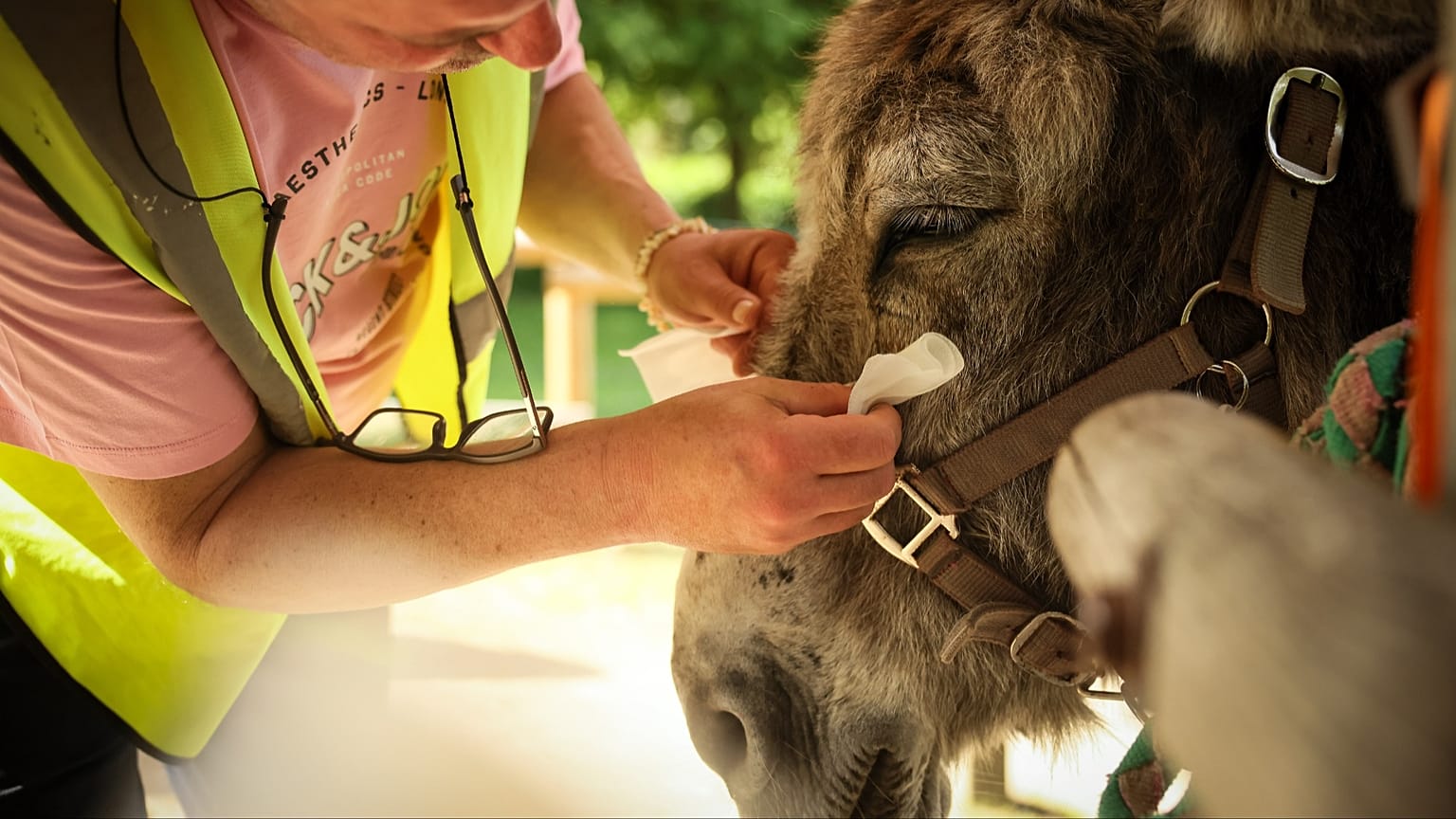
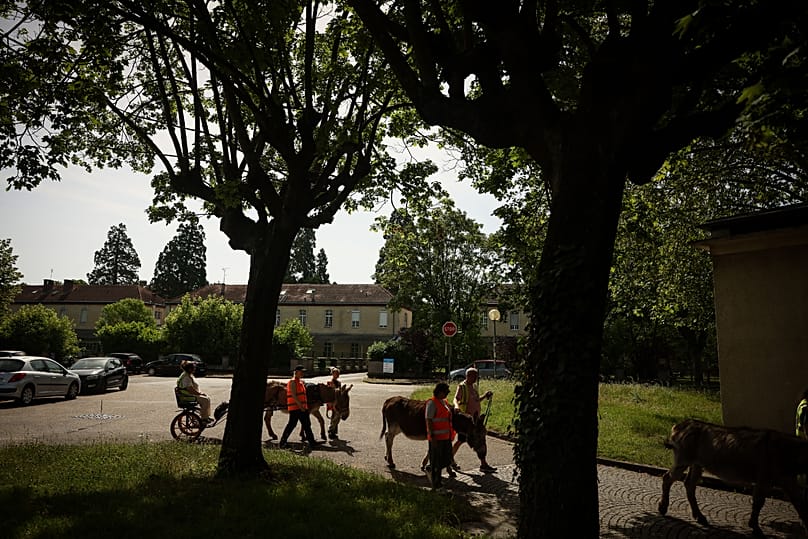
On Friday, patients led the donkeys — named Nono, Pitou, Oscar, Manolo and Malraux — through the grounds, cleaned their hooves and, at the session's end, hugged them. Each patient is paired with a regular companion over time as familiarity, it turns out, works both ways.
For Nathalie, 60, the experience cuts straight to the point. "When you take medication that helps you relax … it's exactly the same," she said. "I'd call it animal medicine. It brings relief. You stop thinking about everything else."
Patients are identified by first name only to protect their privacy.
Nurse Audrey Seffar pointed to Nathalie's progress as a case study in what the animals can unlock. At first, she refused to leave the cart provided for patients with physical difficulties.
"But little by little, with encouragement, she did," Seffar said. "The animal serves as a mediator. It's such an extraordinary one that today she was able to leave the cart and stand beside her donkey."
Another patient, Jérôme, 52, said the programme helps reduce loneliness.
"Talking with people, taking part in activities I wouldn't normally do, it helps me in my daily life," he said. "It helps you break away from the routine of treatment and medication. Staying at home isn't good for me."
'Emotional sponges'
Some of the donkeys arrived at Ville-Evrard having experienced neglect or mistreatment themselves — adopted through shelters before François Hadey trained them for therapy work. He describes their aptitude for the role with something approaching professional respect.
"A donkey is very intelligent. It understands things very quickly, but you have to explain slowly," he said. "Donkeys are calm, serene animals that are generally close to people. Once they're involved in these interactions, they connect very well with patients. They're emotional sponges."
The programme gained official status as a healthcare unit in 2022, a bureaucratic endorsement that allowed it to employ three full-time nurses, with volunteers from a nonprofit helping with animal care.
It has since expanded to include guinea pigs, chickens, doves, goats, turtles and rabbits, with smaller animals brought directly to hospital rooms for patients who cannot make it outside.
Sessions are free to patients and funded by France's public health system. They are designed as therapeutic interventions for people living with anxiety, depression, autism, schizophrenia and other conditions, with staff reporting improvements in emotional regulation, communication and self-esteem.
Ermelinda Hadey describes the work as operating by a kind of mirror logic: caring for an animal, she argues, creates the conditions for patients to care for themselves.
"We work on feeding the animal, which helps us address the patient's own eating habits. We work on the animal's hygiene, and by mirror effect, we work on the patient's hygiene as well," she said.
Many patients take antipsychotic medications or sedatives that can flatten motivation entirely. That, she said, is exactly where the donkeys earn their keep.
"It does not replace a doctor or a medical prescription, but it can help patients regain confidence and a sense of self-worth," Hadey said.
The case for recognition
Despite its apparent success, animal therapy remains on the fringes of formal psychiatric practice — and the Ville-Evrard team wants that to change.
"To do that, we need research. We have plenty of accounts from patients ... Caregivers who accompany them see the benefits every day as well. But doctors have so many other responsibilities that they don't necessarily witness it firsthand," Hadey said.
Nursing student Alicia Fabi, 18, said patients return from sessions visibly different. "Every time we come back from the activity, they say they feel good, calm and relaxed, and that they enjoyed the outing. That's really positive," she said.
As Friday's session drew to a close and patients chatted in the afternoon light, a nurse offered what may be the unit's unofficial motto: "Donkeys are my best colleagues."