




























Can sport help improve the lives of children with autism? From adaptive cycling to inclusive running events, structured physical activity helps children develop communication, focus and emotional regulation.
More than 75 million people worldwide are living with autism spectrum disorder (ASD). One in 100 children is diagnosed with autism, according to the World Health Organisation.
 ADVERTISEMENT
ADVERTISEMENT
ADVERTISEMENT
Autism is not a disorder that can be treated with medication. It requires different approaches to support development.
For many children with autism, communication and social interaction can be among the biggest challenges. Many parents choose sports as one of the ways to support their development.
From cycling to running, structured physical activity is helping children with autism improve focus, regulate emotions, and develop communication skills. One of the sports many parents choose is adaptive cycling.
Fatima Amerzhanova’s son from Astana (Kazakhstan) was diagnosed with autism at the age of four. Today, 10-year-old Amir is non-verbal, but is making progress through sport.
"At the age of six, we shifted our focus to sport and immediately saw results. We realised that through physical activity, the child starts to calm down, it helps correct aggression and self-aggression," said Fatima Amerzhanova.
"Through physical activity and movement, the child begins to better feel and understand their body, and their brain starts working differently. Even my child sometimes bites himself, and I understand that he doesn’t fully realise he is hurting himself."
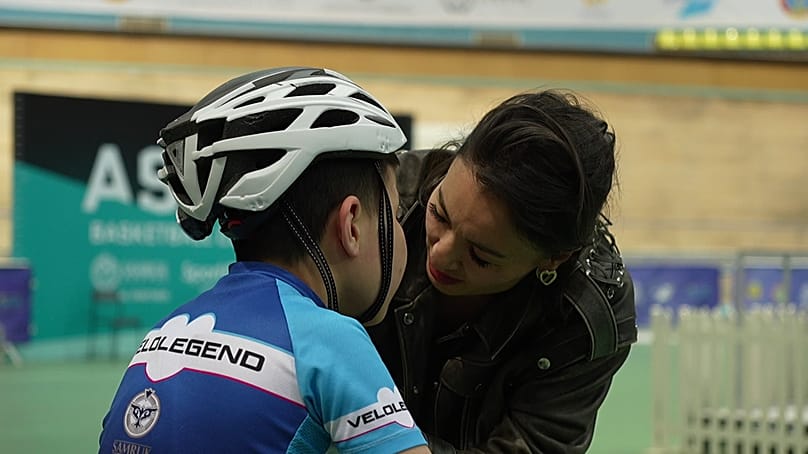
Fatima first discovered adaptive cycling for her son during a summer camp in Turkey. Back in Kazakhstan, they continued training and later made the decision to move her son from individual sessions into a group, hoping it would help him socialise.
"In a group, there are 10 to 12 children. It is stressful not only for children with autism, but also for neurotypical children. On the 23rd session, he got on a road bike for the first time, and I cried because we had finally done it," said Fatima Amerzhanova.
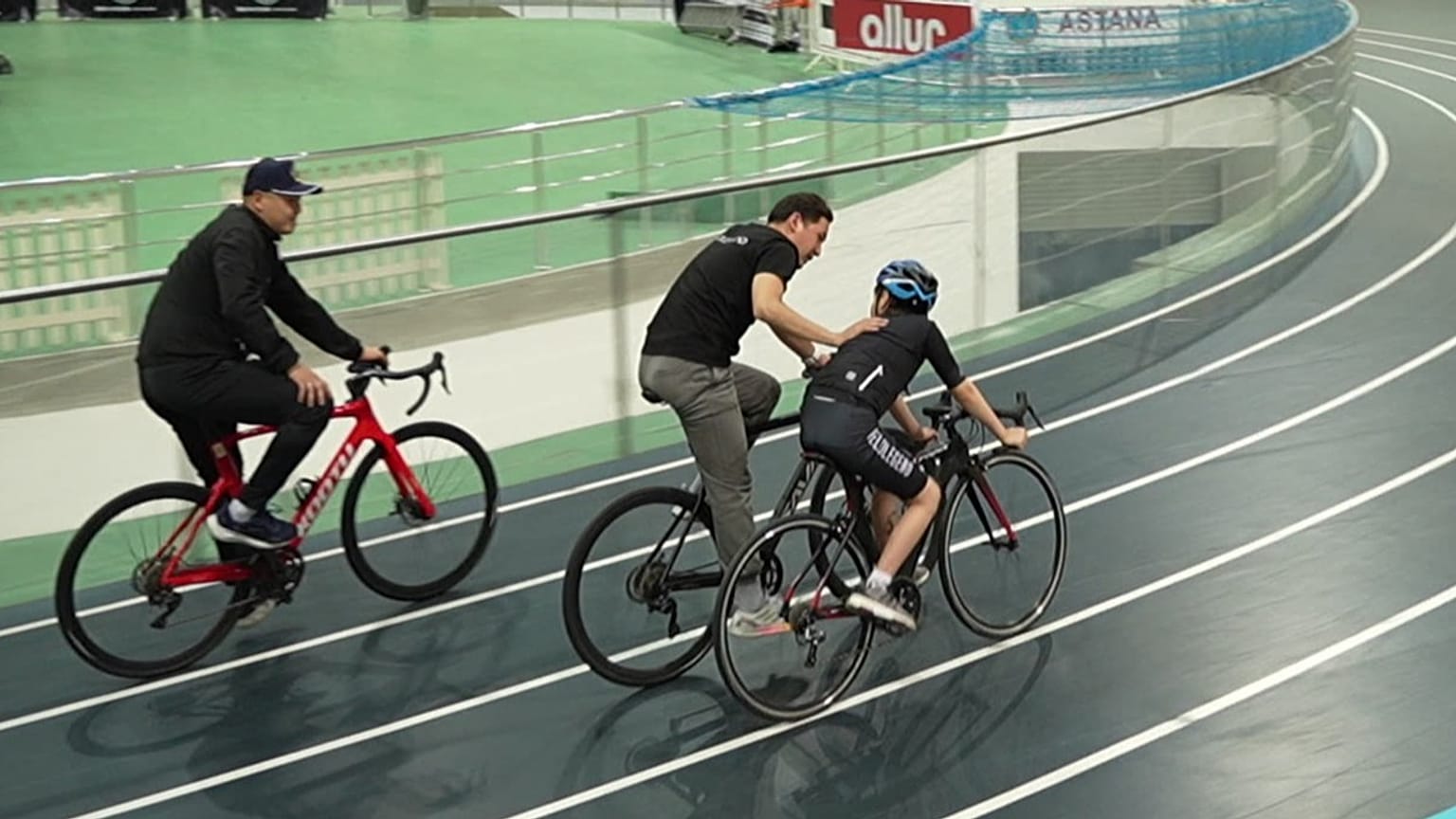
Cycling coach Kairat Khaldybek is one of those working with children with autism every day. For the past two years, he has been training them at the Velolegend Centre in Astana. One of the few places in Central Asia offering such programmes.
"Autism comes in different forms, but we do not select children. We work with everyone from the very beginning, and some are already taking part in competitions," said Kairat Khaldybek.
"For now, we are only based in Astana, Kazakhstan, but we receive messages from different cities across Central Asia asking us to open branches."
In addition to cycling, children with autism are increasingly taking part in swimming, tennis, and running.
Despite growing interest, access to inclusive sports remains uneven across the region. Most programmes are concentrated in large cities, while families in smaller towns often have limited options.
More than just a race
Last month, Astana hosted one of the largest inclusive running events in Central Asia. 'Run for Autism' brought together around 5,000 participants.
“When we launched the project, our goal was to draw public attention to autism and mental health," said Dinara Gaplan, Chairwoman at Bolashak Charity Foundation.
"Today, thousands of people join us at the старт line, and this shows that society is becoming more open, more aware, and more willing to support important social initiatives."
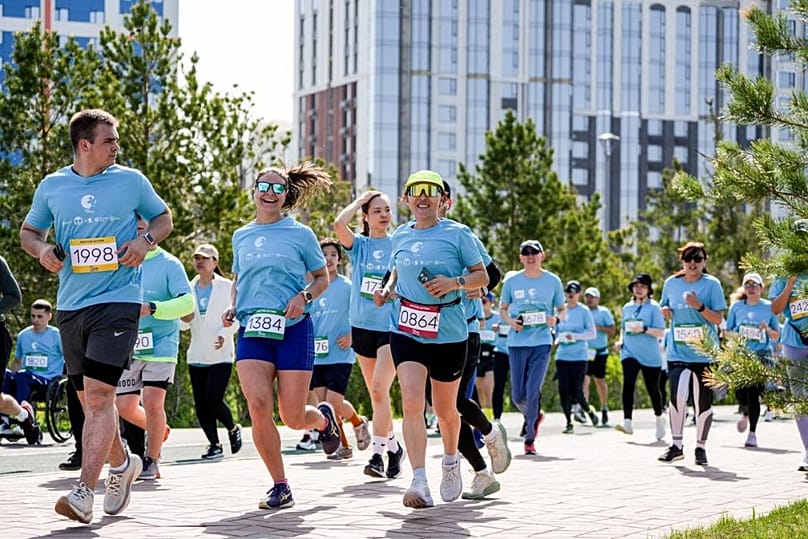
Launched in Kazakhstan by the Bolashak Charity Foundation in 2023, the initiative has already brought together more than 6,400 participants and raised around €80,000 (over 42 million tenge).
"Today, children are growing up, and our programmes are evolving with them. We are expanding professional education opportunities for teenagers and young people with autism," Gaplan said.
All funds raised will go towards professional education programmes for teenagers with autism and Down syndrome.
Bolashak Charity Foundation has already helped open 25 inclusion support rooms in schools and colleges across Kazakhstan.
In many families across Central Asia, sport is no longer just an activity for children. It helps reduce anxiety, build independence and, in some cases, gives children with autism their first real connection with the world around them.