

















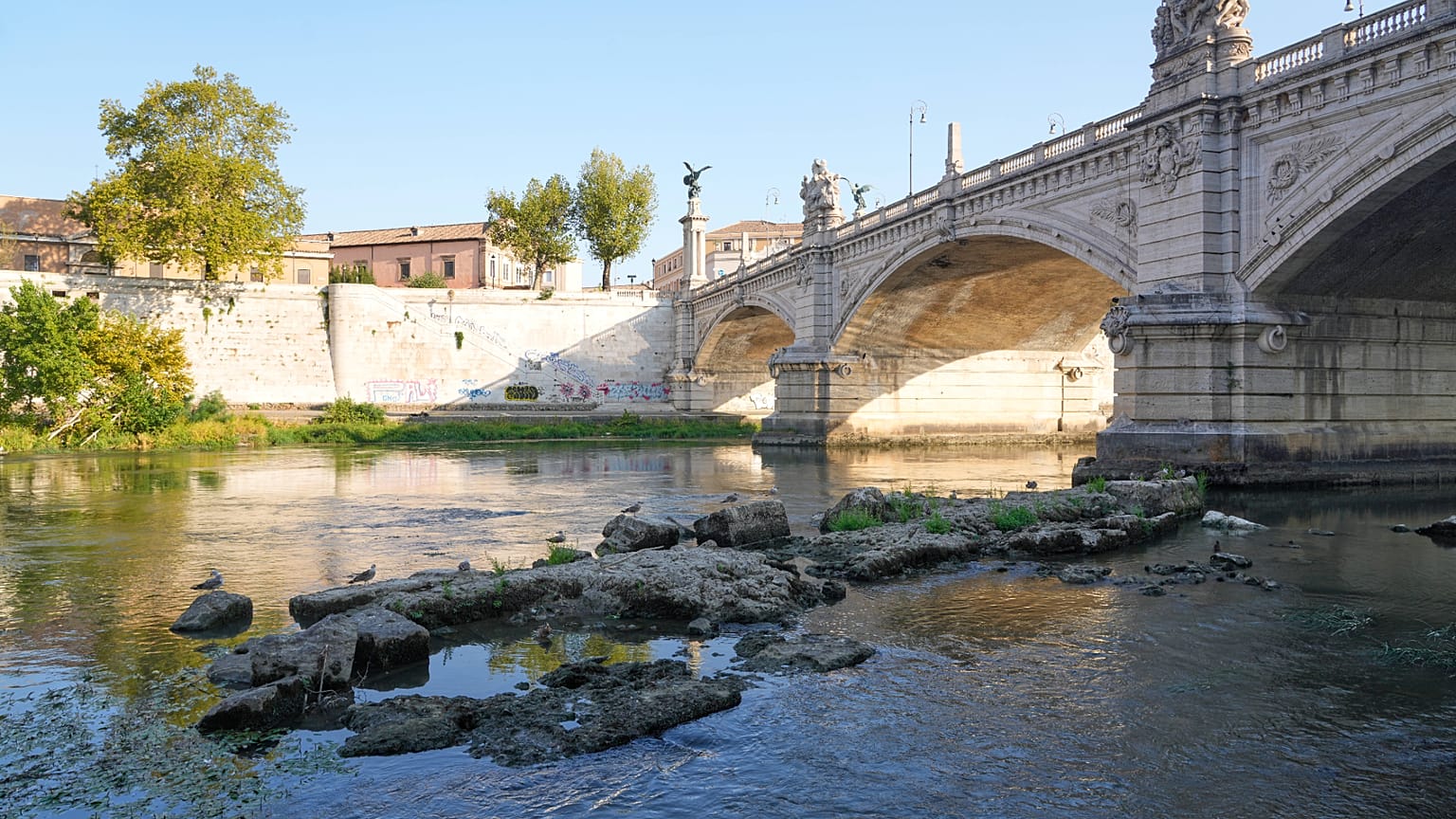













The Tiber is at a historic low, and near Castel Sant’Angelo, the pillars of what was once a Neronian bridge, dating from the early centuries AD, have re-emerged.
The ongoing drought affecting Western Europe has pushed a number of Italian rivers, including the Tiber, down to exceptionally low levels. In the stretch that flows through Rome, the remains of an ancient bridge dating back to the Roman era have even re-emerged from the water; it was built during the reign of Emperor Nero, between AD 54 and 68.
 ADVERTISEMENT
ADVERTISEMENT
ADVERTISEMENT
The Neronian bridge allowed people to cross the Tiber towards what is now the Vatican area
The structure that has resurfaced is located near Castel Sant'Angelo, not far from today's Vittorio Emanuele II bridge. Two millennia ago, this crossing made it possible to cross the Tiber towards what is now the Vatican area.
Italian news agency Ansa notes that "The bridge linked the Campus Martius with the Ager Vaticanus, allowing the ancient Via Trionfale to cross the river Tiber in the direction of Veii". Where the Holy See now stands, "there were the properties of Emperor Nero (including the villa of his mother Agrippina), Caligula's circus and the Via Cornelia, which passed in front of Castel Sant'Angelo".
A rare opportunity for tourists in Rome
This is not the first time that in summer, when the river is at particularly low levels, the remains of the piers of the Pons Neronianus have re-emerged. For a long time they were even used to moor floating structures equipped with mills, powered by the current of the Tiber, which were demolished at the end of the 19th century. In any case, this is a particularly striking sight for the tourists who are currently in the capital.
The Neronian bridge survived for several centuries and was probably demolished during the Gothic War in the 6th century.