

















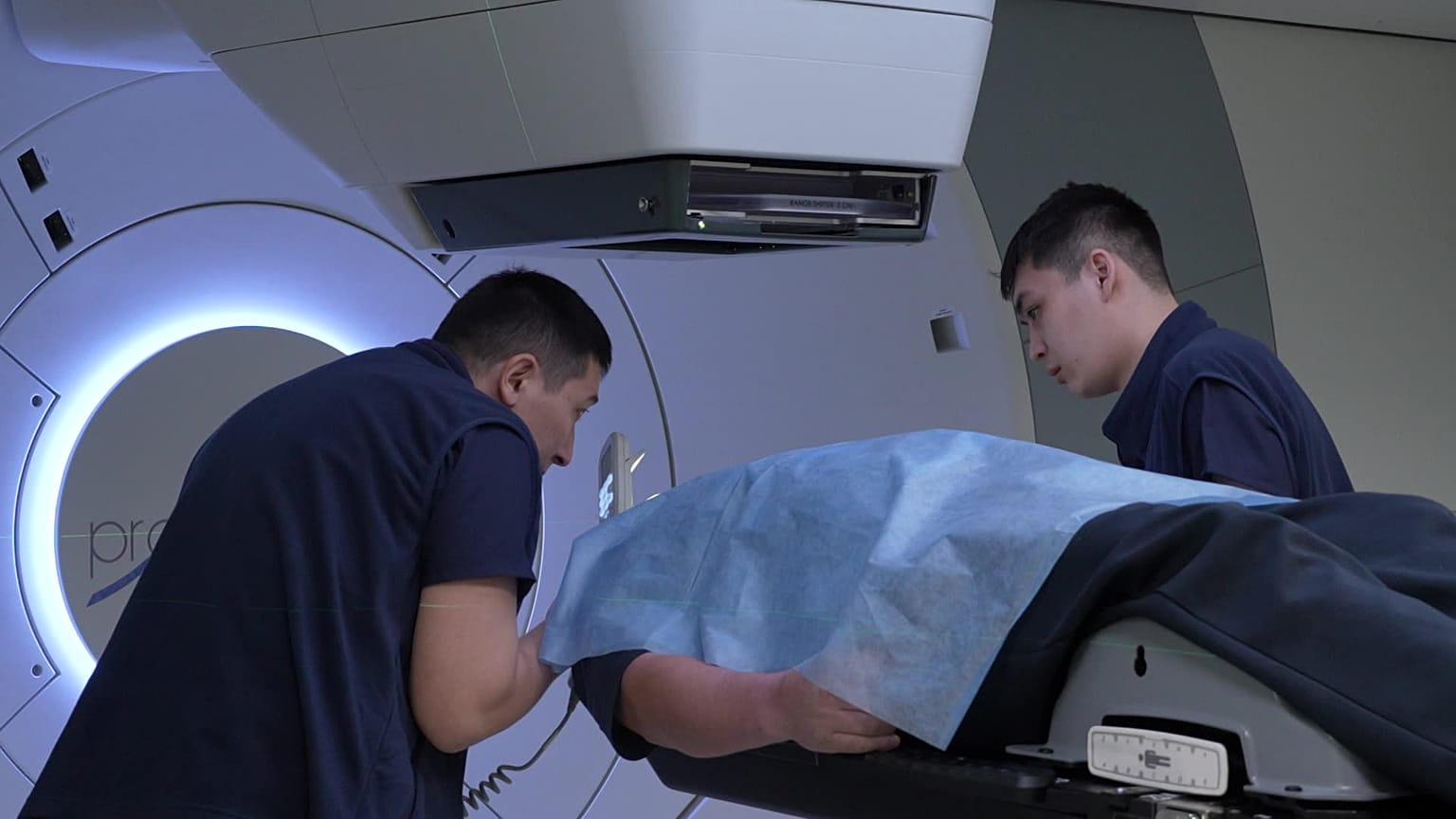














Kazakhstan is positioning itself as Central Asia’s medical tourism hub. The country attracted about 80,000 foreign patients last year and aims to increase that to 300,000 annually. Among the attractions is Astana’s National Research Oncology Center, which hosts the region’s only proton therapy unit.
Since 2020, the fastest growth in medical tourism to Kazakhstan has come from India and China, with patient numbers rising 40-fold and 24-fold respectively. Arrivals from Türkiye have tripled.
 ADVERTISEMENT
ADVERTISEMENT
ADVERTISEMENT
According to the Ministry of Healthcare, patients now travel to Kazakhstan from around 50 countries.
The Kazakhstan Medical Tourism Association forecasts that the number of foreign patients could reach 300,000 a year. Experts say the growth will be supported by the expansion of AI diagnostics and telemedicine.
JCI-accredited clinics and treatments
Interest in Kazakhstan’s medical cluster is driven by relatively low treatment costs, Health Minister Akmaral Alnazarova said.
According to the ministry, diagnostic procedures and surgeries can cost five to ten times less than in the United States or Europe.
“All clinical protocols used in treatment are aligned with European standards. They also undergo health technology assessment, which has been implemented in Kazakhstan for more than ten years,” Alnazarova said.
Nine clinics in the country have received accreditation from Joint Commission International, widely considered the gold standard in patient safety and healthcare quality.
Several specialised institutions form the core of Kazakhstan’s medical cluster.
The National Centre for Neurosurgery performs complex operations on the brain and spinal cord. The facility also operates the Gamma Knife system, used to treat brain conditions, the only installation of its kind in the region, the minister noted.
Another flagship institution is the Cardiac Surgery Centre, a regional leader in emergency cardiac care. Heart transplants and other procedures performed there match the standards of leading international clinics, Alnazarova said.
Kazakhstan also treats young patients at the internationally accredited National Center for Maternal and Child Health, which specialises in oncohematological diseases.
Among European visitors, one of the most in-demand services is in vitro fertilisation, thanks to competitive pricing and high standards of care. Foreign patients also travel to Kazakhstan for advanced high-tech dental procedures, the minister added.
Central Asia’s first proton therapy unit
Kazakhstan is expanding specialised cancer treatment. Six radiotherapy centres and 19 endoscopy units have opened in recent years, while 17 oncology centres have been modernised.
Last year, the country introduced proton therapy, a highly precise form of radiation treatment that targets tumours while minimising damage to surrounding tissue. Kazakhstan became the first country in Central Asia to introduce the technology and the 25th worldwide.
The facility, located at the National Research Oncology Centre in Astana, can treat up to 1,000 patients annually. It uses the ProBeam 360 system, incorporating technologies developed in Sweden and the United States.
Gulnara Shakenova, who has been diagnosed with brain cancer, is among the first patients receiving treatment at the new proton therapy unit.
“Every day I come here with hope and gratitude. The procedure is completely painless. You simply lie down and feel no discomfort,” she said.
The National Research Oncology Centre is also aiming to become a regional training and research hub for International Atomic Energy Agency programmes in nuclear medicine.
“An IAEA mission visited in January to assess our infrastructure and professional capacity,” said Indira Tleulessova, Head of the Centre for Radiation Technologies.
“We hope that in the coming years we will become an anchor centre supporting training for countries in the region.”
Medical innovation hub
“Kazakhstan aims to become a medical innovation hub within the next five years,” said Adlet Tabarov, deputy chair of the Salidat Kairbekova National Scientific Center for Healthcare Development.
He noted that the country is strengthening cooperation with neighbouring states through agreements on healthcare innovation and health technology assessment.
Kazakhstan is also developing a full medical innovation cycle, linking research, preclinical testing, clinical pilots and local production.
The launch of a modern vivarium at the Nazarbayev University research cluster now allows full-scale preclinical studies to be conducted within the country.
“This reduces costs and risks for investors and makes Kazakhstan more attractive as a regional R&D hub,” said MedTech expert Seitzhan Sypabek.
He added that the focus is currently on clinical pilots and early-stage implementation, rather than large-scale rollout.
One example is Cerebra AI, a system designed to detect strokes at an early stage.
The platform is currently in pilot use across 17 stroke centres in Kazakhstan, as well as several hospitals in Uzbekistan. Developers say the technology can detect strokes within minutes, a critical factor for improving survival rates.
The project has already attracted foreign investment, including funding from Singapore-based venture capital firm Quest Ventures.
Startup investments
Kazakhstan has emerged as the region’s leading destination for venture capital. In 2024, startups in the country attracted €65 million in investment, accounting for 74% of all venture capital deals in Central Asia, according to BGlobal Ventures, part of Qazaqstan Investment Corporation.
Health technology is one of the fastest-growing sectors, with funding expanding beyond traditional venture capital. A growing share now comes from hybrid models, including corporate investments, joint R&D projects and technology-transfer partnerships, Sypabek said.
With internationally accredited clinics, competitive pricing and expanding high-tech treatments such as proton therapy, Kazakhstan is positioning its healthcare sector as a regional destination for international patients.