













Eco-anxiety is "a term that encompasses the set of emotional responses of the population to the anticipation and experience of phenomena associated with climate change," explained psychologist Teresa Pereira to Euronews. How do you manifest (and deal with) these negative feelings?
Globally, the consequences of extreme meteorological phenomena, fuelled by climate change, are multiplying. From rising average global temperatures to droughts and intense forest fires - not forgetting the increasingly frequent storms, with heavy rains and winds that can wreak havoc - all of these phenomena have increasingly obvious negative effects on people's daily lives.
 ADVERTISEMENT
ADVERTISEMENT
ADVERTISEMENT
In recent weeks, Portugal has been hit hard by a "train of storms", which has caused extensive damage throughout the country, particularly in the Centre region.
According to figures released by the Intermunicipal Community (CIM) of the Leiria Region in Portugal, the ten municipalities that make up the CIM alone are estimated to have suffered losses that could exceed one billion euros.
But the impact on the population is not only measured by the destruction caused by events of this nature and, consequently, by the costs inherent in the whole process of rebuilding, recovering and restoring infrastructures and material goods of all kinds. This is because it often also influences people's mental health.
Speaking to Euronews Health, Teresa Pereira, a psychologist with a PhD in applied psychology and research in the areas of psychology and climate change, explained that there is "a term that encompasses the set of emotional responses of the population to the anticipation and also, in essence, the experience of phenomena associated with climate change."
This is called "eco-anxiety", a concept that "was first mentioned by an environmental philosopher called Glenn Albrecht in 2007" and, exactly ten years later, in 2017, was "officially" defined by the American Psychological Association (APA) (source in Portuguese) "as a chronic fear of environmental degradation".
As psychologist Teresa Pereira explained, this is a term that "can be characterised by emotional variability", which ends up manifesting itself, for example, through symptoms of "anxiety, worry, fear, anger or guilt".But also through other more "physiological" symptoms or "changes in the routines of individuals' daily lives", such as changes "in sleep patterns, loss of appetite, a constant search for information about climate change" or a "decrease in academic performance" in the case of younger people.
But what can "trigger" eco-anxiety?
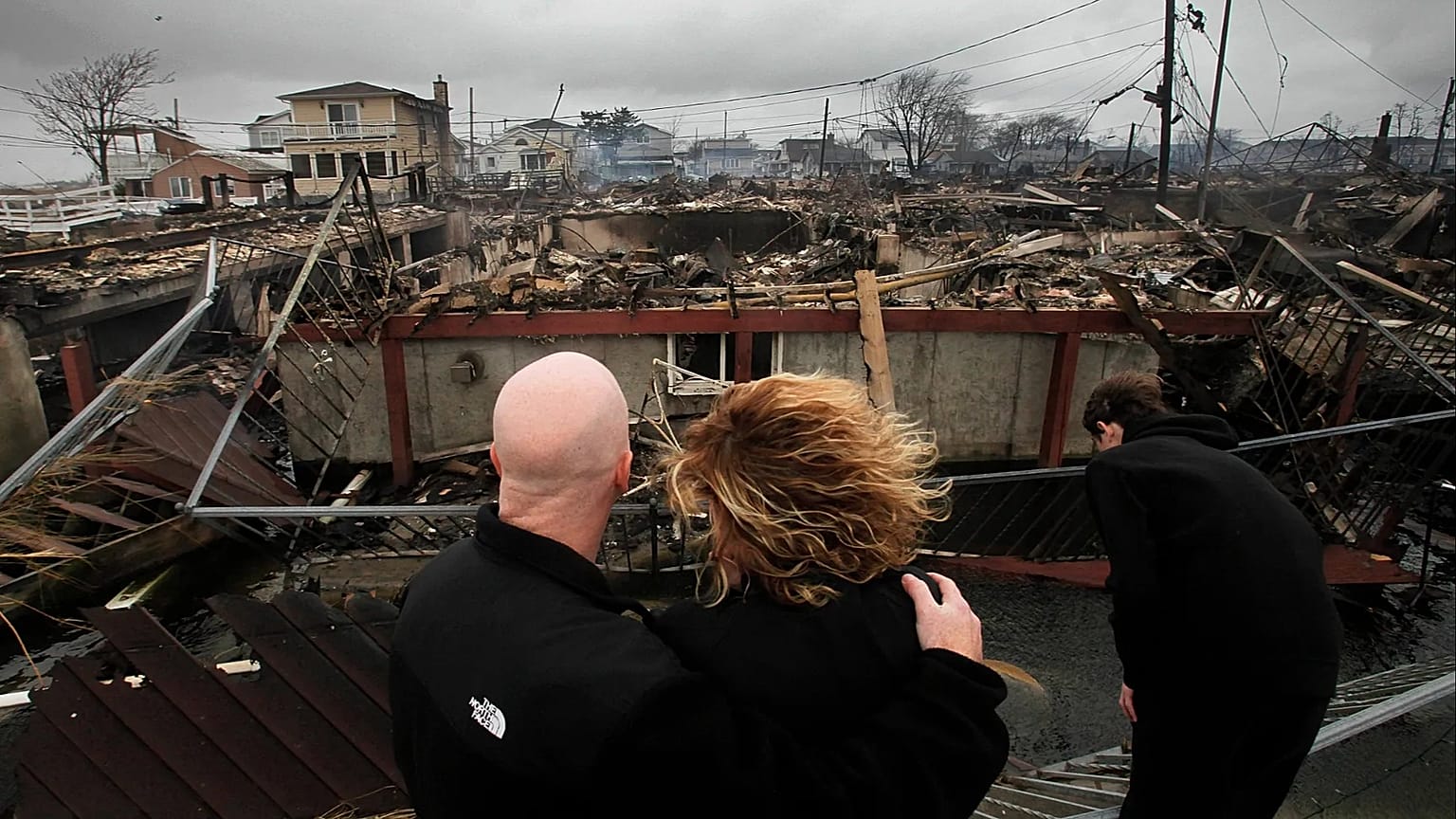
The "effects of environmental degradation on mental health", explained Teresa Pereira, should be considered "on three levels". One of them has to do with the "direct" consequences of climate phenomena, in other words, "when people directly experience" these situations "and, in this case, symptoms such as anxiety, depression and, eventually, post-traumatic stress disorder can arise".
But the impact can also be felt by people who are affected by the consequences of extreme weather events only at a "more indirect level", as they "do not directly experience or witness" these events.
However, the impact of these meteorological events on the "infrastructures they use" - such as public services - as well as on their "means of subsistence" - an example being the farmers who have seen their crops devastated as a result of the recent storms in Portugal - can have negative effects on mental health.
Finally, we must also take into account the fact that, according to the PhD in Applied Psychology, "through the media or the information they receive from other people", citizens end up knowing more about these phenomena and their impacts. "Usually, eco-anxiety falls more into this third level".
In other words, "the fact that we have this information that climate change is a phenomenon that is increasingly present in our daily lives ends up generating the experience of eco-anxiety in people, even if they haven't directly witnessed an extreme event".
At a time when more and more "information and images" are appearing more frequently in the Portuguese media about the consequences of climate change on people's lives, it is therefore "natural for this concern to become more present and for the phenomenon to become more real".
This is because, today, we are not only dealing with situations that "happen in other countries, in other geographical locations, or with people other than ourselves, our families", or, in other words, the Portuguese community, giving them a character of greater "proximity".
Eco-anxiety is a "normal" response
Despite the variety of symptoms and the different ways in which eco-anxiety can manifest itself, "it's very important for the general population to be aware" that this is "an expected phenomenon that reveals an adaptive response", especially in the case of those who have experienced the consequences of extreme weather phenomena first-hand, as is the case of citizens directly affected by the latest storms.
In other words, "it's normal for people, faced with such a large-scale phenomenon that affects their lives, to show these emotional responses," explained psychologist Teresa Pereira.
In this sense, it's important to note that eco-anxiety "is not a pathology". Even so, in cases where this type of behaviour interferes "more significantly with the daily life" of individuals - or even results in a certain "paralysis" - "it may be necessary to seek the help of mental health professionals" so that they can receive specialised support.
But in many cases, the "validation and support of the community, family, teachers and peers",combined with other strategies, can be even more essential.
For this reason, she also called for measures to be promoted to help the "general population to be more empathetic" when it comes to this issue, in order to encourage greater "validation" of these emotions. And the key, in this respect, also involves "promoting literacy about this phenomenon," which "is unfortunately becoming more and more frequent in our country", said the expert.
This promotion also involves educational establishments. "Nowadays, in school curricula, we generally have an approach that is a little more focused on the cognitive dimensions of knowing what climate change is. But it's also important to bring in an affective dimension, to understand how we feel affected and how we can become more actively involved" in responding to them, the psychologist argued.
Particularly with young people, it is therefore important not to adopt "an alarmist attitude" - although this is a premise that applies to the general population. But what is more advisable is to adopt "as positive and realistic an approach as possible", as well as showing "willingness to discuss the issue" in a "reasoned way, focused on the solutions" that are already being developed to try to mitigate the consequences of extreme weather events.
What can help deal with eco-anxiety?
According to Pereira, based on existing scientific research on the subject, eco-anxiety can also motivate individuals to adopt "environmentally protective behaviours, in other words, pro-environmental behaviours". And one of the "three common strategies that are most effective for dealing with eco-anxiety", based on some still preliminary studies that have been developed in recent years, is precisely related to this type of initiative.
According to the psychologist, "some researchers say that action, involvement in actions to protect the environment, is the greatest antidote to eco-anxiety", as it creates "a sense of usefulness", but also "control and hope".
Another possible way to try to deal with this emotional response can be "involvement in groups, in associations with a more environmental focus, [by contacting] other people who report eco-anxiety," in order to acquire "greater social support".
Finally, it should be noted that there are already "many studies that associate contact with nature, with green and blue spaces, with higher levels of well-being", so this could also be a valid strategy to combat "some symptoms of anxiety and depression that may be associated with this, in essence, anticipation of the effects of climate change".
Mapping eco-anxiety
In recent years, academic research has increasingly focused on how eco-anxiety impacts populations.The literature, emphasised the PhD in Applied Psychology, is based on different variables and methodologies, which often makes reliable comparisons difficult. However, they do provide some indicators that make it possible to assess how this reality is taking hold in different parts of the world.
A European study, published in the European Journal of Public Health in 2023, based on data taken from the 10th round of the European Social Survey (collected between 2020 and 2022), assessed the level of concern of "52,219 participants aged over 15 from 25 countries" about climate change. The research concluded that there are "significant differences in levels of eco-anxiety between European countries", with Germany (55.3 percent) and Spain (55.2 percent) having the highest levels, and Slovakia (22.6 percent) and Estonia (24.7 percent) being at the bottom of the table.
Another 2021 analysis, published in The Lancet Planetary Health, surveyed 10,000 children and young people aged between 16 and 25 in ten countries - Australia, Brazil, Finland, France, India, Nigeria, the Philippines, Portugal, the United Kingdom and the United States of America - in order to collect "data on participants' opinions and feelings about climate change".
The study concluded that the "countries that expressed the greatest concern and impact on functioning tended to be poorer, located in the Global South [emerging economies] and more directly affected by climate change". But in the Global North, which encompasses the so-called more developed countries, **"**Portugal (which has seen dramatic increases in forest fires since 2017) showed the highest level of concern".
Even so, more recent research, published in the Social Responsibility Journal, inferred, based on a total sample of 3,300 individuals aged 18 or over, that "the prevalence of anxiety related to climate change is low among adults in Portugal".
In other words, Pereira summarised that "what research has shown is that people who are more ecologically aware, in other words, people who are more concerned about the environment and who are more sensitive to these climate issues, are the ones who show a higher prevalence of eco-anxiety".
This is why young people stand out at this level, because they are "going through a developmental period that will expose them over time to the effects of climate change", so "it is natural that their concern and involvement are also more significant".