




























The Swedish capital’s hydrofoil electric ferry slashes emissions by up to 94%, according to a new report.
In late 2024, commuters in Stockholm gained a novel way to cross the Swedish capital: a ‘flying’ electric ferry.
 ADVERTISEMENT
ADVERTISEMENT
ADVERTISEMENT
Just over a year later and the project has been declared a resounding success by the Swedish Transport Administration following an evaluation of its pilot route.
Built across 14 islands, Stockholm is naturally suited to waterborne transport. Yet relatively slow journeys and infrequent departures lead many to navigate via the city’s more than 50 bridges instead.
Still, diesel-run ferries account for nearly half of the region's total public transport emissions.
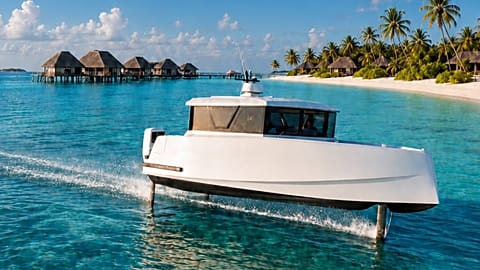
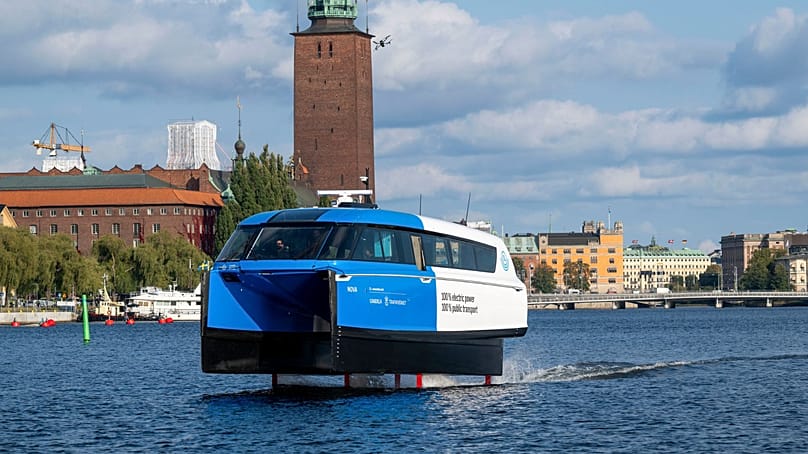
The introduction of the hydrofoiling Candela P-12 Shuttle – described by its manufacturer as the world’s fastest electric passenger vessel in service – aims to change all that.
Travel times and emissions cut
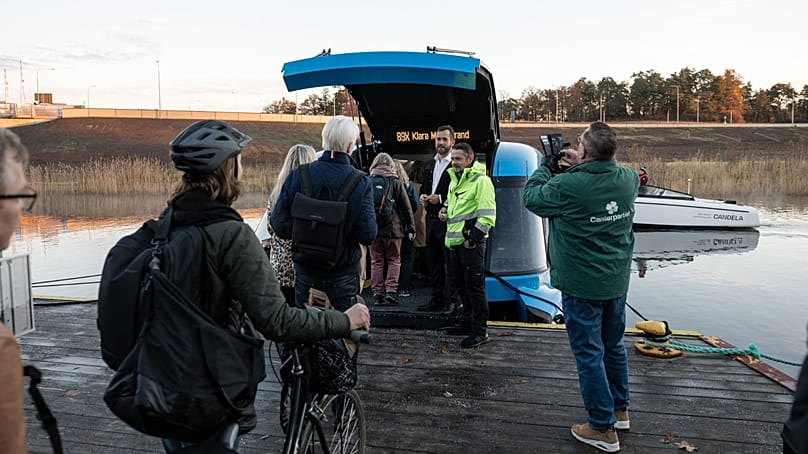
Operating between the suburb of Ekerö and central Stockholm (near City Hall), the ferry has cut travel times from around 55 minutes to roughly 30 minutes.
According to trial data, carbon dioxide emissions have been slashed too – by around 94 per cent compared with comparable diesel vessels.
Local politicians have declared the project a potential “paradigm shift” in how urban waterways are used.
How does Stockholm’s ‘flying’ ferry work?
The P-12 is the first computer-controlled electric hydrofoil ferry to enter serial production, according to manufacturer Candela.
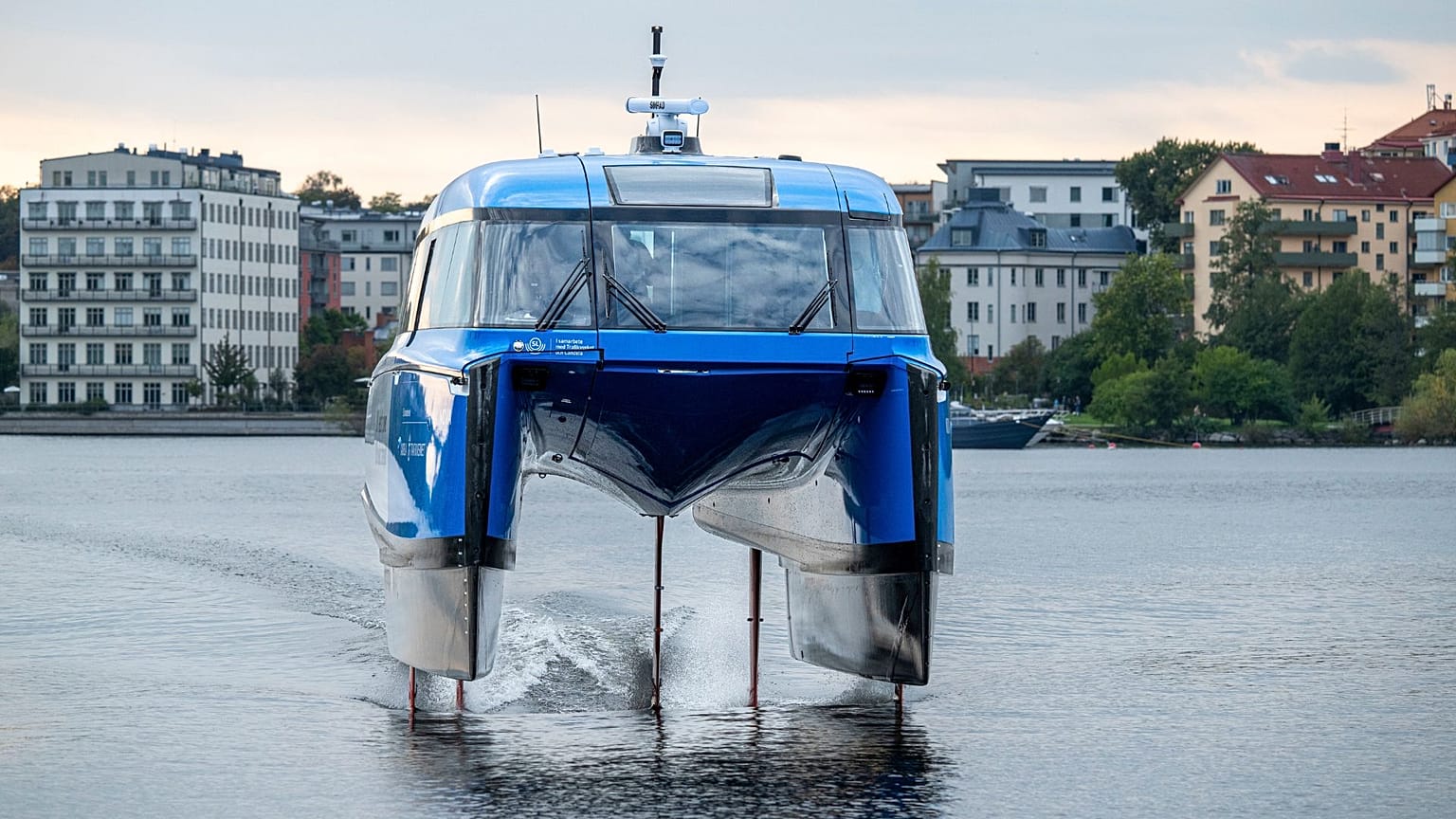
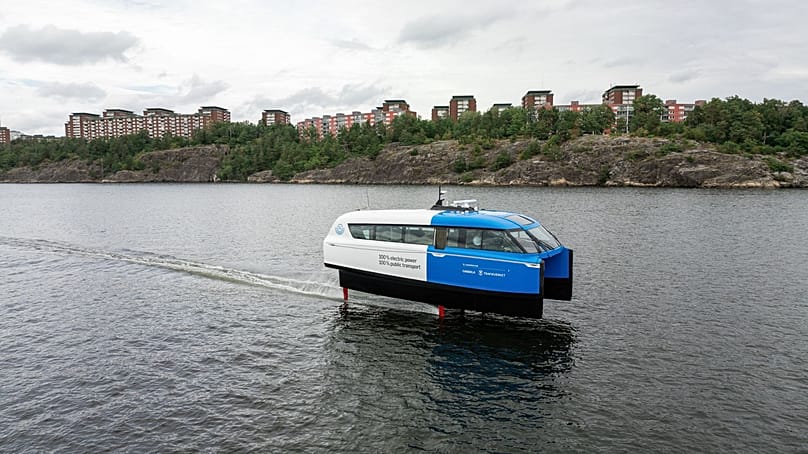
Wing-like carbon fibre foils mounted beneath the hull generate lift as the boat gains speed, raising it above the water’s surface. By reducing contact with the water, drag drops dramatically – enabling higher speeds, smoother travel and significantly lower energy consumption. This enables long-range and high speed on battery power alone.
An onboard computer system constantly adjusts the angle of the foils in real time, using sensors to keep the vessel stable as it ‘flies’ above the water.
The electric ferry also produces dramatically smaller wakes than conventional ferries, comparable, according to the report, to those of a dinghy with an outboard motor. Creating smaller waves as it moves through the water not only means a faster, more comfortable ride, it also reduces shoreline erosion and environmental disturbance.
Noise levels decrease, too – sound measurements showed the ferry to be as quiet as a car travelling at 45 km/h, and barely audible from 25 meters away.
What’s next for Stockholm’s flying ferries?
Thanks to its minimal wake, the current electric ferry is allowed to operate under a speed exemption on Stockholm’s waterways. This means it can take advantage of its capabilities with a roughly 25 knot service speed – far greater than the ordinary 12‑knot limit.
In its evaluation, the Swedish Transport Administration recommended extending similar exemptions to additional routes, potentially allowing the service to expand.
Passenger numbers on the Ekerö line reportedly rose by 22.5 per cent during the trial period, suggesting strong demand from both commuters and tourists.
The report notes that the vessel requires relatively limited dockside charging upgrades compared with conventional electric ferries. Combined with lower fuel and maintenance costs compared with diesel ferries, this creates a winning formula.
According to the report, replacing two diesel ferries with six P-12 vessels could allow departures every 15 minutes instead of hourly, increase passenger capacity by around 150 per cent, and generate estimated socioeconomic benefits of SEK 119 million (€12 million), while lowering the cost per journey.
“The Candela P-12 can transform urban waterways,” says Gustav Hasselskog, founder and CEO of Candela, which produces the P-12 ferries at its Stockholm factory in Rotebro. “By combining high speed, minimal energy use, and near-zero emissions, we can unlock faster, cleaner, and more cost-efficient waterborne transport for cities worldwide.”
Cities including Berlin, Mumbai and destinations in the Maldives and Thailand are among those that have announced plans or orders for similar vessels in 2026.