
















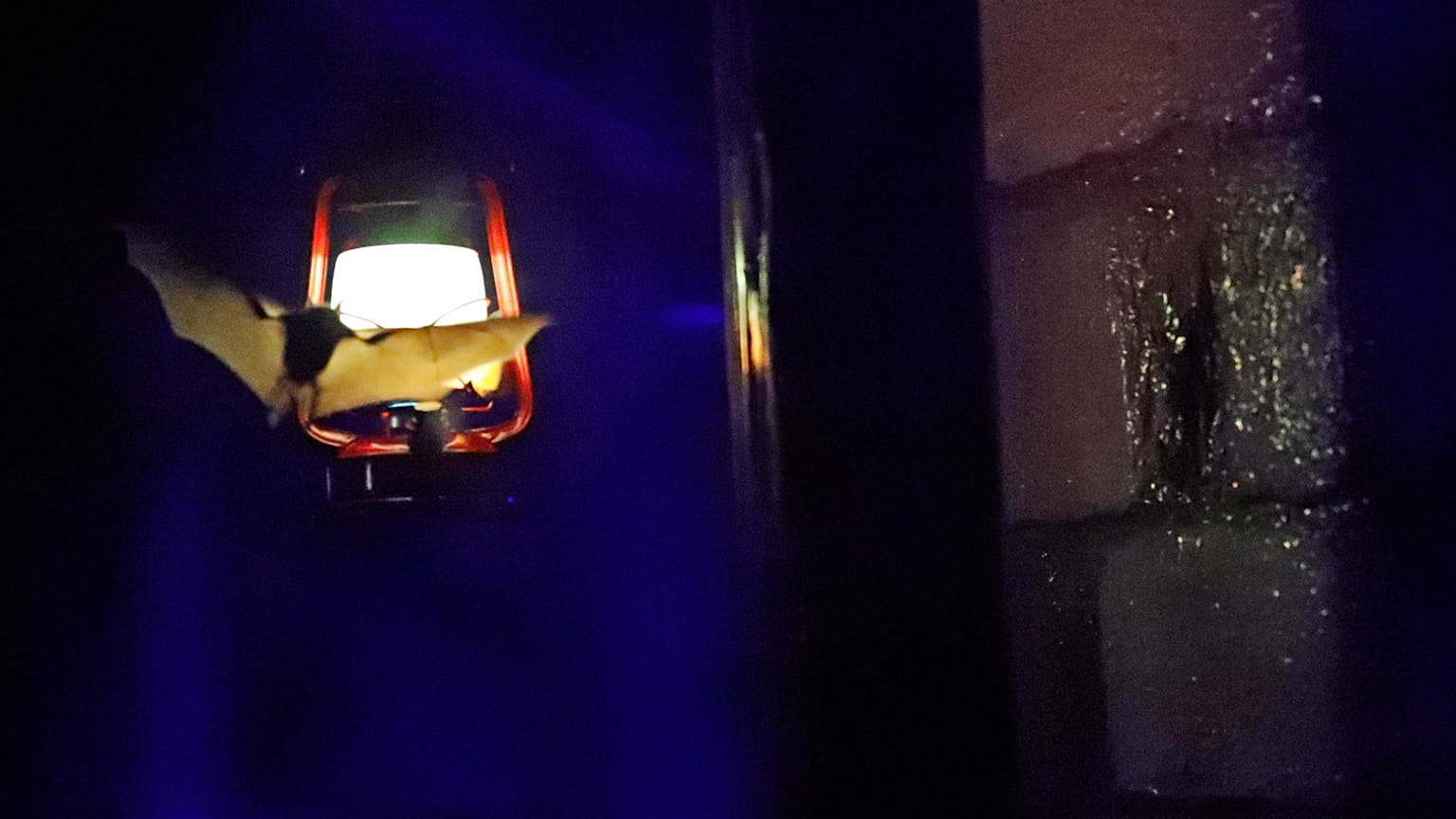













The change in colour is part of a scheme to reduce the effects of light pollution, particularly on nocturnal animals.
Copenhagen, urban illumination along one major roadway is red, not white.
 ADVERTISEMENT
ADVERTISEMENT
ADVERTISEMENT
The change in colour is part of a scheme to reduce the effects of light pollution, particularly on nocturnal animals.
Research has shown that bat activity is hindered by white light at night, while red light appears to have minimal effect, akin to darkness.
European cities install bat-friendly red lighting
In Gladsaxe, a project by AFRY Architects is underway to help reconcile urban development with environmental goals.
Red LED streetlights have been installed along a main road and cycle superhighway in order to minimise the impact on the living conditions of bats in a nearby colony.
Thirty one-metre-high bollards along the road now emit a red glow.
The bollards are spaced far enough apart to let light-shy species cross the area without being exposed as potential prey, while still allowing vehicles and cyclists to navigate the road safely.
Similar projects have launched around Europe. In 2018, the Dutch town of Zuidhoek-Nieuwkoop became the first in the world to install fauna-friendly red lighting.
The UK created its first bat crossing in 2019 with 60 metres of red lighting along the major A4440 motorway near Worcester’s Warndon Woodlands nature reserve.
Red lighting has no negative effect on bat activity
In 2017, researchers succeeded in measuring the effects of light on different bat species for the first time.
The team from the Netherlands Institute of Ecology found that different spectra had varying effects on the activity of slow-flying, light-shy bats in their foraging habitat.
The experiment was conducted over five years at eight study sites along forest edges in dark areas of the Netherlands.
"We've found these bats to be equally active in red light and in darkness," said lead researcher Kamiel Spoelstra in a press release at the time. "White and green light, on the other hand, substantially reduce the bats' level of activity."
Bats hunt for insects at night because there's not much competition from other animals, and predators won't see them because it's too dark.
White artificial light can cause significant disruption for species such as Natterer's bat or the brown long-eared bat, which may feel vulnerable to visual predators such as owls.
Agile flyers such as the pipistrelle, on the other hand, don't mind the extra light, according to the study. In fact, streetlights even help them catch more insects by luring them into a concentrated area.
Larger bat species, such as the serotine bat and the lesser noctule, fly high enough to be unaffected by streetlighting, the researchers found.
Red lighting is a practical solution to environmental protection
The research proved particularly positive because red lighting experiments hold up under real-life conditions. "It's entirely suitable for use on country roads," said Spoelstra.
“This opens up possibilities for limiting the disruption caused by external, artificial lighting in natural areas, in situations where having light is considered desirable."
The LED lights also reduce energy consumption and require less maintenance.