














The otherwise sunny US state of Florida is currently experiencing unusually low temperatures.
Temperatures have plummeted below freezing in parts of Florida, the USA's 'sunshine state'. In Tampa Bay, snowflakes fell for the first time in well over a decade.
 ADVERTISEMENT
ADVERTISEMENT
ADVERTISEMENT
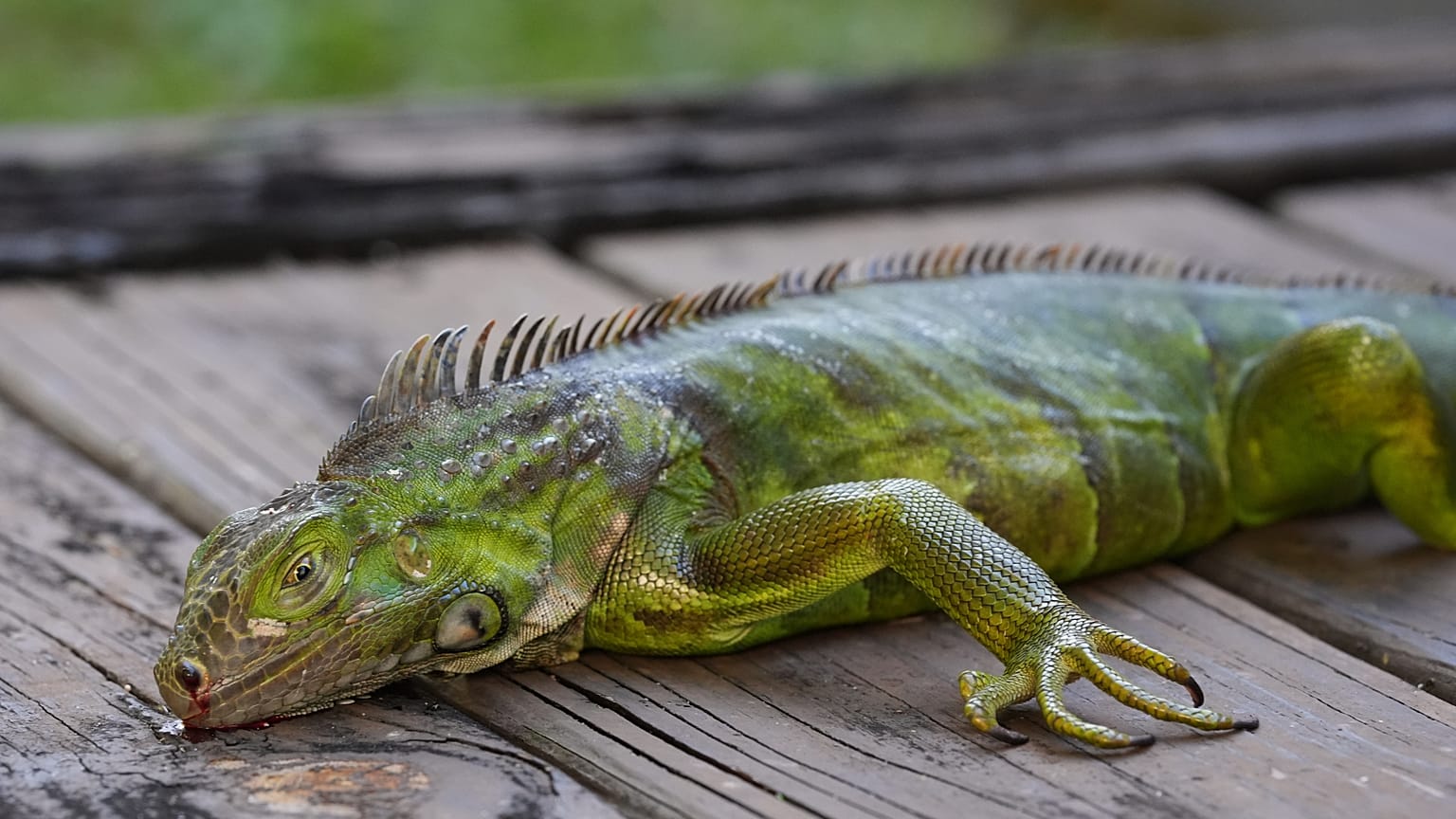
But that's not the strangest thing falling from the skies: thousands of cold-stunned green iguanas have been dropping onto streets, pavements and front gardens.
Unable to generate their own body heat, green iguanas are dependent on warmth from outside. As soon as the thermometer drops below around 10 degrees Celsius, they become lethargic.
Between around 4 and 7 degrees, the cold-blooded reptiles enter a stunned state of temporary, survival-mode paralysis.
If they are caught in this state in trees, they lose their grip and fall to the ground. Earlier this week, local media outlets shared scenes of masses of fallen animals lying motionless on the ground. The green lizards can grow up to two metres long and weigh up to 9 kg.
Iguanas are an invasive species in Florida
Green iguanas are originally from Central and South America, but since the 1960s they have become an invasive species in the suburbs of Miami, Fort Lauderdale and Palm Beach. It is believed they were introduced via cargo ships and the pet trade.
It is estimated that the number has now grown to one million animals. They are officially recognised as a problem in Florida, where they undermine dams and embankments, destroy gardens and infrastructure, and can cause power cuts.
The Florida Fish and Wildlife Conservation Commission (FWC) recommends that residents only remove frozen iguanas from their property with suitable protective equipment.
The animals can then be taken in breathable bags to official collection centres where they can be killed "humanely" by professionals. Over the past week, more than 5,000 have been euthanised.