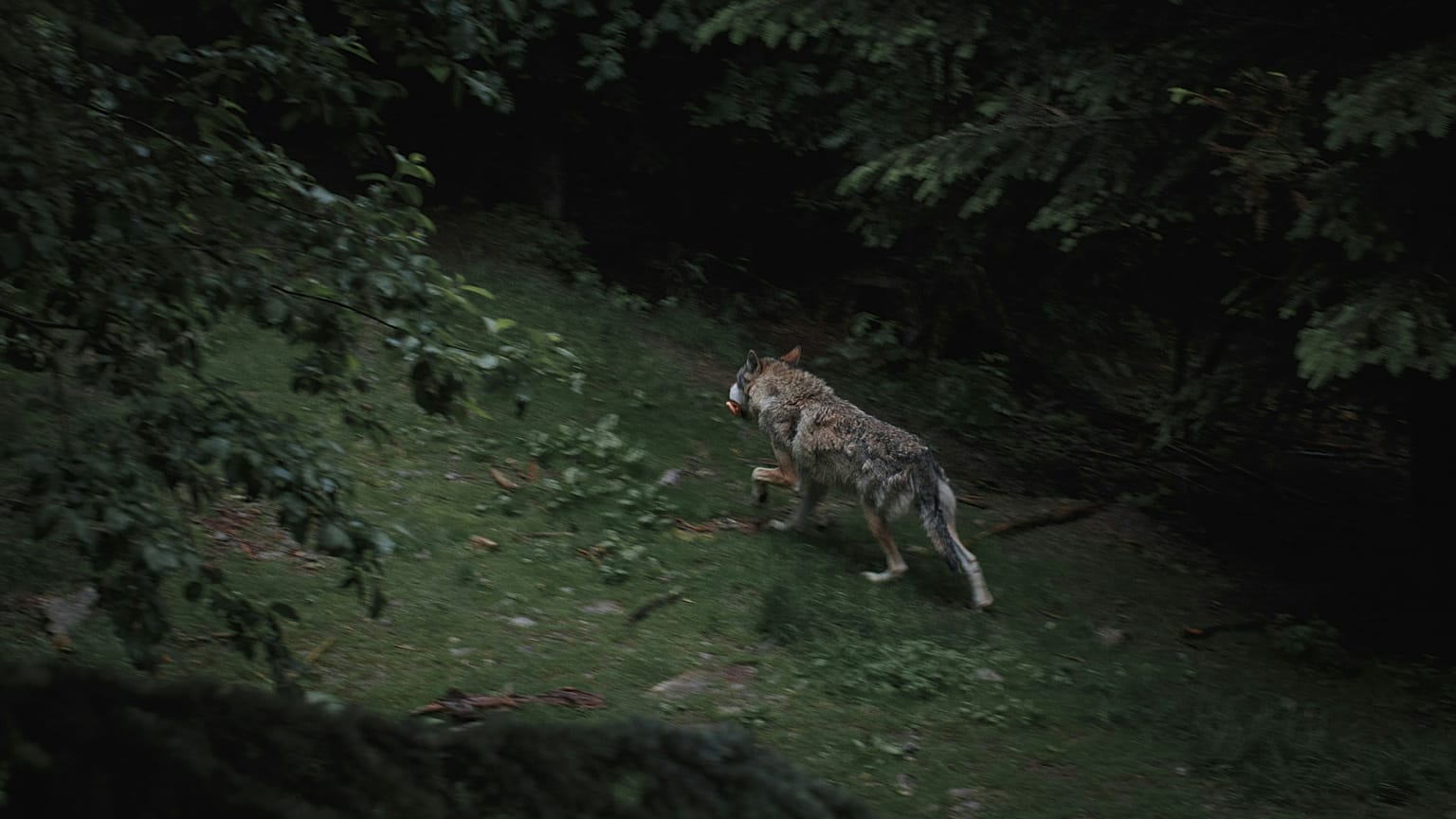













Italy’s wolf population now numbers 3,000-3,500; at the beginning of the 1970s, they were nearing extinction in the country.
In early January, a video taken in a residential street of the northern Italian city of Pesaro went viral. Shot from inside a car, it shows a wolf running past a few metres away, the lights of a bar just behind, and disappearing down a side road.
 ADVERTISEMENT
ADVERTISEMENT
ADVERTISEMENT
In recent weeks, there have been dozens of sightings like these in urban areas of the Romagna region, including the cities of Rimini and Cesena.
Clips on social media show wolves strolling past houses; one even captures a pack of three devouring a cat in the street.
The now-habitual sightings have sparked a debate about resurging wildlife and its problematic impact on humans. It’s an issue of coexistence that has also come to a head in other European countries, too, including in France, Germany and Spain.
Wolf pack forces Italian airport to close
On 6 January, the regional Rimini Fellini Airport halted all departing and arriving flights. The issue was not the winter weather that was affecting other European hubs, but a pack of four wolves spotted close to the runway.
Luckily, only one flight was affected as the airport’s operations are scaled back in winter. But the bigger issue was why the animals were there in the first place.
Pier Claudio Arrigoni, a wildlife and hunting expert in the Rimini area, told local media that the wolves, which have been present in the area for two years, were likely attracted to the airport by hares, having been driven away from their usual hunting grounds by the snow.
Residents form a ‘wolf emergency’ committee
The same question is being asked by fearful residents in the city, and Rimini has a dedicated ‘Wolf Help Desk’ to deal with enquiries.
According to Tania Bascucci, a nature scientist working at the help desk, rubbish bags, dumpsters, and even dog food in gardens are attracting wolves to cities.
Attacks on humans are rare, only occurring when wolves have become too accustomed to the presence of people and have lost their natural fear, she said.
But dogs, sheep, goats, and other livestock are attacked because they are easy prey.
“Our advice is to keep the animals sheltered at night in a closed enclosure,” she told local media. “A traditional 'anti-wolf' enclosure should be bent at about 45 degrees to prevent the animal from climbing through."
But advice like this is not satisfying everybody.
In Rimini, residents have formed a ‘wolf emergency’ committee, pointing to the rise in wolf population numbers as the critical issue.
Italy’s wolf population now numbers 3,000-3,500; at the beginning of the 1970s, they were nearing extinction in the country.
"We must choose whether to leave our territory to wolves or to humans; there is no coexistence," they said in a frank statement.
"We don't know about wolves because they haven't been here for at least 100 years. Back then, farmers carried shotguns, and there were ‘wolf hunters’ paid to eliminate them."
Frustration stems from the authorities’ advice to keep pets indoors at night or build safer animal enclosures outside.
"Now they want us to believe that we are the problem. We would be forced to put up fences two or three metres high, underground barriers, electrification, and barbed wire - often prohibited - and keep dogs and cats confined,” the statement continued.
“But in the countryside, dogs are guard dogs, not companions; cats are used to keep mice and rats at bay."
‘The presence of wolves is an asset’
Despite the spate of sightings and animal attacks, wildlife organisations are highlighting the benefits of the wolf resurgence.
The branch of the WWF based in Rimini has said that the presence of wolves is “an asset”.
“It restores balance to the territory and limits the wild boar population, which has grown dramatically," it added.
But local authorities say this approach is at odds with Europe-wide sentiment. Last year, the European Parliament downgraded the EU’s wolf protection status from ‘strictly protected' to ‘protected'.
This means member states now have greater flexibility in managing their wolf populations to improve coexistence with humans and to minimise the impact of a growing wolf population in the EU.
They will also be better able to take measures adapted to particular regional circumstances.
Authorities in the Emilia-Romagna region say Italy’s national management plan to which the regions are required to adhere has not changed since 2002, however, and does not reflect the downgrading of the wolf as a protected species at the European level.
At the end of the month, local mayors, the police commissioner, and the Carabinieri forestry police will meet to review the containment strategy.