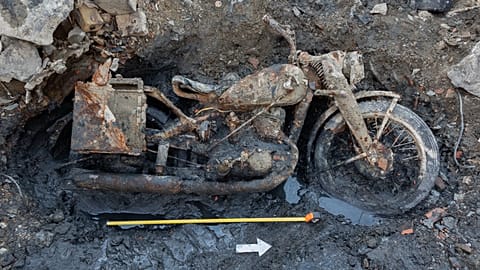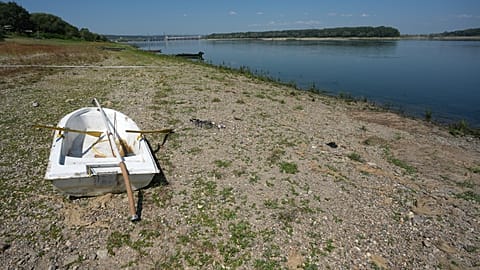




























Record low Danube levels in Budapest have exposed a perfectly preserved Wehrmacht DKW NZ 350-1 motorbike. Where did it serve, and are nearby dead its crew? Euronews unravels the story of the Danube motorbike.
The water level in the Danube has never been this low. The low water is exposing what has lain hidden on the riverbed for decades, including a Wehrmacht motorcycle of the DKW NZ 350-1 type from the Second World War. DKW is the abbreviation of "Dampfkraftwagen", a former German car and motorcycle brand from the Saxon motor city of Zschopau that was later taken over by Auto Union.
 ADVERTISEMENT
ADVERTISEMENT
ADVERTISEMENT
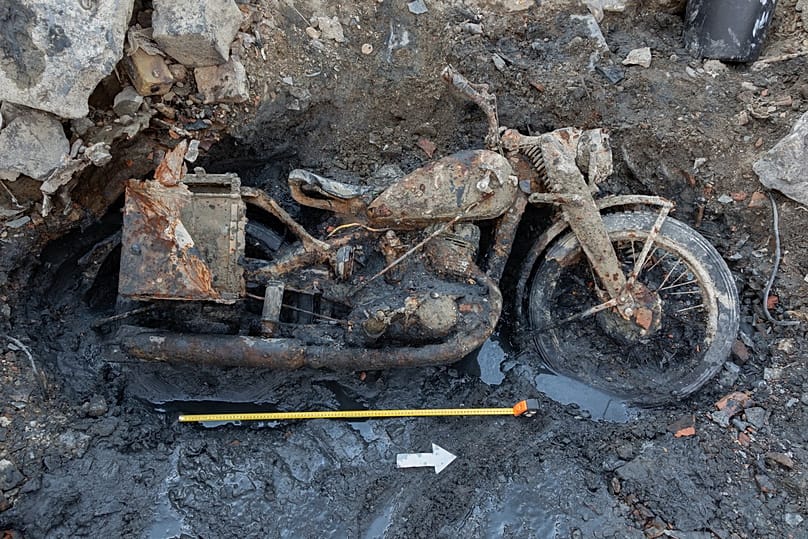
The motorcycle was found in the riverbed in the heart of Hungary's capital, Budapest, level with the Hungarian parliament building. For staff at the local Institute and Museum of Military History it is a genuine find of the century. According to the institute, the vehicle is almost completely intact. It was effectively preserved in the Danube's mud.
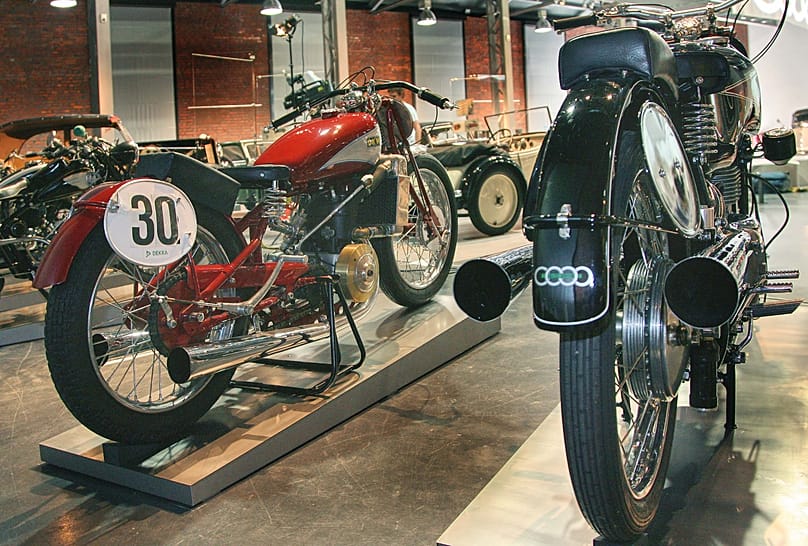
The motorcycle recovered is a model developed specifically for wartime use and built from 1944 onwards. It was powered by a two-stroke engine producing 11.5 hp. Thanks to their robustness and reliability, the bikes were popular with the troops. One of the distinctive features of the DKW 350-1 is the metal pannier on the side, a feature also present on the bike lifted from the Danube.
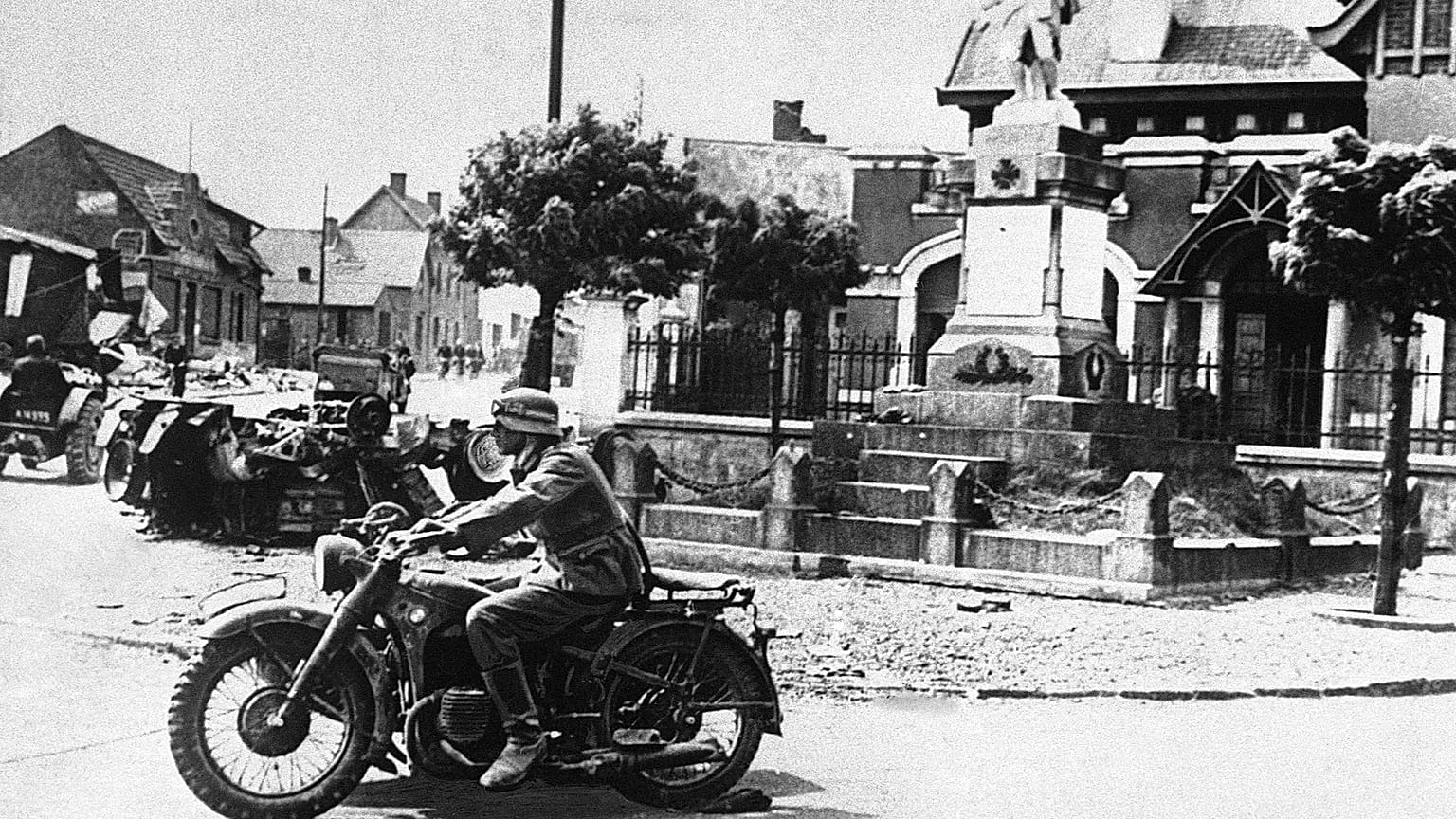
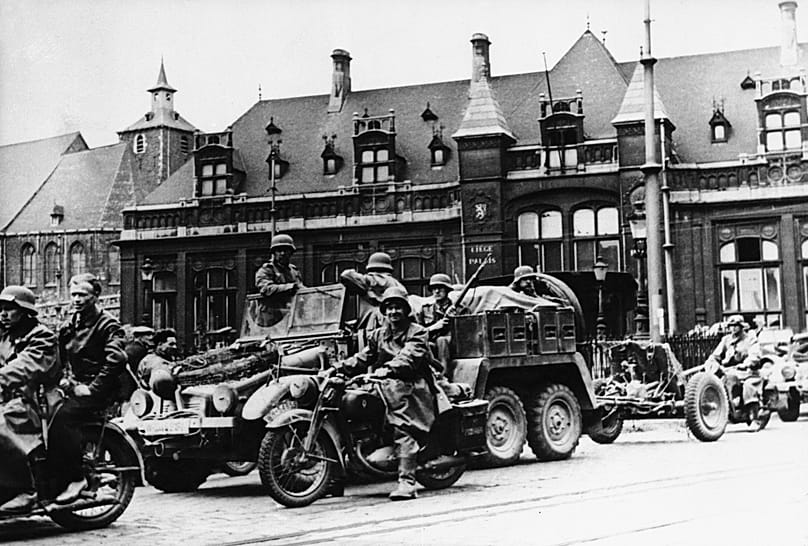
Around 12,000 units were produced by the end of the war in 1945. According to the ADAC, the predecessor model, the DKW (source in German) NZ 350, had a top speed of 105 km/h. Motorcycles were mostly used by the Wehrmacht as dispatch, reconnaissance or courier bikes.
The motorcycle was built by Auto Union AG, a car and motorcycle manufacturer founded in 1932 which at the time was the second-largest producer after Opel. Auto Union AG was created through the merger of several brands, including Audi.
On earlier models by the manufacturer, the frame components were still bolted together; on the NZ series they were welded. Because this required a high power supply, the welding could only be carried out at night, when the grid was not under strain from other users.
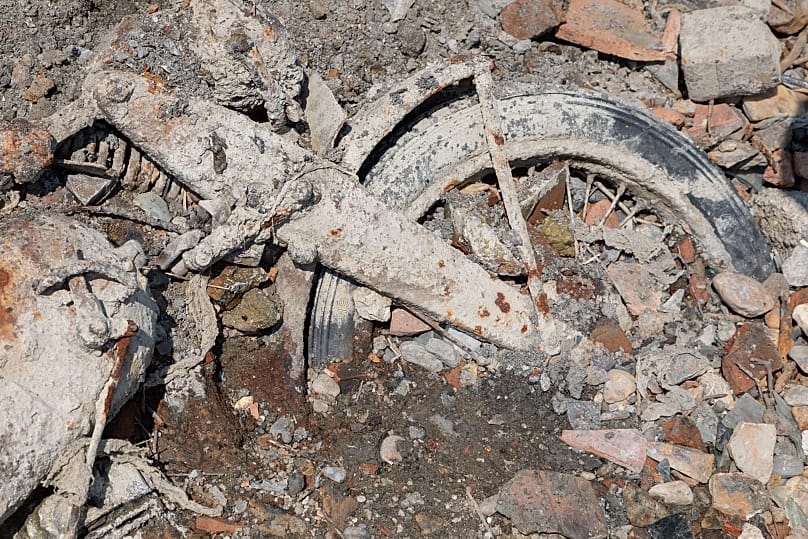
German Tellermine 35 anti-tank mines, remnants of hand grenades and artillery shells were also found on the bed of the Danube. According to the Hungarian Institute of Military History, this stretch of the Danube may have been used as a "war rubble dump".
From March 1944, German troops laid siege to Budapest. Between October 1944 and February 1945, the Battle of Budapest was fought between the Soviet Red Army and German and Hungarian forces. Around 30,000 German, more than 17,000 Hungarian and some 80,000 Soviet and Romanian soldiers were killed. On 13 February 1945, the remaining German units surrendered.
After the war, the DKW production facilities were dismantled and taken to the Soviet Union as part of war reparations. In Moscow and other locations, they were used until 1951 to produce, in large numbers, the largely identical ISCH-350.
Human remains were found beneath the motorcycle. The Volksbund Deutsche Kriegsgräberfürsorge (German War Graves Commission) handled the recovery and says they are the mortal remains of two Wehrmacht soldiers. The crew of the motorcycle? Their identity tags are well preserved, so they should be able to be identified. The two dead soldiers are to be buried at the German war cemetery in Budaörs, west of Budapest. More than 16,000 German soldiers are already buried there.
The Volksbund is a non-profit association which, on behalf of the federal government, searches for, recovers and buries war dead abroad. In 2025 alone, it recovered and buried more than 5,500.