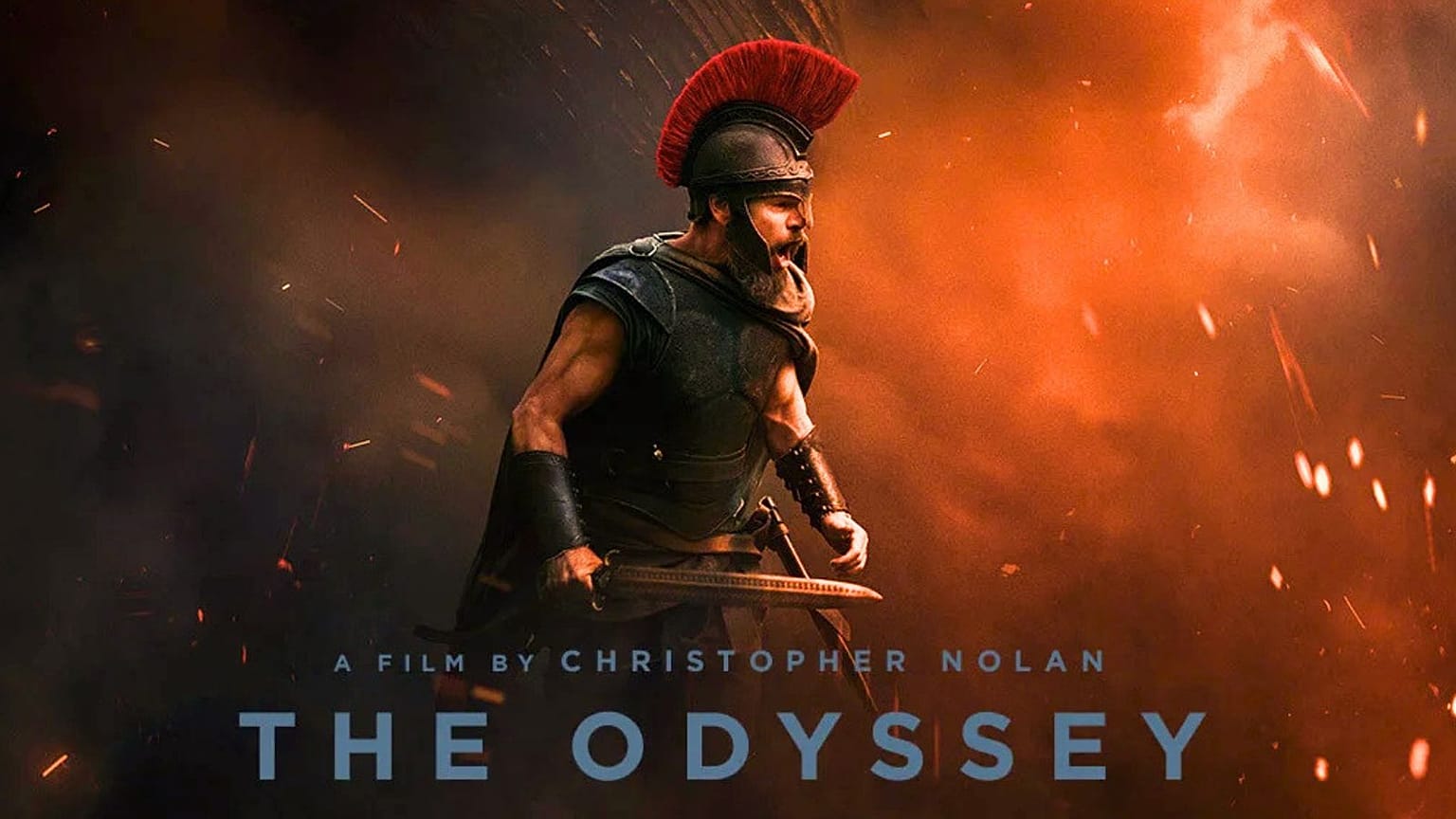














Christopher Nolan follows his Oscar-winning 'Oppenheimer' with his most ambitious undertaking to date: adapting Homer's epic poem to the screen. As impressive as it is, something feels missing...
Most directors would balk at the idea of adapting Homer’s "The Odyssey" to the big screen.
 ADVERTISEMENT
ADVERTISEMENT
ADVERTISEMENT
The Greek mythology epic may essentially boil down to an ill-fated warrior trying to get home, but the 24-book 8th-century BC poem which sees men collide with gods and monsters across a perilous adventure lasting decades is an enduring narrative whose scale and scope has served as the template for all of literary fiction.
Not Christopher Nolan. Fresh from his Oscar-winning three-hour biopic about the birth of the atomic bomb, the filmmaker undertakes what is arguably his most ambitious project to date. He does so by doing what he did for Batman: committing to realism and making it less about myth and more about the man.
This more grounded version of the story is matched by the craft. Filmed in six countries, shot entirely on IMAX – the first film to ever do so, with a reported 2.1 million feet of film shot – and relying on practical effects rather than an abundance of CGI (a reported 2,000 extras were used to film the siege of Troy), The Odyssey sees Nolan truly commit and swing for the fences.
However, prioritizing the plights of men can have its pitfalls.
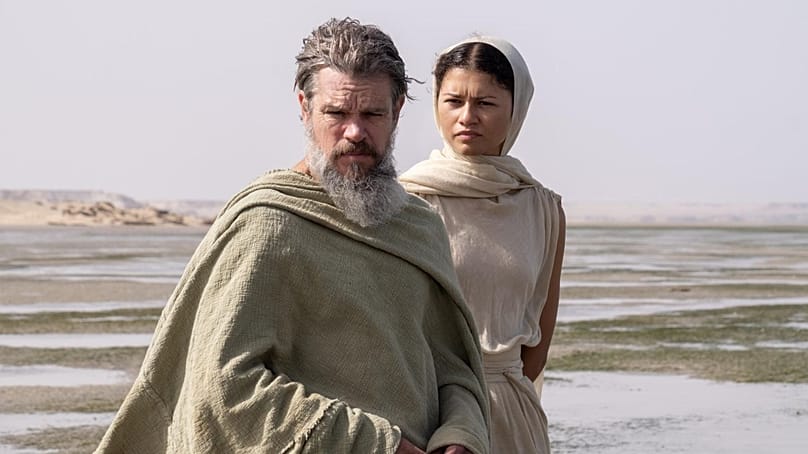
Set in a “time of apparent magic”, as the opening title card informs us, the audience dive straight into a story dense with plot and characters. After his victory in the Trojan War, Odysseus (Matt Damon) is nowhere to be found. This leaves his wife Penelope (Anne Hathaway) to fend off the attentions of suitors led by the slimy Antinous (Robert Pattinson), who is vying for the hand of the abandoned Queen of Ithaca.
Her son Telemachus (Tom Holland) is intent on driving out the suitors and sets out for Sparta, hoping King Menelaus (Jon Bernthal) knows of his father’s whereabouts.
Meanwhile, on the Isle of Ogygia, the nymph Calypso (Charlize Theron) has been nursing an amnesic Odysseus back to health. As memories come back to him, we learn of what brought the shipwrecked warrior to the island without his men. A bloodthirsty Cyclops, cannibalistic Laestrygonians, the dangerous chant of the Sirens, and Calypso's enticing stews...
It's a lot to compress into 173 minutes. Nolan manages thanks to a zippy pace, but one which comes at a price.
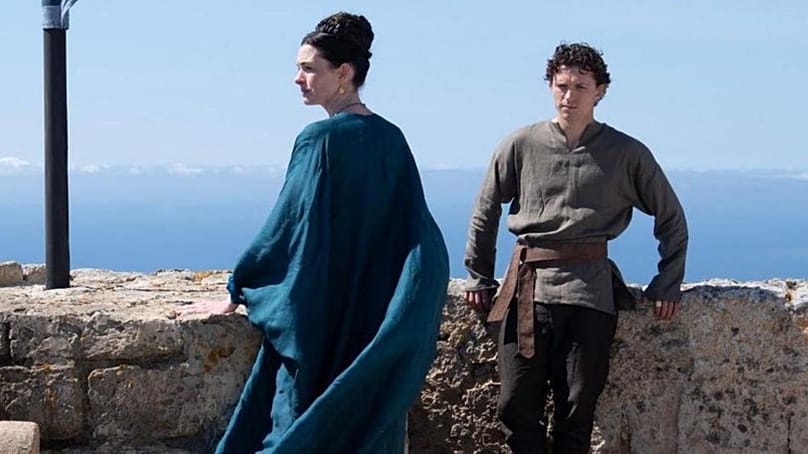
The first half of The Odyssey sees parallel timelines co-exist, something which is to be expected from the linear-averse Nolan. The film quickly intercuts between Odysseus’ memories and Telemachus’ struggle to keep Ithaca under his father’s rule. As a result, the warrior's adventures feel rushed and strangely curtailed.
Many will argue that the episodic nature of Odysseus' encounters with all manner of threats makes sense considering Homer's poem is episodic by nature, and that these are flashes of disjointed memories gradually reforming. But even if the pacing means there's never a dull moment, Jennifer Lame's editing is distracting, borderline detrimental to the storytelling.
No sooner do you glimpse the Cyclops or encounter the Sirens that the story moves on, leaving little room for build-up or to recoil at the sense of threat, even less appreciate the stakes or feel the unease of men facing dangers which test not only their will but their place in a universe supposedly at the mercy of volatile deities.
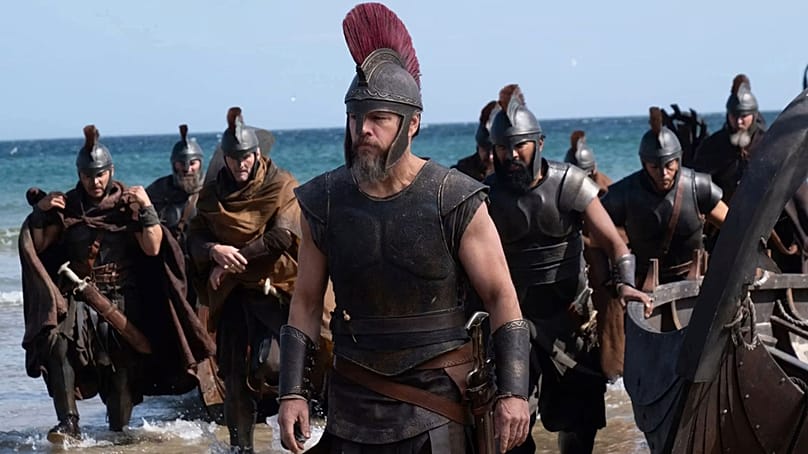
This part of The Odyssey feels like a hastily edited with little satisfying flow – especially when the quick-cut battles and hastily chopped adventures (inherent to the structural switches though they may be) spend little time on the most exciting, tense or gory details within extraordinary set-pieces.
Even the film's standout moment, featuring the encounter with Samantha Morton's Circe, suffers from some baffling editing choices. It's the closest Nolan has come to (body)horror, and Morton gives a transfixing performance that is – once again – over far too quickly. Why not stay in a deeply troubling environment to assure emotional investment and actually care about the protagonists' survival, instead of hurtling towards the next set-piece?
It's only in the final act, when we head into present tense, that the film truly comes together.
Odysseus finally makes it back to Ithaca, reunites with his wife and son, and confronts the boorish suitors. During this stretch, The Odyssey has focus. Damon shines as a traumatized man broken not only by how the fragile bonds between men have been destroyed by the absurdity of war, but by his own role in the downfall. Hathaway, Pattinson and John Leguizamo’s blind servant Eumaeus also get the chance to stand out in the last hour, unlike the bafflingly underused Zendaya and Lupita Nyong'o.
The former is relegated to a cameo form of trauma-conjured Athena, while the latter barely gets any screentime playing both Helen of Troy and her sister Clytemnestra.
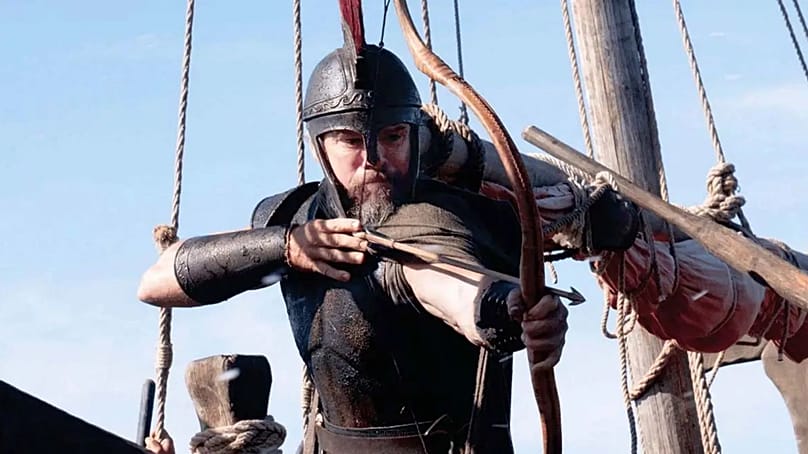
There’s so much to admire about Nolan's gargantuan undertaking and how he departs from the Homeric world, preferring a tale in which the supernatural realms are pushed back to make way for a modernist reading of Odysseus' psyche.
While some purists may quibble at this choice and some anachronistic liberties taken with the dialogue (a couple of F-bombs do strike a false note), The Odyssey brushes aside reservations by being a monumental technical achievement. It is to be expected from a director of Nolan's meticulousness, as well as from his four-time cinematographer Hoyte van Hoytema - without forgetting the great Ludwig Göransson, who delivers a tremendous, throbbing score. Expected, but not taken for granted.
Still, something is missing. Not the filmmaking flair, nor the ambition; rather a moment to breathe and emote during what sometimes feels like a dutiful α to β to γ trip to Hades and back.
Maybe it's too much to ask for Homer's sprawling epic to fit into three hours? Nolan has certainly given it his best and biggest shot, one which will be showered with "masterpiece" praise. As it is, The Odyssey has the strange distinction of feeling like a rushed three-hour spectacle that will provoke awe but little in terms of feeling.
The Odyssey is out in cinemas now.