














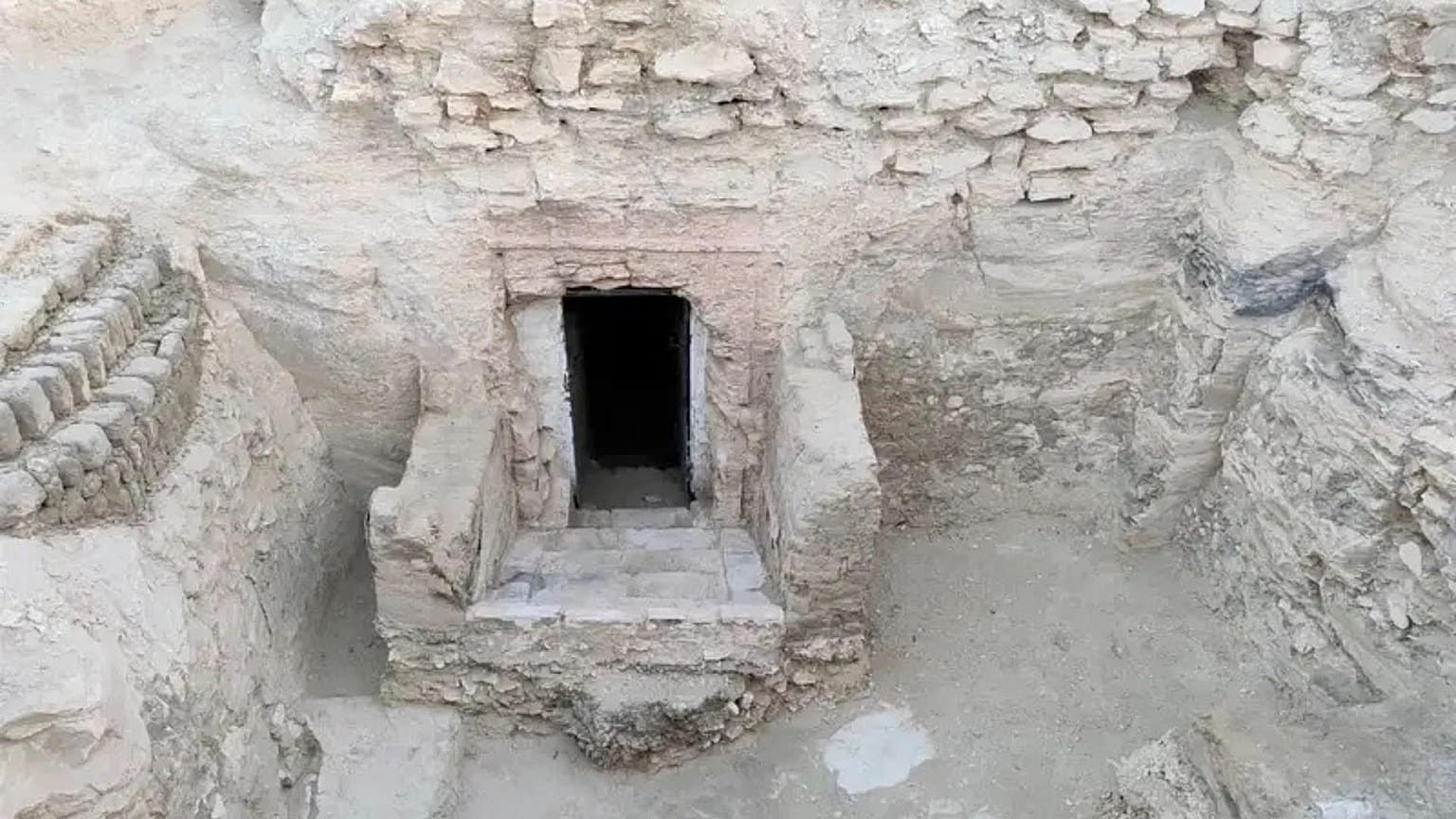













Dating back to Egypt’s Ramesside period - the era of powerful pharaohs such as Ramesses II - the tomb features scenes of religious rituals and the journey into the afterlife.
Dutch archaeologists have uncovered a previously unknown 3,000-year-old tomb near Luxor, Egypt, revealing vivid wall paintings and inscriptions that identify its owner as a man named Paser.
 ADVERTISEMENT
ADVERTISEMENT
ADVERTISEMENT
Announced recently by Egypt's Supreme Council of Antiquities (SCA), the discovery was made in the Sheikh Abd El-Qurna necropolis on Luxor's West Bank, part of the UNESCO-listed Theban Necropolis, one of ancient Egypt's most important burial grounds for priests and high-ranking officials.
The team behind the excavation believe the tomb dates to the Ramesside period (circa 1292–1069 BCE), based on the style of its decoration.
It was uncovered by a Dutch archaeological mission from Leiden University, led by Carina van den Hoven, who has been excavating the site with the SCA since 2018.
The tomb has the classic layout of an elite New Kingdom burial, with an open courtyard leading to a rock-cut chapel and underground burial chambers. Archaeologists also found a mudbrick bench designed to hold a funerary stela and a staircase descending to the entrance.
Inside, surviving painted scenes depict Paser worshipping Egyptian gods and sitting beside his wife at an offering table, images intended to provide the deceased with an eternal supply of food and drink in the afterlife.
More of the painted decoration is expected to emerge as conservators remove a thin layer of dirt covering parts of the walls.
"The team will continue documenting and studying the tomb to identify those buried within it and reconstruct their identities," said Hisham Al-Leithy, secretary-general of the SCA.