















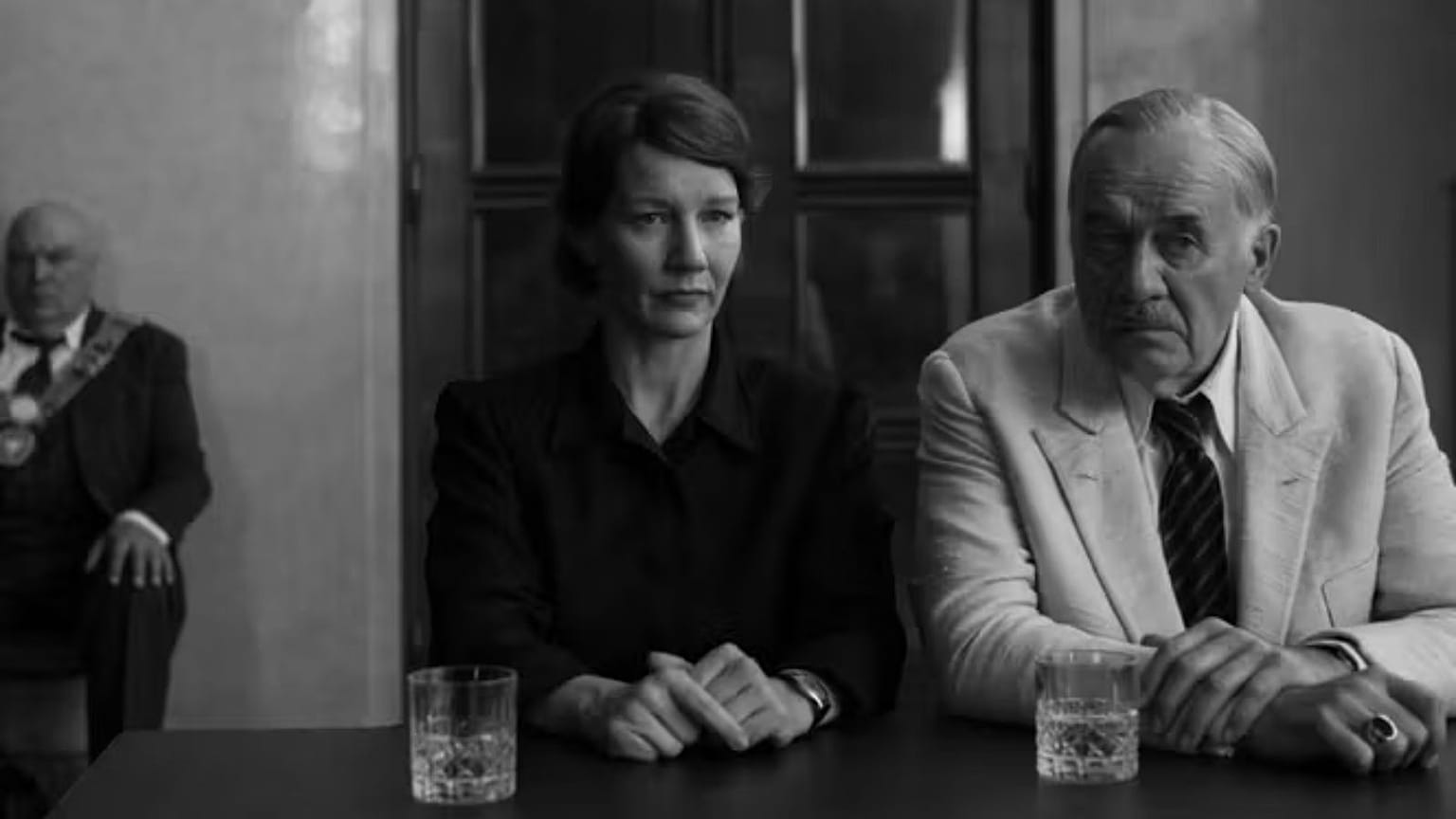














Paweł Pawlikowski's first film in eight years stars Sandra Hüller and Hanns Zischler as Erika and Thomas Mann, as they embark on a road trip across Germany during the Cold War.
Following its world premiere in Competition at the 79th Cannes Film Festival, where Polish filmmaker Paweł Pawlikowski won Best Director for the second time after 2018‘s Cold War, Ojczyzna (Fatherland) is another monochrome historical snapshot focusing on a couple swept up by the tides of history.
 ADVERTISEMENT
ADVERTISEMENT
ADVERTISEMENT
Instead of lovers, it centers on a father, German Nobel Prize laureate Thomas Mann (“Death in Venice”, “Doctor Faustus”) and his daughter, Erika.
Thomas (Hanns Zischler) is heading back to his native Germany only four years after the end of the war. Having left in 1933 for the US, the returning national treasure is about to receive two honours just a few days apart.
The first is in West Germany under American occupation. The second is in East Germany under Soviet rule. Both sides wish to claim Mann as one of their own, with the West Germans hoping the celebrated cultural figure will embrace capitalism, while the East Germans make the case that Goethe, Mann’s great influence, would have agreed with Marxist values.
Erika (Sandra Hüller) is reluctant to accompany her father to the place she once called home. The same applies to her disillusioned brother Klaus (August Diehl), who is residing in France and whose book “Mephisto” was banned for its anti-Nazi stance.
“Never again Germany - ugly place, ugly people, with a language created for lies,” he tells his sister on the phone.
Thomas insists they go, even if travelling to Weimar could endanger his American citizenship. Erika reluctantly agrees to accompany her father, serving as his assistant, translator, speech proofer, barber, and driver. As compensation, she is looking forward to seeing Klaus – should he show up...
As the father and daughter embark on their road trip through divided Germany, familial fractures arise as they witness the scars of war on a home that no longer exists.
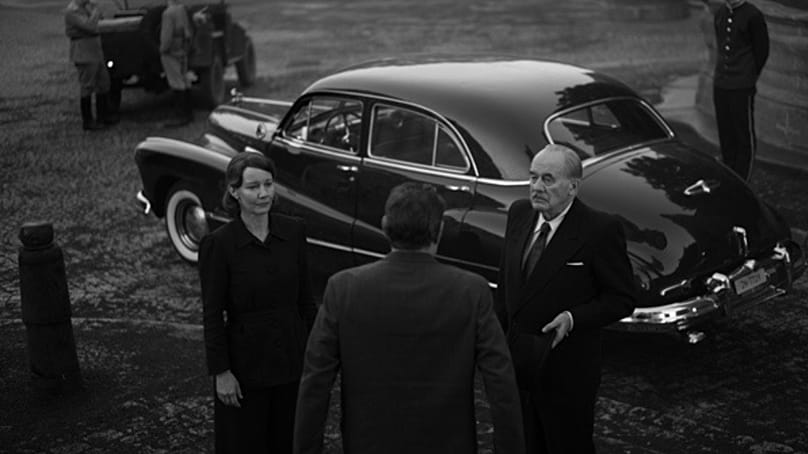
In many ways, Fatherland is the third part of a loose trilogy that started with the Oscar-winning Ida (2013) and Cold War, a stylistic companion which also uses stark black-and-white photography, the Academy aspect ratio, and which takes place in a European setting haunted by World War II.
No matter the familiarity, Pawlikowski’s return is a masterclass in mood and subtlety, as well as an insightful exploration of grief, cultural appropriation to ideological ends, and the notion of belonging.
“Let’s go home,” Erika tells her father on their journey.
“Where is that?” he answers, highlighting that Fatherland is about two lost souls whose homeland is gone forever, replaced by two sides attempting to claim heritage.
Throughout the film's taut 82-minute runtime, Pawlikowski also makes Fatherland into a poignant ghost story, where his characters are haunted by absences, whether historical or personal. His regular cinematographer, Łukasz Żal, adds a haunted beauty to the themes, through meticulously shot still frames and claustrophobic long takes.
As for Hüller, she makes Erika the beating heart of Fatherland and adds another soul-stirring performance to her filmography. Erika Mann is already a fascinating figure as a war journalist, an actress and a writer, but the actress imbues her with palpable sorrow and suppressed pain. Whether she’s burying her hatred or briefly snapping when she meets her ex-husband and Nazi sympathiser Gustaf Gründgens (Joachim Meyerhoff), every facial tic and movement Hüller makes is measured and perfectly calibrated. How she left Cannes without a Palme remains a mystery.
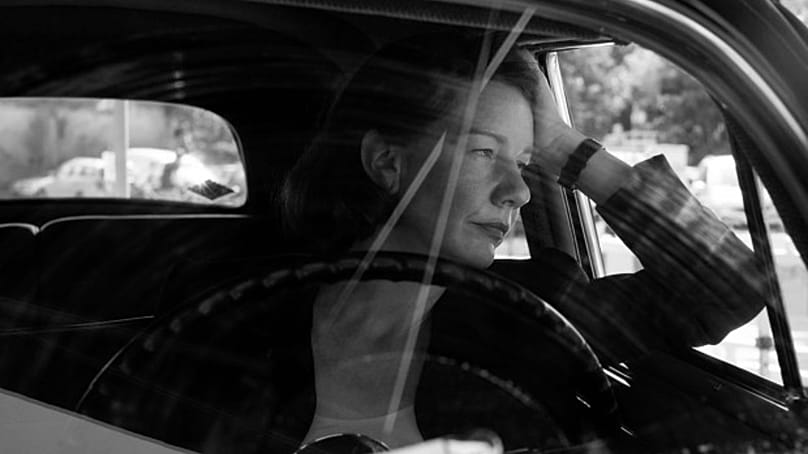
By the time Erika ends up with her father sitting in the ruins of a crumbling church where a lone organist plays Bach, both Hüller and Zischler deliver one of the most devastating scenes you’re likely to see all year.
In a place filled with beauty and decay, repressed feelings finally surface and their weight is acknowledged. It’s a simple and elegant moment which Pawlikowski handles with the delicacy it deserves – an emotional release in which everything is said in silence.
It’ll take one powerfully engrossing film to top Fatherland when it comes to looking back on 2026’s best cinematic offerings.
Fatherland is out in Polish cinemas now and has a staggered release in the rest of Europe from September onwards.