



























The boat designed by Leonardo da Vinci has come back into use after a bridge was closed and traffic increased. The ferry is a model of sustainable transport, powered solely by the river’s current.
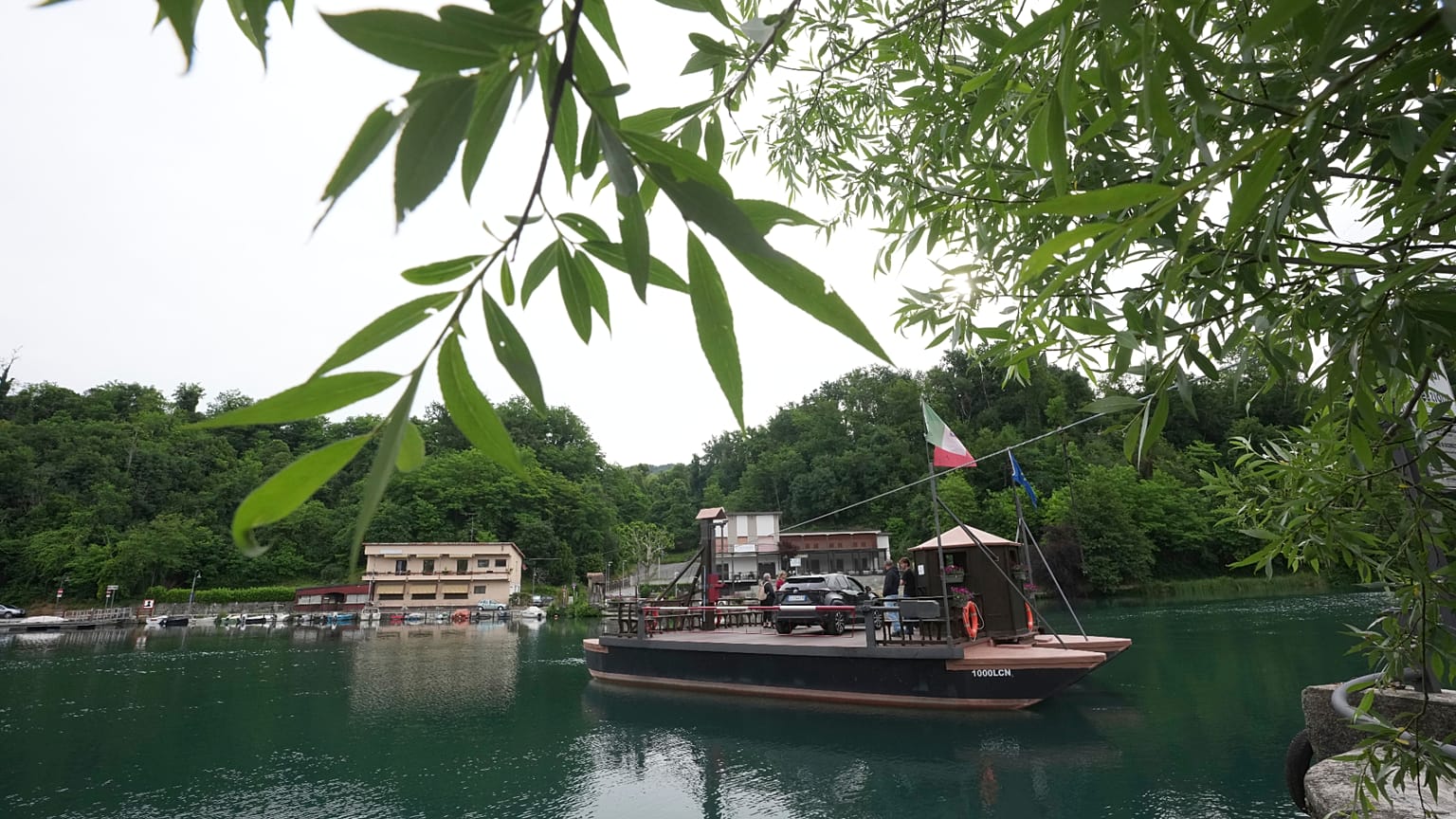
On the River Adda in Lombardy, a ferry has been linking the two banks for more than 500 years. It is the so-called “Leonardo’s ferry”, a Renaissance craft without an engine, designed by Leonardo da Vinci in 1513.
 ADVERTISEMENT
ADVERTISEMENT
ADVERTISEMENT
Today it links Imbersago, in the province of Lecco, with Villa d'Adda, on the Bergamo side of the river. It is the last working example of its kind.
Leonardo da Vinci did not invent the ferry that bears his name
In service for five centuries, the vessel carried people and goods between the Duchy of Milan and the Republic of Venice until the late 18th century, when the Adda marked the border between the two states.
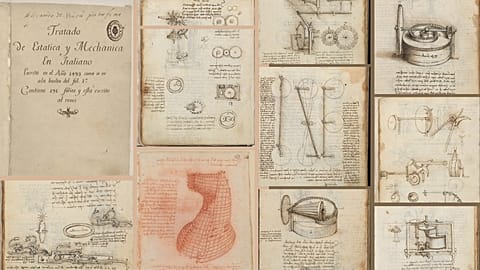
Despite what its name suggests, this type of craft was already widespread in the 15th century. But the boat so captivated Leonardo that he immortalised it in a drawing entitled “Landscape of the Adda with detail of a ferry”, kept in the Royal Collection at Windsor Castle in the United Kingdom.
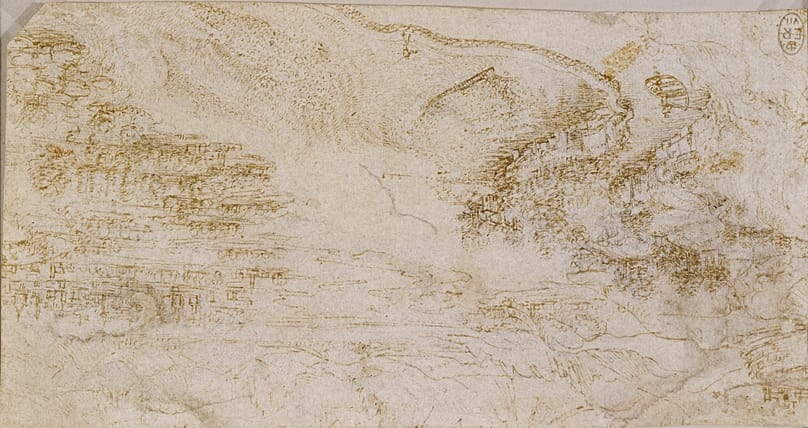
According to historian Erminio Bonanomi, at most Leonardo may have designed the port of Imbersago, after studying how the ferry worked.
After passing through several noble families, management of the ferry finally passed to the municipality of Imbersago. On the Adda there were five boats of this kind, but they gradually fell out of use from 1889 onwards, when the first bridge was built at Paderno d'Adda, making the ferry crossing superfluous.
The Imbersago ferry is the last one left.
Among those who crossed the Adda on this boat was Angelo Giuseppe Roncalli, before he became Pope John XXIII. A native of the area, the pontiff used it regularly during his pilgrimages to the Sanctuary of Our Lady of the Woods in Imbersago.
When Leonardo’s ferry was rediscovered
Commuters in Lombardy have rediscovered the ferry since the beginning of May, when the Brivio bridge, one of the few crossings between the two banks in the area, was closed for works that will last until 2027.
Traffic on the nearby San Michele bridge, three kilometres away, has increased, with tailbacks stretching for two kilometres and 8,000 vehicles a day at peak times.
Once in service only at weekends as a tourist curiosity, the ferry has become a way of avoiding the traffic. Since the bridge closed, its operation has been extended to weekdays as well.
“Right now it is the quickest option, but above all the most pleasant, because it gives you three minutes of peace and quiet,” Gianpaolo Graffagnino told the Associated Press. Since the bridge closed, he has started cycling and using the ferry.
The service is run by a group of local volunteers. Among them are three 20-year-olds, engineering and economics students, a pensioner, and the mayor of Imbersago, Fabio Vergani.
“This is a means of transport that has existed for 500 years and has always linked the two banks of the Adda,” explained Massimo Zoia, one of the volunteers. “Today it has returned to its original function: bringing together two communities living on opposite sides of the river.”
Leonardo’s ferry is a model of sustainable transport
The vessel is a fully eco-friendly means of transport with no environmental impact, as it is powered by the current of the river, with no engine or fuel.
Built of wood, the barge is attached to a steel cable (once a rope) stretched between the two banks of the Adda. To set off, the person at the helm pulls a rope that steers the vessel towards the middle of the river. The ferryman then manoeuvres the craft so that it is at an angle to the current, which pushes it towards the other bank.
The force of the water presses against the side of the boat, which moves forward thanks to a principle of the resolution of forces that fascinated Leonardo.
Only one operator is needed to run the ferry and the crossing takes around five minutes.
The platform carries pedestrians, bicycles, motorbikes and cars. A ticket costs €1.50 (€3.50 if you are in a car). If it is windy, the service is suspended.