












This year’s Berlinale has been rocked by huge backlash over the sidelining of political discourse. Now, in an open letter, more than 80 prominent film figures have condemned the Berlin Film Festival’s “silence” on Gaza. Here's everything you need to know.
“Unconscionable”. “Appalling”. “Weird”.
 ADVERTISEMENT
ADVERTISEMENT
ADVERTISEMENT
It’s not been smooth sailing for this year’s Berlin Film Festival, with the festival swept up in what it called a “media storm” over the alleged sidelining of political discourse at the event.
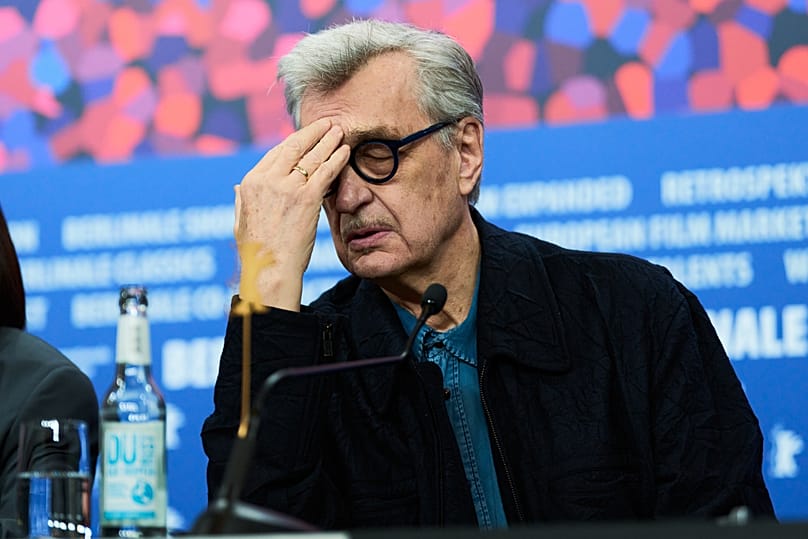
The festival, which is known for being the most politically charged of the Big Three European Festivals (Berlin, Cannes, Venice), got off to a controversial start last week when journalists asked the competition jury, led by renowned German director Wim Wenders, about the current state of the world – including the war in Gaza.
When asked whether films can affect change in the political realm, Wenders said that “movies can change the world”, but “not in a political way.”
“No movie has really changed any politician’s idea. But we can change the idea people have of how they should live,” he said. “There’s a big discrepancy on this planet between people who want to live their lives and governments who have other ideas. So I think films enter that discrepancy.”
When asked about the ongoing conflict in Gaza and how the German government (which funds part of the festival) has continued to show support for Israel, jury member Ewa Puszczyńska pushed back.
“There are many other wars where genocide is committed, and we do not talk about that,” she said. “So this is a very complicated question and I think it’s a bit unfair asking us what do you think, how we support, not support, talking to our governments or not.”
Wenders added: “We have to stay out of politics because if we make movies that are dedicatedly political, we enter the field of politics. But we are the counterweight of politics, we are the opposite of politics. We have to do the work of people, not the work of politicians.”
It was at this moment that the livestream of the press conference experienced technical difficulties, and rumours started spreading that the feed was cut purposefully.
The Berlinale responded in a statement: “We had technical problems with the web streaming of the Press Conference with the International Jury this morning. We would like to extend our sincere apologies.”
Backlash and pushback
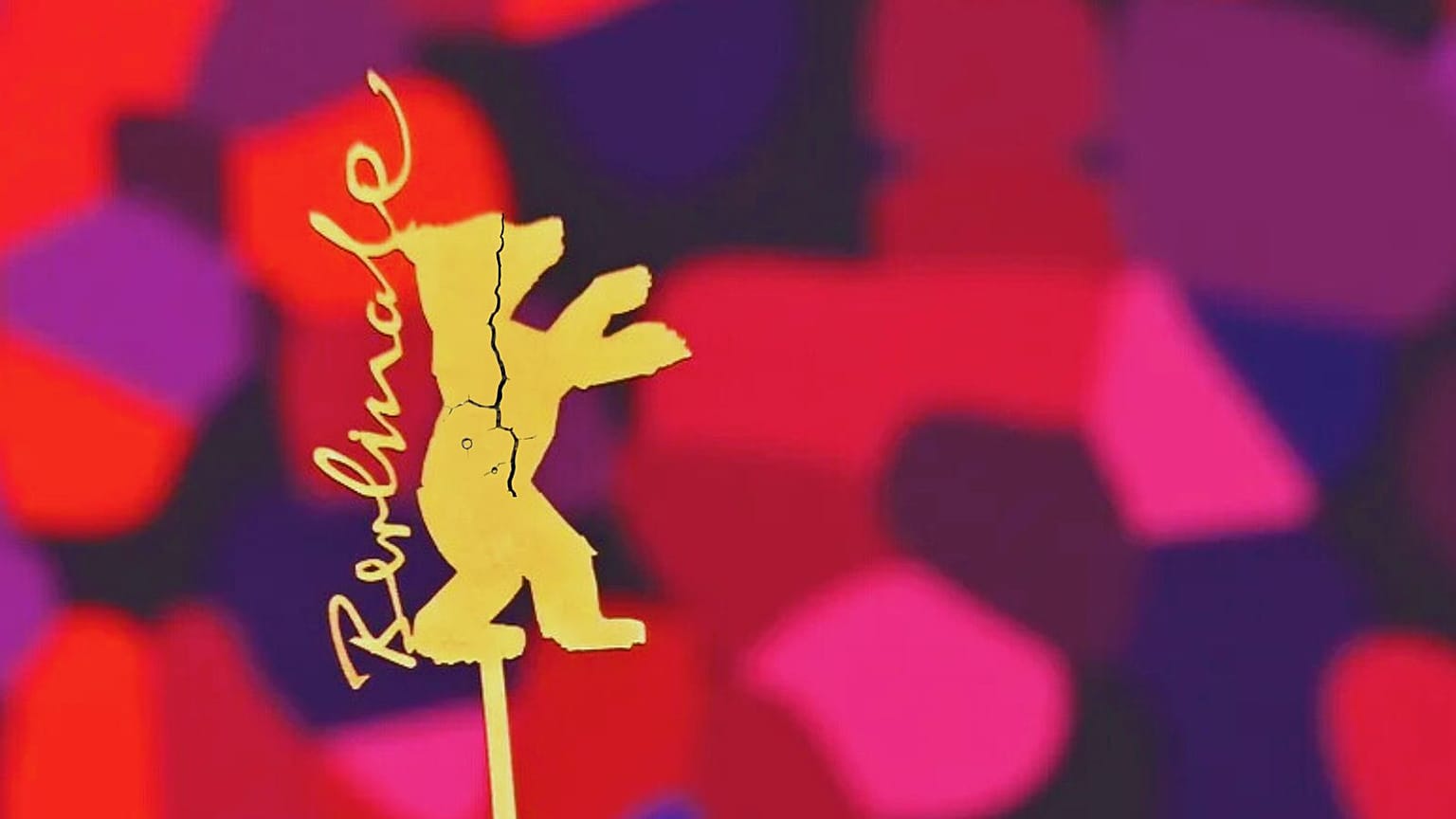
The backlash was swift and outrage steady, with many declaring the festival defanged and pivoting away from topical issues – something particularly egregious for the Berlinale, as the has never shied away from taking a stance in the past, most recently when it comes to Russia’s invasion of Ukraine. They even went so far as to make their trademark little bear Berlinale pin in the colours of the Ukrainian flag.
Another recent example came in 2024, when the festival's documentary award went to No Other Land, which follows the dispossession of Palestinian communities in the Israeli-occupied West Bank. There was controversy following the award, and the festival stood by the film and those speaking out, even as German government officials criticized "one-sided" remarks about Gaza by the directors at the awards ceremony.
Both Berlinale 2026 guests Michelle Yeoh and Neil Patrick Harris faced online criticism for avoiding answering questions about ICE raids in the US and the rise of fascism – especially Harris for asserting that he was interested in “doing things that were “apolitical”.
One major pushback came from celebrated Indian author Arundhati Roy, who was due to present her 1989 comedy “In Which Annie Give It Those Ones” as part of the festival’s Classics section.
She announced she was pulling out of the festival, citing the “unconscionable statements” made by the jury and saying that to “hear them say that art should not be political is jaw-dropping.”
“Although I have been profoundly disturbed by the positions taken by the German government and various German cultural institutions on Palestine, I have always received political solidarity when I have spoken to German audiences about my views on the genocide in Gaza,” said Roy in her statement. “This is what made it possible for me to think of attending the screening of Annie at the Berlinale.”
She continued, in reference to the jury: “To hear them say that art should not be political is jaw-dropping. It is a way of shutting down a conversation about a crime against humanity even as it unfolds before us in real time – when artists, writers and film makers should be doing everything in their power to stop it. Let me say this clearly: what has happened in Gaza, what continues to happen, is a genocide of the Palestinian people by the State of Israel. It is supported and funded by the governments of the United States and Germany, as well as several other countries in Europe, which makes them complicit in the crime.”
She finished by saying: “If the greatest film makers and artists of our time cannot stand up and say so, they should know that history will judge them. I am shocked and disgusted.”
The Berlinale defends itself from “media storm”
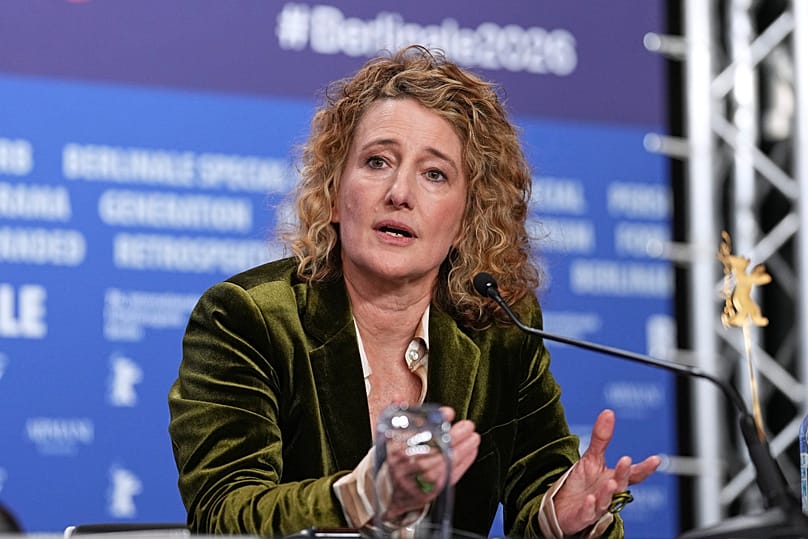
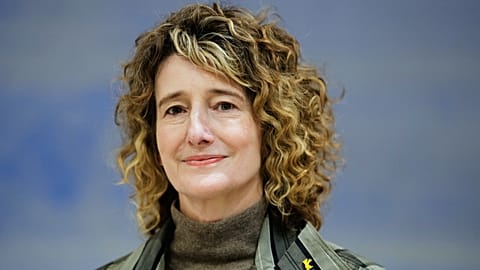
Witnessing growing upset, the festival issued a lengthy statement from the Berlinale head Tricia Tuttle.
The statement read: “People have called for free speech at the Berlinale. Free speech is happening at the Berlinale. But increasingly, filmmakers are expected to answer any question put to them. They are criticised if they do not answer. They are criticised if they answer and we do not like what they say. They are criticised if they cannot compress complex thoughts into a brief sound bite when a microphone is placed in front of them when they thought they were speaking about something else.”
Tuttle went on to mention that there are 278 films in this year’s programme, some of which are “about genocide, about sexual violence in war, about corruption, about patriarchal violence, about colonialism or abusive state power.”
She added: “In a media environment dominated by crisis, there is less oxygen left for serious conversation about film or culture at all, unless it can be folded as well into a news agenda. Some films express a politics with a small “p”: they examine power in daily life, who and what is seen or unseen, included or excluded. Others engage with Politics with a capital “P”: governments, state policy, institutions of power and justice. This is a choice. Speaking to power happens in visible ways, and sometimes in quieter personal ones.”
“Artists are free to exercise their right of free speech in whatever way they choose. Artists should not be expected to comment on all broader debates about a festival’s previous or current practices over which they have no control. Nor should they be expected to speak on every political issue raised to them unless they want to.”
A-list escalation
Tuttle’s statement did nothing to assuage concern over the matter, with more than 80 film industry figures slamming the Berlinale in a letter published yesterday (Tuesday 17 February), saying that they were “appalled” by the festival’s “institutional silence” on Gaza.
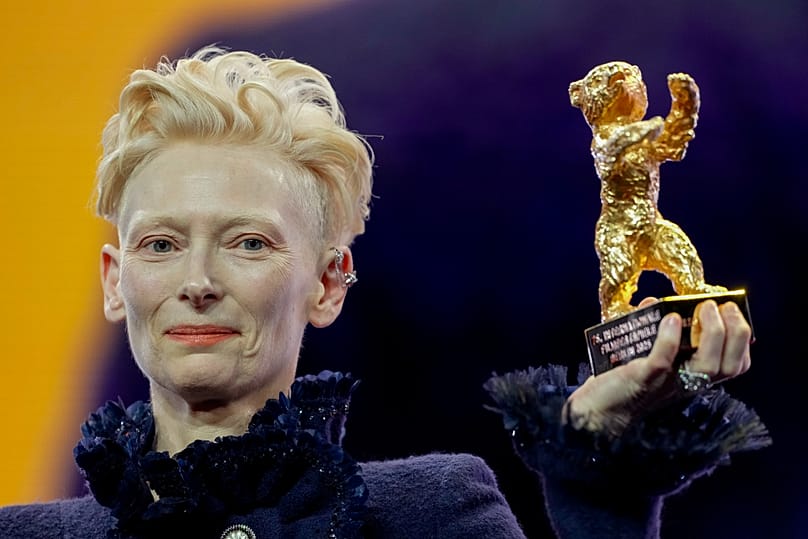
Signatories include Oscar winner Javier Bardem, actor Brian Cox, British filmmaker Mike Leigh, Belgian director Lukas Dhont, American director Adam McKay, celebrated photographer Nan Goldin, and longtime Berlinale attendee and champion Tilda Swinton – who was honoured last year with the prestigious Honorary Golden Bear.
They stated they “fervently disagree” with Wenders’ comments, argued that filmmaking and politics cannot be separated”, called out the Berlinale's stance on Gaza, but "the German state's key role in enabling" Israel's actions.
“We write as film workers, all of us past and current Berlinale participants, who expect the institutions in our industry to refuse complicity in the terrible violence that continues to be waged against Palestinians,” read the statement. “We are dismayed at the Berlinale’s involvement in censoring artists who oppose Israel’s ongoing genocide against Palestinians in Gaza and the German state’s key role in enabling it. As the Palestine Film Institute has stated, the festival has been “policing filmmakers alongside a continued commitment to collaborate with Federal Police on their investigations”.”
The letter continues: “We fervently disagree with the statement made by Berlinale 2026 jury president Wim Wenders that filmmaking is “the opposite of politics”. You cannot separate one from the other. We are deeply concerned that the German state-funded Berlinale is helping put into practice what Irene Khan, the UN Special Rapporteur on Freedom of Expression and Opinion recently condemned as Germany’s misuse of draconian legislation “to restrict advocacy for Palestinian rights, chilling public participation and shrinking discourse in academia and the arts”. This is also what Ai Weiwei recently described as Germany “doing what they did in the 1930s” (agreeing with his interviewer who suggested to him that “it’s the same fascist impulse, just a different target ”).”
The letter notes that the Berlinale has made “clear statements” in the past about “atrocities” carried out against people in Iran and Ukraine, and highlighted how many international film festivals like the International Documentary Festival Amsterdam and Belgium’s largest festival Film Fest Gent have “endorsed the cultural boycott of apartheid Israel.”
The signatories added: “More than 5,000 film workers, including leading Hollywood and international figures, have also announced their refusal to work with complicit Israeli film companies and institutions” - read more about that here.
The letter concludes: “We call on the Berlinale to fulfil its moral duty and clearly state its opposition to Israel’s genocide, crimes against humanity and war crimes against Palestinians, and completely end its involvement in shielding Israel from criticism and calls for accountability.”
To speak or not to speak out?
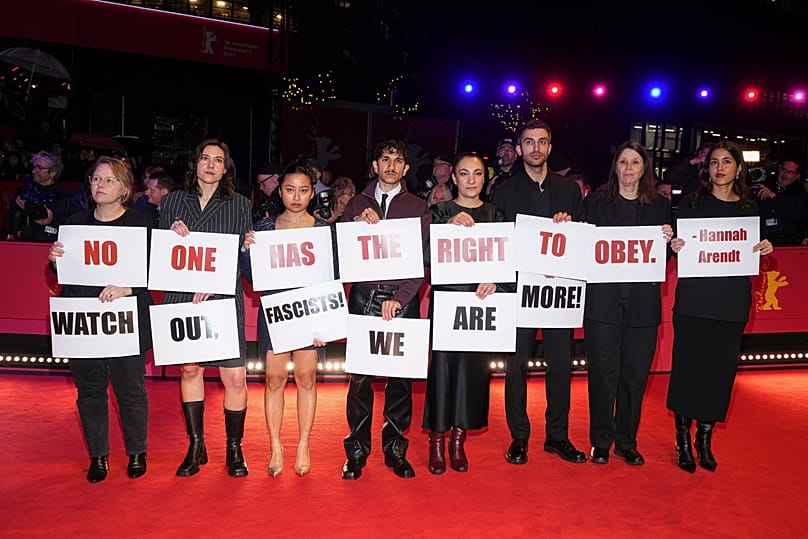
When does it become the responsibility of an artist attending a festival to speak out – especially when it comes to the rise of fascism, which goes against artistic freedom?
Always, especially if you adhere to George Orwell’s stance when he said: “The opinion that art should have nothing to do with politics is itself a political attitude.”
Artists attending an event where historically politics have been centre stage both on and off screen, have a duty to use their platforms to speak out – especially in troubled, some would say Orwellian, times.
While it can be naive to dismiss Wenders' comment about movies being able to change a politician's idea, and it is unreasonable to expect every artist to come up with an insightful soundbite on any matter, no artist should be afraid to speak up. If they are, maybe international film festivals are not the place to be right now. Especially not at the Berlinale, where politics has never been a no-go area.
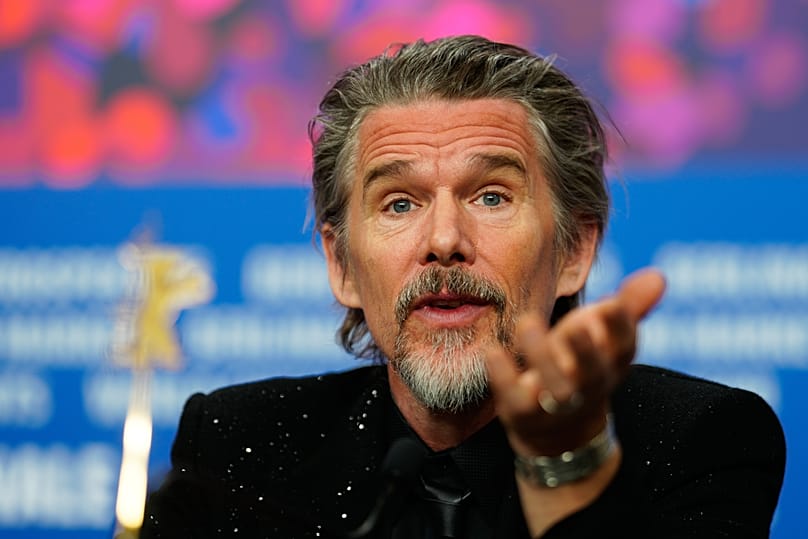
Oscar nominated Ethan Hawke toed the line rather well (and with humour) this year at the Berlinale.
During the press conference for his new historical drama The Weight, the actor was asked about the responsibility of big names to speak out.
“The last place you probably want to look for advice in your spiritual counsel is a bunch of jet-lagged, drunk artists talking about their films,” he said, before adding: “I believe in the power of cinema to affect… You know how every night we all dream and those dreams kind of heal us and get us ready for the next day? I feel like, collectively, the whole festival - all of you, all of us here - are responsible for creating an international dream life. What is it? What are our dreams? What are we talking about? What are we thinking about?”
Hawke concluded his answer with a more direct answer to the question: “Anything that fights fascism, I’m all for it.”
Later, Hawke was pressed on the open letter signed by fellow artists.
“The last time I spoke publicly about any of this, I was really shocked about how much animosity it was met with,” Hawke replied candidly. “You know, people saying, ‘Actors shouldn’t talk about politics’ and things like that. And I really feel like the answer is the absolute inverse, that everybody should be. We’re all citizens of the world and all of us matter, all of us have a voice and everybody’s welcome to disagree. That’s part of the benefit of living in a free society.”
Hawke said that celebrities tend to “get microphones thrown in front of our faces, but it’s not because we’re telling people what to do. We’re just sharing art.”
“We’re not some of the greatest minds in the world that try to make the planet live in peace, ” he added, ending his response by addressing the journalist who asked the question. “I feel like there’s a slight agenda to your question that’s different from my agenda. But I respect you and I respect the question.”
The Berlin Film Festival ends on Sunday 22 February 2026.