



























A whole generation of artists and listeners seems to have given impetus to a new wave of music in the world's second most sung language. The question of identity and the entry of new genres are driving it.
The scale and versatility of Hispanic music, now the first quarter of the 21st century has passed appears to be unfathomable.
 ADVERTISEMENT
ADVERTISEMENT
ADVERTISEMENT
Ignoring of course, the big names that fill the charts, front pages or lazy headlines, the options on offer are fast multiplying and electrifying for an audience of roughly 635 million people who dream or able to sing in Spanish.
Even before the explosion last year of Bad Bunny's 'DtMF', with contained the sixth most listened to single in the world and the album itself in fifth position; or Rosalía's 'LUX', which with a Metacritic rating of 98/100 has become the most listened to Spanish album on Spotify in a single day, the evidence of this systemic change was already crystal clear.
And there are many more examples in various charts and genres.
How about the electronic music of the Peruvian Sofía Kourtesis, a stable in many Berlin clubs? There's the versatile production of Eduardo Cabra (a regular collaborator of artist such as Asturian Rodrigo Cuevasand a member of the Boricua family clan that also brings together René -Residente- and Ileana -iLe- Cabra Joglar); Or perhaps Cain Culto, who enjoyed enormous success by conquering hearts among America's 'white trash'.
Musical roots
The sound of the son of Colombian and Salvadoran immigrants is based on fusing the Appalachian music of his native Kentucky with his family's Hispanic roots. He and the others have forged a trend -neo-folk and genre fusion - that is making its mark in this decade. So does it make sense, given this hodgepodge of sounds around, to restrict them to the big 'Latin music' box in 2026?
"This concept of Latin can actually be traced back to the end of the 19th century", explains Eduardo Viñuela,professor of Musicology at the University of Oviedo and a researcher on contemporary Spanish and Latin American music. "Many rhythms come into play, depending on the fashions that follow one after the other. Latin music at the beginning of the 20th century was the habanera or the tango".
Music on the American continent follows a process of historical and universal amalgamation. It occurs, for example, at the dawn of the Spanish Modern Age, near the river valleys and in the Andalusian suburbs after the fall of the kingdom of Granada. The encounter between the gypsy culture that migrated from the north with the Christian armies and the Moors who withdrew outside the city walls, for fear of reprisals from the new 'status quo', led to the cultural fusion that gave rise to what we know today as flamenco.
"Fashions are being updated, new rhythms are appearing, they are fusing and interacting", Viñuela points out. "And what we have within the umbrella of Latin music is a lot of different expressions that also have different regional origins or from different localities, and that are the result of the interaction with everything that is moving globally".
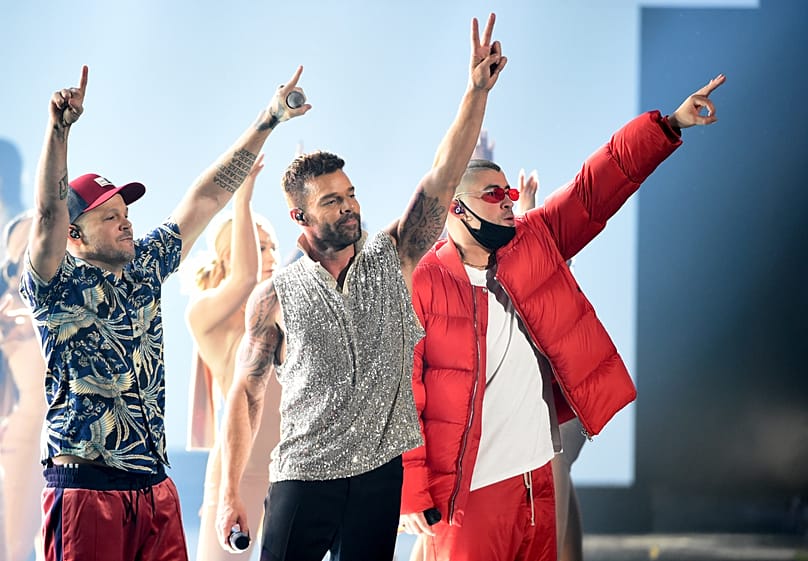
What the data tells us: phenomenon or hype?
Quantitative evidence seems to accompany the general perception of the evolution of Hispanic culture in recent years. In the United States alone, the largest global entertainment market with 1.5 trillion listeners and the second largest Spanish-speaking country in the world, Spanish-language music (with 120.9 billion plays) came close to overtaking country (122.5) according to the final 2025 report from Luminate, a provider of cultural consumption data.
However, the demographics point to caution. Although the US is estimated to go from a quarter of the population being Hispanic (2016) to a third by 2060, the total number of Latinos speaking Spanish at home has gone from 75% in 1980 to 70% in 2019, the Pew Research Center shows, indicating a slight abandonment of the family language by second- and third-generation migrants.
In the rest of Latin America and Spain, moreover, only nine countries have an estimated growth rate above 1%, although it is true that all Spanish-speaking populations are increasing demographically except Cuba, according to the CIA World Factbook.
For the moment, the curve in the cultural sphere remains upward. In a study published for the Cervantes Institute in 2023, Eduardo Viñuela himself confirmed that a quarter of the songs on the charts of portals such as YouTube or Spotify used Spanish. And in a year in which the consumption of music in English fell by 3.8%, the same percentage increased for songs in this language, according to his data also collected by Luminate.
Another annual report by IFPI, the International Federation of the Phonographic Industry, from 2023, shows that Spanish was the language of 21% of the 500 most played songs on Spotify, behind English (75%) but well ahead of other demographically important languages such as Korean, Hindi, Arabic or Portuguese. On YouTube, the same percentage of songs (21% of the 100 most listened to on a global scale), and 7% of the 30 most viewed video clips in the history of the platform are in Spanish, with a total of 13,000 million views.
More money... and also identity awareness
But why is this increase occurring? Part of the explanation could lie in the improved purchasing power of Latinos. In the United States alone, the Center for Latino Health and Cultural Studies at the University of California, Los Angeles (UCLA) showed in a 2023 study that, if the capital of this segment of the population were accumulated, it would add up to 2.7 trillion dollars (2.27 trillion euros): in other words, it would exceed the GDP of all the states in the country except California.
"The Latino community in the US now has greater economic resources and spends more on culture. It is a group that also consumes a lot of music through the internet", Viñuela points out. "And there is also a very interesting sociological question: those who are driving this boom are the children of migrants, native Americans who claim their identity as Latinos: they find in Spanish-language culture the way to articulate that identity.
Calle 13's political turn in 2010 created a gap in the mainstream for a renaissance of protest, anti-colonial and pan-American revindication songs. For Viñuela, that success is encompassed in another macro-genre, that of the global and multicultural sound of the beginning of the century, which does not build such strong identity roots or in such an organic way.
"There are many things that explain this pride in being Latin, which has to do, for example, with the use of accents". Singers, Viñuela insists, no longer use a kind of neutral Spanish, like Ricky Martin in his early days, and use their own slang as a core element in their creations.
In the 20th century, authors such as Víctor Jara, Mercedes Sosa, Silvio Rodríguez and Noel Hernández were responsible for articulating this social and political awareness: a torch that is now being inherited by the next generation of artists, as Bad Bunny demonstrates in 'Lo que le pasó a Hawaii'.
From Miami sound to intra-genre fusion
The end of the English monopoly on the charts (even more so if we introduce K-pop into the equation) is also reflected in unexpected offerings: the lyrics on the latest album by Oklahoma-born iconoclast St. Vincent are written entirely in the language of Cervantes.
Moreover, artists as diverse as Guitarricadelafuente, C. Tangana, Ca7riel & Paco Amoroso or Rusowsky are increasingly rare guests on online platforms where emerging artists want to be, such as NPR's Tiny Desk or the Colors show. The stereotype that associates Spanish only with urban Latin rhythms, while celebrating the cultural weight and importance of this myriad of genres, seems to be definitively behind us.
In the late 1990s, legendary figures such as Ivy Queen began to universalise genres such as reggaeton outside their countries of origin, while a school of pop singer-songwriters - Alejandro Sanz, Gloria Estefan, Thalía, Paulina Rubio, Ricky Martin, Shakira, Marc Anthony and Enrique Iglesias - developed what is known in the industry as the Miami sound, leading to the creation of landmarks such as 'MTV Latino' and the Latin Grammys. But the situation has evolved in barely two decades.
"There is talk of a second Latin 'boom', which is linked to the 'Despacito' effect in 2017. This song overtook Gangnam Style (K-pop anthem), which had been the most viewed video on YouTube since 2012. 2017 is the year in which the top positions in the lists of the most listened to songs on Spotify have that recognisable reggaeton syncopation pattern", says Viñuela.
The musicologist believes that the Puerto Rican school (Ozuna, Anuel AA...) has definitely changed the scale of cultural consumption in Spanish, but also other trends such as Norteño music or corrido tumbado in Mexico.
"There are many genres that are breaking through. While the first Latin 'boom' was something very focused on Miami with the Estefans (Emilio and Gloria, a sentimental and artistic couple) or Rudy Pérez as producers to succeed in the US market, what we are seeing here is that there are different focuses".
It remains to be seen whether this new cultural wave, which has multiplied the offer and the possibilities of listening to music in Spanish, will continue in the future or whether it is a passing phase, although there are certain anthems,such as 'Fever' by La Lupe or 'Fiebre' by Bad Gyal, which will undoubtedly remain as intangible heritage of humanity in the collective memory.