































Copenhagen Fashion Week has partnered with Renoon for the past year, tapping into the company’s four years of work on Digital Product Passports and the technology behind them.
Although Copenhagen Fashion Week is the youngest of the major fashion weeks, it has been running for 20 years.
 ADVERTISEMENT
ADVERTISEMENT
ADVERTISEMENT
It stands apart from the more established shows in Paris or Milan because in Scandinavia, there is a strong emphasis on sustainability and fashion houses must meet strict requirements to be able to showcase their collections.
The Digital Product Passport (DPP) is a concept already familiar to many people and professionals through regulations. Meeting its requirements is a creative and industrial challenge firms have to take in their stride. For Renoon’s Managing Director, Iris Skrami, it’s an exciting moment both for the industry and for this tool.
The DPP is part of European regulation introduced in 2024 to minimise the environmental impact of products. While it is legally binding, it is not only being implemented in Europe – it is also being adopted by the UN and other countries. It encourages the development of a culture of product information for consumers, helping them make more informed choices about what they buy and who made it.
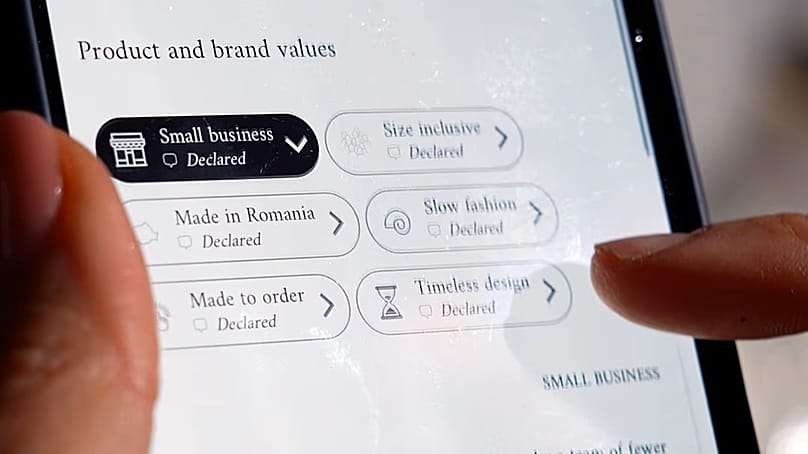
As Skrami explains, the concept of the Digital Product Passport is very straightforward.
“It’s basically an e‑label. Imagine the tag on any product, but fully digitised. You can scan a QR code or open a page with information about the product, available at any point of sale – whether it’s a physical store or online. And essentially, we provide more details about the product, such as who made it and where it was made,” she says.
Telling the story behind the production process is important, but it’s equally crucial that consumers become part of that story. Buyers can register the product as their own.

“In two years, when every product – and it starts with fashion, which is why this is so relevant right now – has a QR code, what will your code contain? Many companies, especially in the luxury and premium sectors, are asking themselves: What experience do I want to offer my customer, and how can I use this within my product and business?” says Skrami. She adds that the goal is to make product data systems more efficient and ready for use by all stakeholders.
Renoon works closely with Copenhagen Fashion Week, which is highly advanced at every stage, with a focus on both technology and sustainability. In particular, the partnership emphasises digitalisation and helping brands create a mental space to think about fashion not just on the runway, but beyond it.
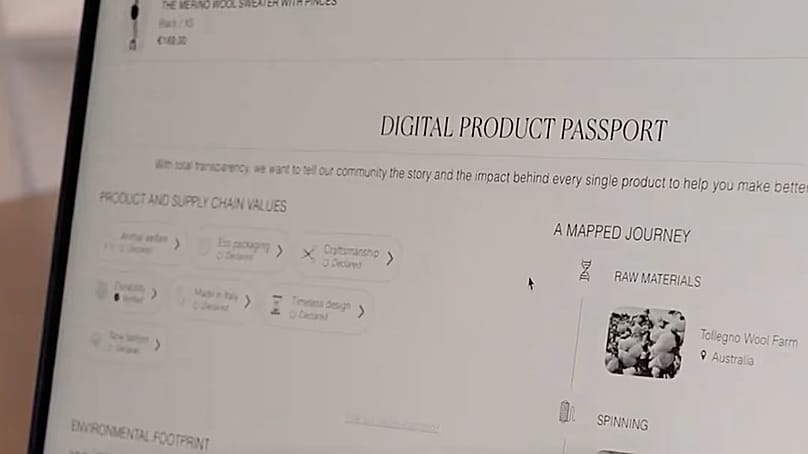
“For us, it has been an honour and a pleasure to work with the Copenhagen Fashion Week team over the past year. Helping them explore the next steps, including in technology as a platform – because Copenhagen Fashion Week is essentially a platform. It’s a platform for industry professionals, for designers, and a way to support them in reaching the next stages that the future will demand of them, and in succeeding in business both in Europe and beyond,” says Skrami.
The concept behind fashion week is brand-focused. Copenhagen Fashion Week is particularly adept at sparking and opening up more conversations, not just on the runway.